
What Is FASB? 7 Simple Steps in Setting Standards

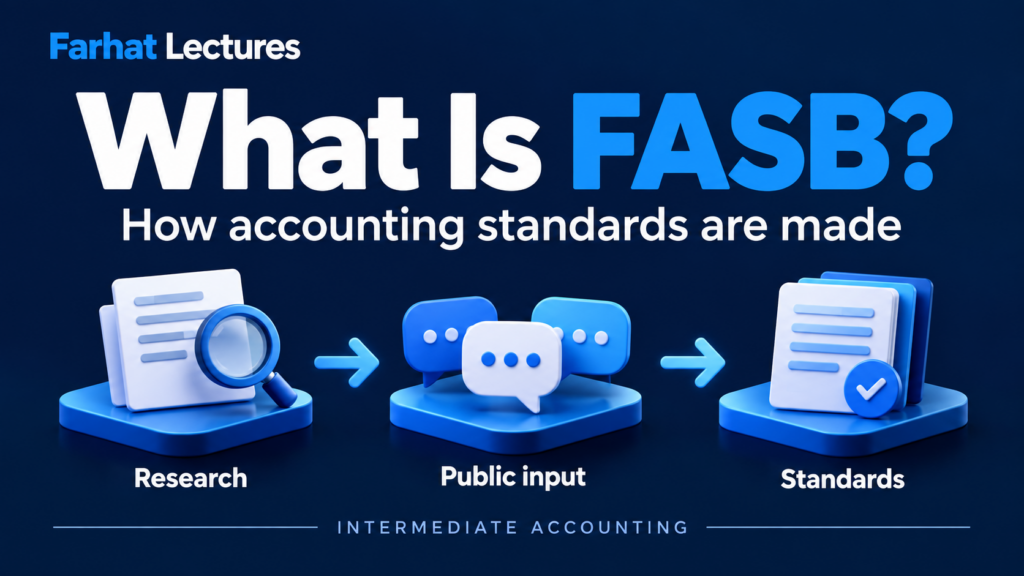
FASB stands for Financial Accounting Standards Board. It is the independent private-sector organization that develops financial accounting and reporting standards for nongovernmental entities in the United States. Its work helps investors, lenders, and other users receive useful financial information.
To understand what FASB does, separate the organization from its documents. The Board develops standards, the Accounting Standards Codification organizes authoritative guidance, and Accounting Standards Updates communicate amendments. This lesson explains the institution, the organizations around it, and the public process used to develop standards.
What is FASB responsible for?
The Board establishes and improves accounting and reporting standards. Its focus includes the needs of people who use financial information as well as the practical issues faced by preparers and auditors. The purpose is to improve financial reporting, rather than prepare each company’s financial statements.
The seven Board members serve full time. An independent structure helps support decisions that consider the broader reporting system, rather than only one company or professional group. The official FASB overview explains the organization and its role.
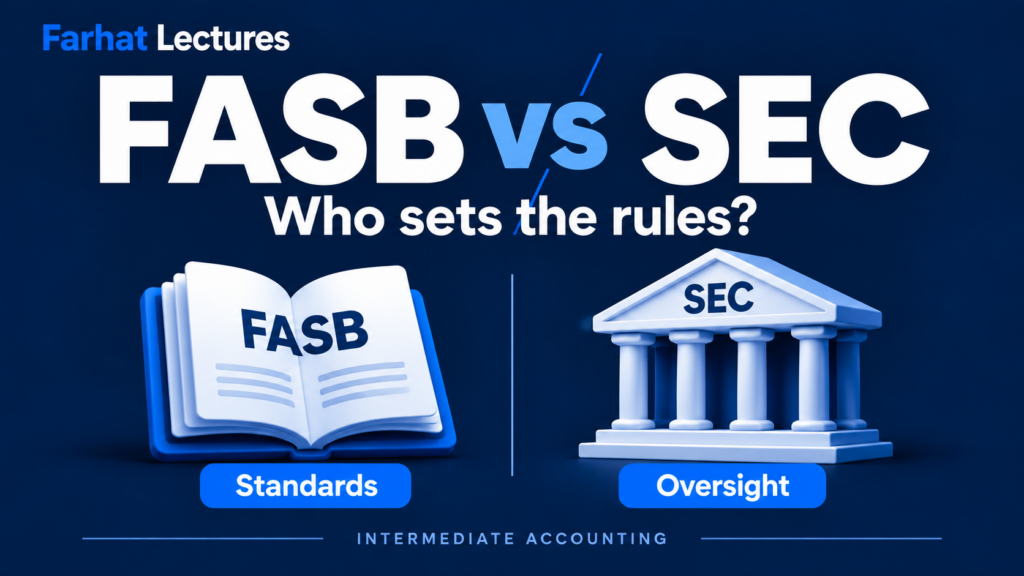
The SEC recognizes the Board as the designated private-sector accounting standard setter and retains authority within its jurisdiction. FASB is not a federal agency, and the two organizations are not interchangeable. See the FASB vs SEC comparison for that relationship.
How do FAF, FASAC, and AICPA fit in?
| Organization | Role to remember | Student memory aid |
|---|---|---|
| Financial Accounting Foundation (FAF) | Provides oversight and appoints members of the standard-setting Board and advisory councils. | Oversight and appointments. |
| Financial Accounting Standards Board (FASB) | Develops financial accounting and reporting standards. | Sets standards. |
| Financial Accounting Standards Advisory Council (FASAC) | Advises the Board on matters such as technical issues and priorities. | Advice and consultation. |
| American Institute of Certified Public Accountants (AICPA) | A professional organization associated with the CPA profession, with a historical role in accounting standard setting. | Professional organization; not the current principal setter of nongovernmental U.S. GAAP. |
The similar abbreviations can make this topic feel harder than it is. Start with the job, then attach the name: oversight, standard setting, or advice. An adviser contributes views without becoming the body that issues the accounting standards. An oversight foundation supports the process without replacing the Board’s technical decisions.
The FASB standard-setting process in 7 steps
Due process means the Board follows an open process that gives interested parties opportunities to contribute. Its official overview describes the following sequence. The amount and type of research and outreach can vary with the project; not every project requires an identical set of meetings.
| Step | What happens | Why it matters |
|---|---|---|
| 1. Identify an issue | Reporting concerns come from stakeholders or other sources. | The process starts with a problem to investigate. |
| 2. Consider the agenda | The Board considers staff analysis and decides whether to add a project. | It determines whether the issue merits standard-setting work. |
| 3. Deliberate publicly | The Board discusses issues analyzed by the staff. | The reasoning can be observed and evaluated. |
| 4. Issue an exposure draft | A proposal is released for comments; some projects also use an earlier discussion paper. | Stakeholders can respond before final guidance is issued. |
| 5. Hold a roundtable if needed | Additional public discussion may be used. | The Board can explore concerns and alternatives. |
| 6. Evaluate feedback and redeliberate | Staff analyze comments and the Board reconsiders the proposal. | Feedback can affect the final outcome. |
| 7. Issue an update | An ASU describes amendments to the Codification. | The final change and implementation information are communicated. |
This is a student-friendly summary of the FASB’s published standard-setting process. Your textbook may group some activities into fewer stages. Focus on the sequence of research, proposal, public input, reconsideration, and final amendments rather than treating a simplified diagram as a rigid checklist.
Two types of FASB pronouncements
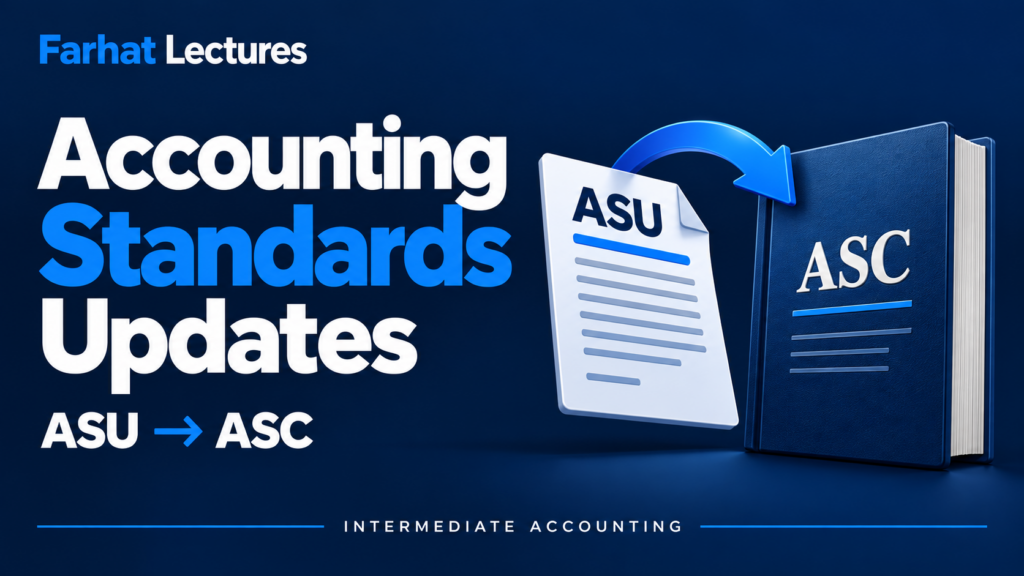
Accounting Standards Updates communicate amendments to the Codification. They explain what changed, why it changed, and when the amendments apply. The update itself is not authoritative; the Codification is the source of authoritative guidance recognized by the Board for nongovernmental U.S. GAAP.
Statements of Financial Accounting Concepts provide objectives and concepts used in developing accounting standards. They do not establish GAAP and do not override an applicable Codification requirement. This is a key distinction when an exam question asks whether a document is authoritative.
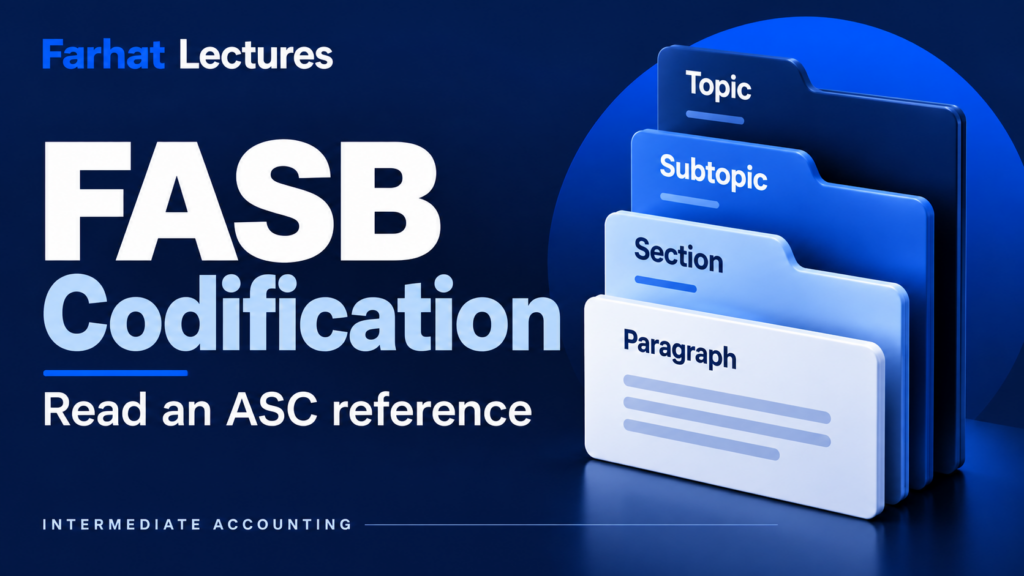
Use the Accounting Standards Update guide to compare the documents. Use the Codification lesson to learn how authoritative guidance is organized.
A simple standard-setting example
Assume users report that a particular disclosure is difficult to compare across companies. The Board and its staff investigate the concern. If a project is added, they consider possible changes and discuss the issues publicly. A proposal then gives interested parties a chance to explain benefits, costs, and practical difficulties.
A company might explain the cost of collecting the proposed information. An investor might explain why the information improves analysis. The Board considers the feedback and may revise its proposal before issuing amendments. This is a hypothetical process example, not a description of a specific current project.
The lesson is that issuing standards involves reasoning and consultation. Public input helps reveal consequences that may not be obvious at the start. It does not mean each stakeholder can choose which final accounting requirements to follow.
Practice questions about the Board
1. Which organization provides advice on standard-setting priorities: FAF or FASAC? FASAC. Its name includes “Advisory Council.” FAF’s role centers on oversight and appointments.
2. Is an exposure draft automatically final GAAP? No. It is proposed guidance issued for input. Comments and further deliberation can change the final outcome.
3. Does a Concepts Statement establish GAAP? No. It provides concepts used in developing standards. It does not replace an authoritative requirement.
Frequently asked questions about FASB
Is the Board part of the government? No. It is a private-sector standard setter. Its relationship with the SEC does not make it a federal agency.
Does it prepare company financial statements? No. Companies prepare their own statements. The Board develops the accounting standards relevant to that preparation.
Does it issue IFRS Accounting Standards? No. The IASB develops IFRS Accounting Standards. Read FASB vs IASB to compare the two standard setters.
Responses