
Lessor vs Lessee: What a Lease Is and Who Does What

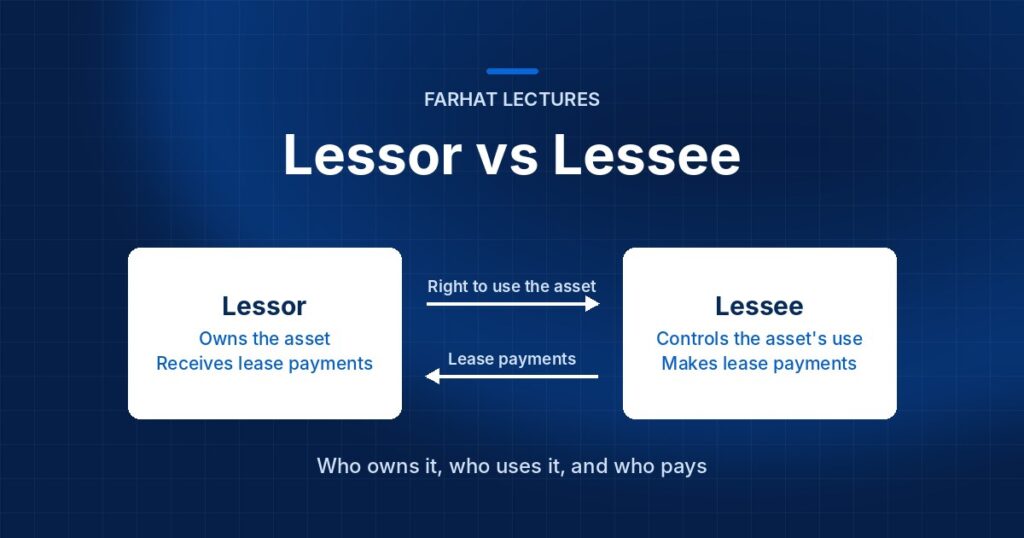
The lessor is the party in a lease that provides the asset and receives the payments. The lessee is the party that gets the right to use the asset and makes those payments. The lessor is usually the owner and keeps legal title. Under ASC 842, the lessee reports a right-of-use asset and a lease liability for most leases.
Lessor vs lessee comes down to one question: who provides the asset, and who pays to use it?
Getting the roles right matters because every lease question in intermediate accounting starts there. The lessee decides whether a lease is a finance lease or an operating lease, and the lessor applies its own set of rules. If you mix up the two parties, every later step in the problem goes wrong.
Watch: Lease Accounting Basics: Lessor vs. Lessee Explained (an introduction to both parties before classification and journal entries)
What is a lease?
Under ASC 842, the U.S. GAAP leases standard, a lease is a contract that gives one party the right to control the use of an identified asset for a period of time in exchange for consideration. Under ASC 842, the identified asset must be property, plant, or equipment (PP&E), such as a building, a truck, or a machine. Leases of intangible assets, inventory, biological assets such as timber, mineral rights, and assets still under construction fall outside ASC 842.
Three ideas sit inside that definition:
- An identified asset. The contract covers a specific asset, such as one floor of a building or one delivery truck.
- Control of use. The user has the right to direct how the asset is used and to obtain substantially all of its economic benefits during the term.
- A period of time and payments. The right lasts for a lease term, and the user pays for it, usually through rental payments.
You have probably signed a lease already. When you rent an apartment, you are the lessee and the property owner is the lessor. When you lease a car, the dealer or its finance company is the lessor.
One twist: the lessor is not always the owner. In a sublease, a lessee rents the asset out again to someone else. The original lessee then becomes the lessor in the sublease, called the intermediate lessor, even though it never owned the asset.
What is the difference between a lessor and a lessee?
| Feature | Lessor | Lessee |
|---|---|---|
| Who they are | The party that provides the asset, usually its owner | The user who obtains the right to use the asset |
| Legal title during the lease | Usually keeps title (not in a sublease) | Usually does not have title |
| Cash flow | Receives lease payments | Makes lease payments |
| Everyday example | Landlord, car dealer, equipment leasing company | Tenant, driver, business using leased equipment |
| Main accounting question | Is it a sales-type, direct financing, or operating lease? | Is it a finance lease or an operating lease? |
Identify the contract first. The lessor grants the right to use the asset. The lessee receives that right.
What do companies lease?
Almost any type of property, plant, and equipment can be leased. Retailers lease store space. Airlines lease aircraft and engines. Delivery companies lease vehicles and warehouses. Restaurant chains often lease the land under their buildings, or both the land and the building. Hospitals lease scanners, and banks lease branch premises.
The reasons are both financial and practical, such as conserving cash and avoiding technology that quickly goes out of date. We cover them in detail in the advantages of leasing for lessees and lessors.
What does the lessee report on the balance sheet?
Under ASC 842, a lessee recognizes a right-of-use (ROU) asset and a lease liability for its leases. The ROU asset is the lessee’s right to use the property. The lease liability is its obligation to make the lease payments.
This reflects substance over form. The lessee can hold the right to use the asset while another party holds legal title. In substance, the lessee controls the asset’s use and gets its benefits, so the lessee reports an asset and a matching obligation.
The short-term lease exception
A short-term lease has a lease term of 12 months or less at commencement and no purchase option that the lessee is reasonably certain to exercise. A lessee may elect, by class of underlying asset, to keep short-term leases off the balance sheet. It then recognizes the lease payments as expense on a straight-line basis over the lease term, and any variable payments in the period they occur.
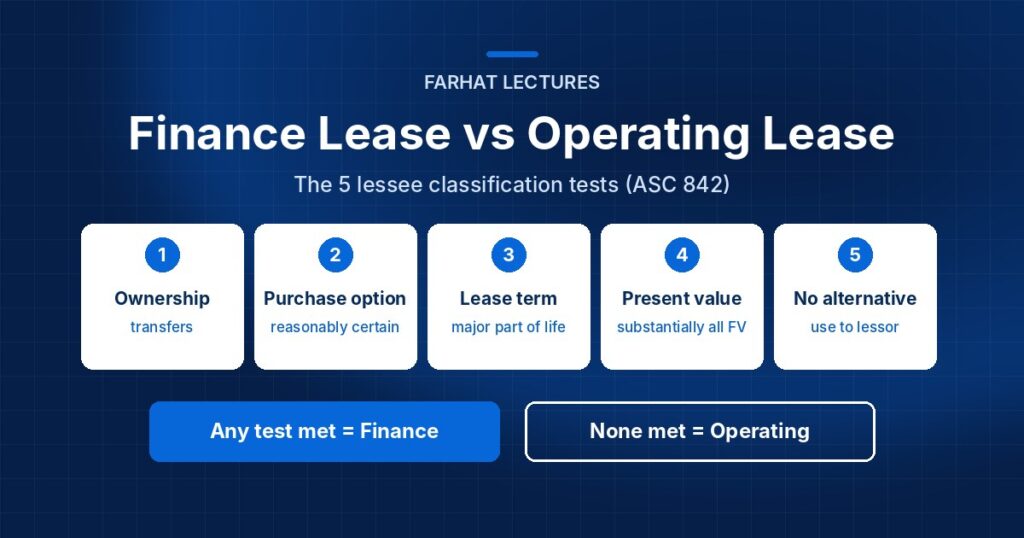
At commencement, the lessee classifies the lease as either a finance lease or an operating lease. Unless a lease qualifies as short-term and the lessee has elected the exception, both types go on the balance sheet. The classification uses five tests, explained step by step in finance lease vs operating lease.
How does each side record the lease?
Both parties classify the lease at commencement, but they use different categories and record different things.
| Feature | Lessee | Lessor |
|---|---|---|
| Lease types | Finance lease or operating lease | Sales-type, direct financing, or operating lease |
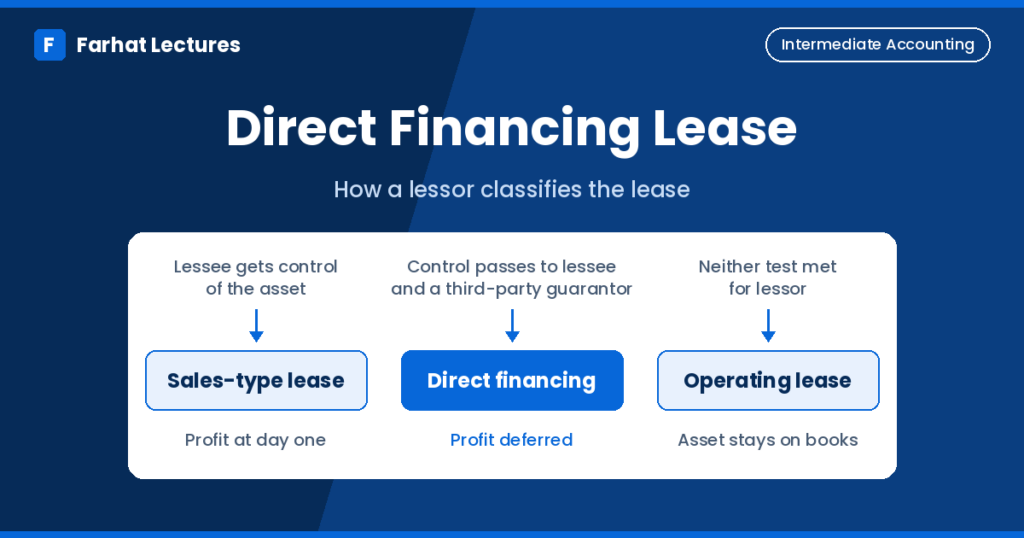
| Balance sheet | Right-of-use asset and lease liability (unless short-term and the exception is elected) | Sales-type or direct financing: removes the asset and records a net investment in the lease. Operating: keeps the asset on its books |
| Income statement | Finance: amortization expense plus interest expense. Operating: a single lease cost, generally straight-line | Sales-type or direct financing: interest income on the net investment. Operating: lease income, generally straight-line, plus depreciation on the asset |
At commencement, the lessor’s net investment includes the lease receivable plus the present value of the unguaranteed residual value. For a direct financing lease, the lessor also subtracts any deferred selling profit.
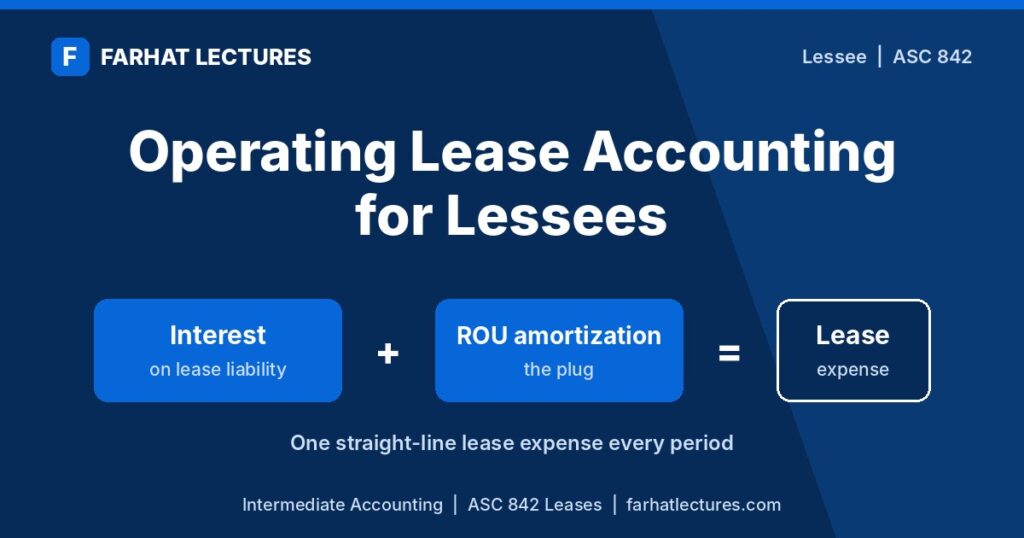
For the lessor side in detail, see lessor accounting for operating leases, sales-type lease accounting, and direct financing leases. For the lessee side, see operating lease accounting and finance lease journal entries.
Example: who is the lessor and who is the lessee?
Hypothetical example. Cedar Lane Bakery signs a contract with Metro Equipment Leasing to use a commercial oven for 4 years. Cedar Lane pays $900 per month, and Metro keeps legal title to the oven. At the end of the term, Cedar Lane returns the oven. Over the 4-year term, Cedar Lane pays $900 × 48 months = $43,200 in total.
| Question | Answer |
|---|---|
| Who is the lessor? | Metro Equipment Leasing, because it owns the oven and receives the payments |
| Who is the lessee? | Cedar Lane Bakery, because it controls the oven’s use and pays $900 per month |
| Is it a short-term lease? | No. The 4-year term is longer than 12 months |
| What does Cedar Lane report? | An ROU asset and a lease liability, after it classifies the lease as finance or operating |
Now change one fact: Cedar Lane rents a storage unit for 10 months with no purchase option. That is a short-term lease. If Cedar Lane has elected the short-term exception for this class of asset, it records rent expense as it uses the unit and puts no ROU asset on the balance sheet.
Common mistakes
- Swapping the two terms. Ask who grants the right to use the asset under this contract and who receives that right. In a sublease, the original lessee grants that right to the subtenant.
- Assuming the lessee owns the asset. The lessee records an ROU asset, not legal ownership. Title usually stays with the lessor.
- Thinking operating leases stay off the balance sheet. That was true under the old standard, ASC 840. Under ASC 842, lessees report operating leases on the balance sheet too, unless the lease qualifies as short-term and the lessee has elected the exception. See our lesson on off-balance-sheet financing for why that change mattered.
- Treating IFRS and U.S. GAAP as identical. IFRS 16 uses a single lessee model rather than the finance and operating split. Compare it in our guide to IFRS 16 lease accounting.
CPA exam tip: Leases are tested in the FAR section of the CPA exam. A common trap is a question written from the lessor’s side that asks for the lessee’s entry, or the reverse. Before you calculate anything, circle who the question is about.
Practice questions
Question 1
Harbor Clinic rents an MRI scanner from MedTech Capital for 5 years and pays MedTech each month. Who is the lessor, and who is the lessee?
Show answer
MedTech Capital is the lessor because it grants Harbor Clinic the right to use the scanner and receives the payments. Harbor Clinic is the lessee because it uses the scanner and pays for that right.
Question 2
A company rents temporary office space for 9 months with no option to buy or extend. It has elected the short-term lease exception for office space. Does it record an ROU asset?
Show answer
No. The lease term is 12 months or less and there is no purchase option, so it is a short-term lease. The company expenses the rent over the 9 months instead of recording an ROU asset and lease liability.
Question 3
Why does a lessee record an asset for property it does not legally own?
Show answer
Because of substance over form. The lessee controls the use of the asset and receives its benefits during the lease term, so it reports a right-of-use asset and the related lease liability even though another party holds legal title.
Lessor vs. Lessee Practice Exercise
Compare the two parties in a lease by identifying who keeps legal title, who controls the use of the leased asset, and who makes or receives lease payments. Select one answer for each question.
Frequently asked questions
Is the landlord the lessor or the lessee?
The landlord is the lessor because the landlord grants the tenant the right to use the property in exchange for rent. The tenant who uses the property and pays rent is the lessee.
Who owns the asset in a lease?
In a direct lease from the owner, the owner usually keeps legal title during the lease. In a sublease, the intermediate lessor grants the right to use the asset while the original owner retains title. The lessee obtains ownership if the contract transfers title or the lessee purchases the asset.
Do lessees record leases on the balance sheet?
Yes. Under ASC 842, a lessee records a right-of-use asset and a lease liability for both finance and operating leases. The one exception is a short-term lease, meaning a lease term of 12 months or less with no purchase option the lessee is reasonably certain to exercise. A lessee may elect to keep those off the balance sheet.
Can a company be both a lessor and a lessee?
Yes. A common case is a sublease. If a company leases an office floor and then rents part of it to another business, it is the lessee in the original lease, called the head lease, and the lessor in the sublease. A company can also lease equipment from one party and lease a building it owns to another.
Is a lessee the same as a tenant?
In a property lease, yes. Tenant is the everyday word for the lessee of a home or office. Lessee is the broader term and also covers anyone who leases a car, a machine, or an aircraft.
How does a lessor account for a lease under ASC 842?
The lessor classifies each lease as a sales-type, direct financing, or operating lease. In a sales-type or direct financing lease, it removes the asset from its books and records a net investment in the lease. In an operating lease, it keeps the asset, keeps depreciating it, and records lease income, generally on a straight-line basis.
Sources
- FASB Accounting Standards Codification, Topic 842: Leases
- Deloitte DART, Leasing Roadmap 1.2: Overview of ASU 2016-02
- Deloitte DART, Leasing Roadmap 8.2.1: Short-term lease recognition exemption
About the author
Mansour Farhat, CPA, CIA, DBA, teaches accounting and CPA exam topics through Farhat Lectures and its YouTube lessons. Read more about Professor Farhat.
Continue learning with Farhat Lectures
Lease accounting builds step by step, from the parties to classification and measurement. Try a full lesson with worked problems before you move on.
Explore the free sample course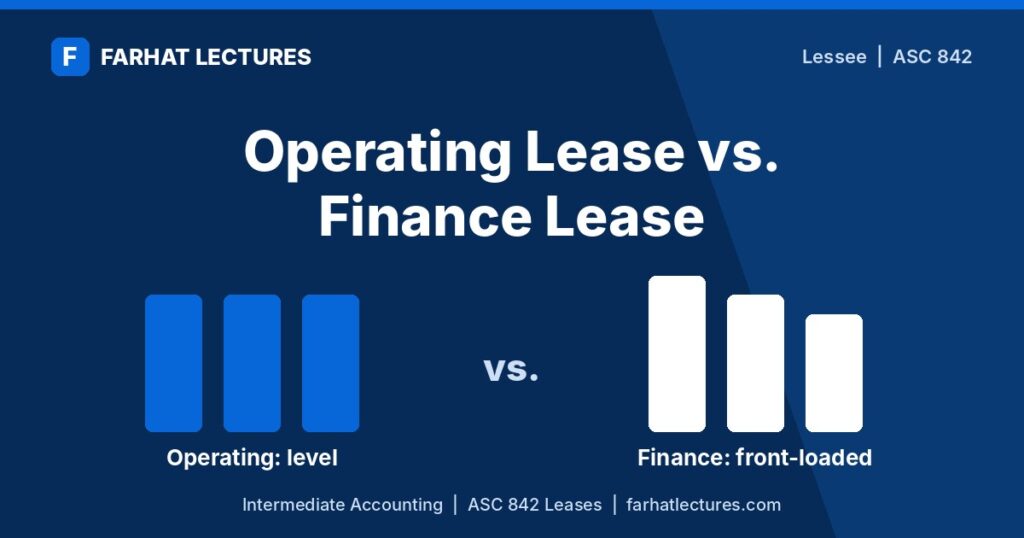
Responses