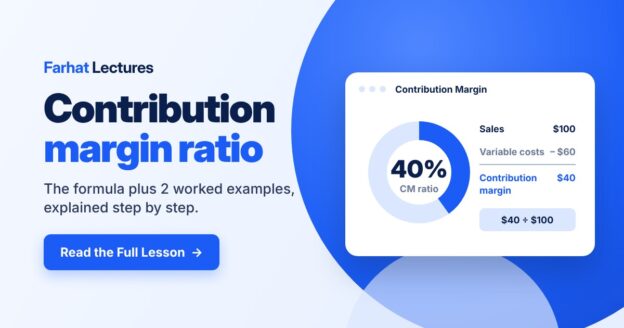
Contribution Margin Ratio: Formula and 2 Worked Examples
Calculate the contribution margin ratio, interpret a 40% result, and predict operating profit with two worked examples, a formula graphic, and a Farhat video lecture.
Understand the concepts. Work through examples. Prepare with confidence.
Choose an exam, a subject, or both.

Calculate the contribution margin ratio, interpret a 40% result, and predict operating profit with two worked examples, a formula graphic, and a Farhat video lecture.

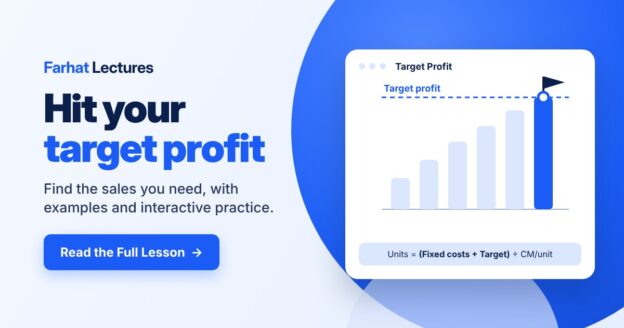
The target profit formula tells you how many units—or how much sales revenue—you need to earn a desired profit. Required unit sales = (Fixed costs

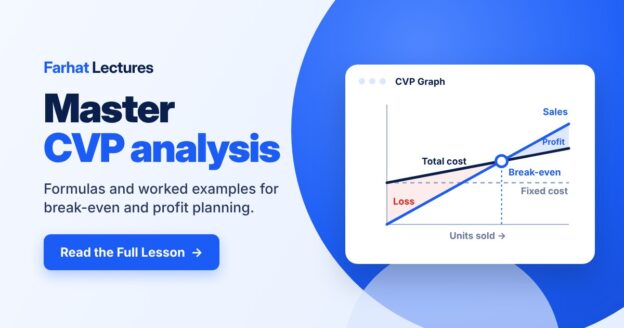
Work through five CVP analysis examples using contribution margin to evaluate advertising, product quality, pricing, commissions, and special orders. Includes formulas, calculations, a comparison table, and a Farhat video lesson.

Cost volume profit analysis (CVP analysis) examines how selling prices, sales volume, variable costs, and fixed costs affect operating profit. The core formula is: Operating

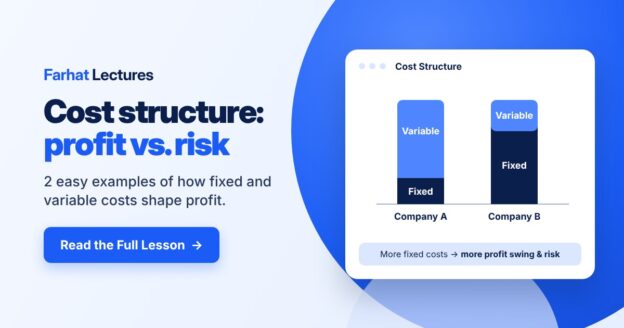
Cost structure is the mix of fixed and variable costs a business incurs. Fixed costs, like rent, stay the same in total within a normal

Calculate margin of safety in dollars, units, and percentages. Follow two restaurant scenarios, distinguish the sales cushion from profit margin, and test your understanding with a worked practice question.

Degree of operating leverage (DOL) measures the percentage change in operating income that comes with a 1% change in sales. The formula is DOL =
We use essential cookies to keep this website working. With your permission, we also use analytics and advertising cookies, including OpenAI Ads conversion tracking, to understand visits and measure our ads. Choose Accept All, Reject, or Preferences. You can change your choice at any time using Cookie Preferences.
Manage your cookie preferences below:
Essential cookies enable basic functions and are necessary for the proper function of the website.
Statistics cookies collect information anonymously. This information helps us understand how visitors use our website.
Helps us understand website visits, traffic sources, and how visitors use our pages. Analytics cookies are used only when you allow Statistics cookies.
Service URL: policies.google.com (opens in a new window)
Marketing cookies are used to follow visitors to websites. The intention is to show ads that are relevant and engaging to the individual user.
Measures advertising conversions, including eligible paid purchases, after you allow Marketing cookies. Helps us understand whether our OpenAI ads lead to sales.
Service URL: openai.com (opens in a new window)