
FASB vs IASB: 5 Key Differences Made Simple

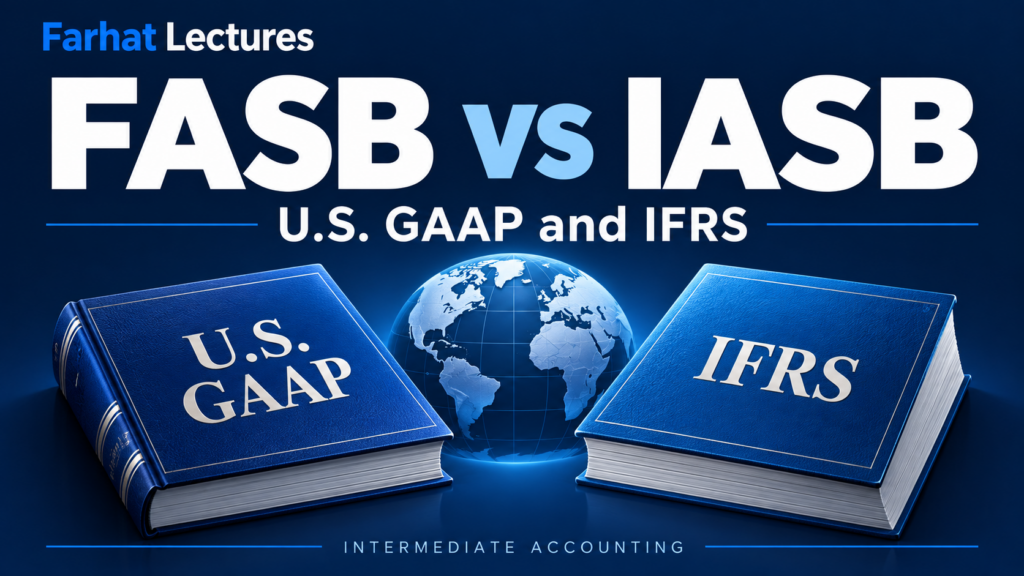
FASB vs IASB compares two accounting standard setters. The Financial Accounting Standards Board develops standards for nongovernmental U.S. financial reporting. The International Accounting Standards Board develops IFRS Accounting Standards. Both seek useful financial information, but they are separate organizations and their accounting frameworks are not identical.
For intermediate accounting, start with the pairing: FASB → U.S. GAAP; IASB → IFRS Accounting Standards. This lesson focuses on the organizations and the reporting environment. It does not require you to memorize detailed differences in the accounting for individual transactions.
FASB vs IASB: 5 differences to understand
| Point of comparison | FASB | IASB |
|---|---|---|
| 1. Full name | Financial Accounting Standards Board. | International Accounting Standards Board. |
| 2. Main accounting framework | U.S. GAAP for nongovernmental entities. | IFRS Accounting Standards. |
| 3. Organizational setting | Operates under oversight of the Financial Accounting Foundation. | An independent standard-setting board within the IFRS Foundation. |
| 4. Reach of its standards | Used by entities reporting under nongovernmental U.S. GAAP. | Used by entities reporting under IFRS in jurisdictions that require or permit that framework. |
| 5. Where a student begins research | The relevant guidance in the FASB Accounting Standards Codification, with SEC requirements considered when applicable. | The relevant IFRS Accounting Standards and applicable reporting requirements. |
These are differences in identity, framework, organization, application, and research source. They are not five rules for calculating financial statement amounts. For the official descriptions, see FASB’s overview and the IFRS Foundation’s description of the IASB.
When comparing FASB vs IASB, avoid treating the organizations as the frameworks themselves. A board is a standard-setting body. U.S. GAAP and IFRS refer to accounting requirements. Keeping “who develops the guidance?” separate from “which guidance applies?” makes the abbreviations easier to understand.
What do the two boards have in common?
Both boards work to develop high-quality financial reporting standards. Useful standards help investors and other users understand a company’s financial position and performance. More understandable and comparable information can support decisions about providing resources to a business.
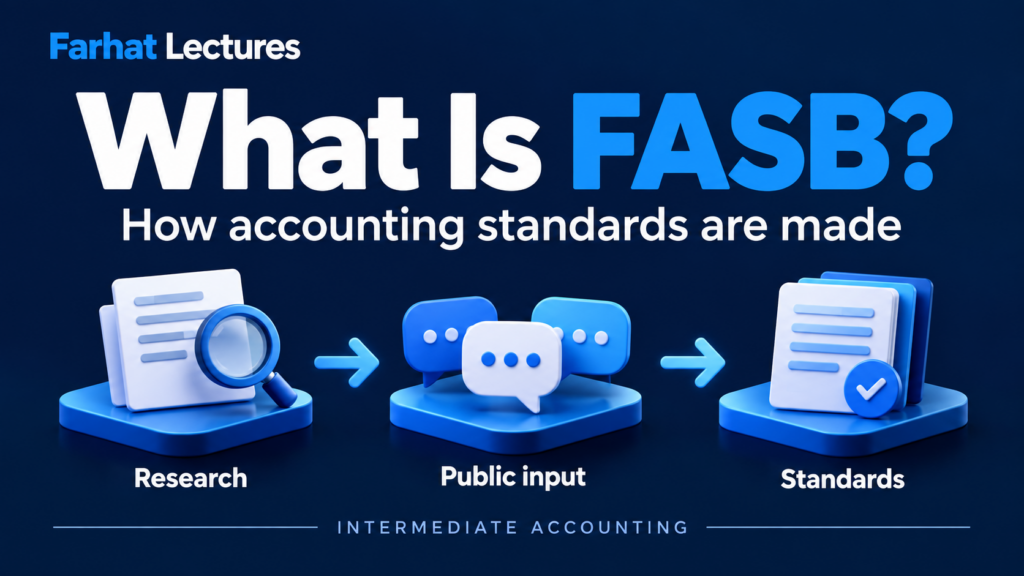
Both also use public processes to consider proposed changes and obtain input. Standard setting involves research, discussion, feedback, and judgment. The existence of a shared goal does not mean the boards always reach the same conclusions or issue identical requirements.
A useful way to study FASB vs IASB is to make two lists: shared purpose and distinct responsibilities. Put useful financial reporting and public input on the first list. Put each organization’s name, framework, and institutional setting on the second. This keeps similarities from obscuring the differences.
What does convergence mean?
Convergence refers to efforts to bring accounting standards closer together. The two boards have worked together on major projects, including revenue recognition and leases. Cooperation can improve comparability across reporting frameworks, but it does not establish that all accounting requirements have become the same.
For example, two standards can address the same transaction and share important ideas while retaining differences. A student should therefore identify the required framework before applying guidance. Do not take a conclusion reached under one framework and assume it automatically applies under the other.
The broader financial reporting lesson is that investors may compare companies across national borders. Different reporting frameworks can complicate that comparison. Work toward high-quality, more comparable standards addresses that problem, but the framework used in a particular set of statements still matters.
A simple FASB vs IASB example
Assume Lakeside Manufacturing prepares financial statements under U.S. GAAP, while Ocean Manufacturing prepares statements under IFRS Accounting Standards. An investor wants to compare the two businesses. The investor first identifies the framework each company uses before interpreting the reported amounts and disclosures.
Lakeside’s accountant researches the applicable Codification guidance. Ocean’s accountant researches the applicable IFRS requirements. The company names and locations alone do not answer the accounting question; the example explicitly tells you which framework applies. That is the fact you should use.
Now assume both companies enter into similar transactions. Similar facts make comparison meaningful, but they do not prove that every reporting result must be identical. The accountant still applies the relevant framework. This example stays at the reporting-environment level rather than introducing detailed transaction rules.
Common mistakes in FASB vs IASB questions
“The IASB is a department of FASB.” Incorrect. The IASB is a separate board within the IFRS Foundation. Cooperation between the organizations does not make one part of the other.
“FASB issues IFRS Accounting Standards.” Incorrect. Pair the Board with nongovernmental U.S. GAAP. Pair the IASB with IFRS Accounting Standards.
“Every company outside the United States uses IFRS.” Too broad. Reporting requirements depend on jurisdiction and entity circumstances. Do not turn widespread international use into a claim that every business follows exactly the same requirements.
“Convergence means the frameworks are identical.” Incorrect. The boards can cooperate while differences remain. Read the applicable guidance for the question you are answering.
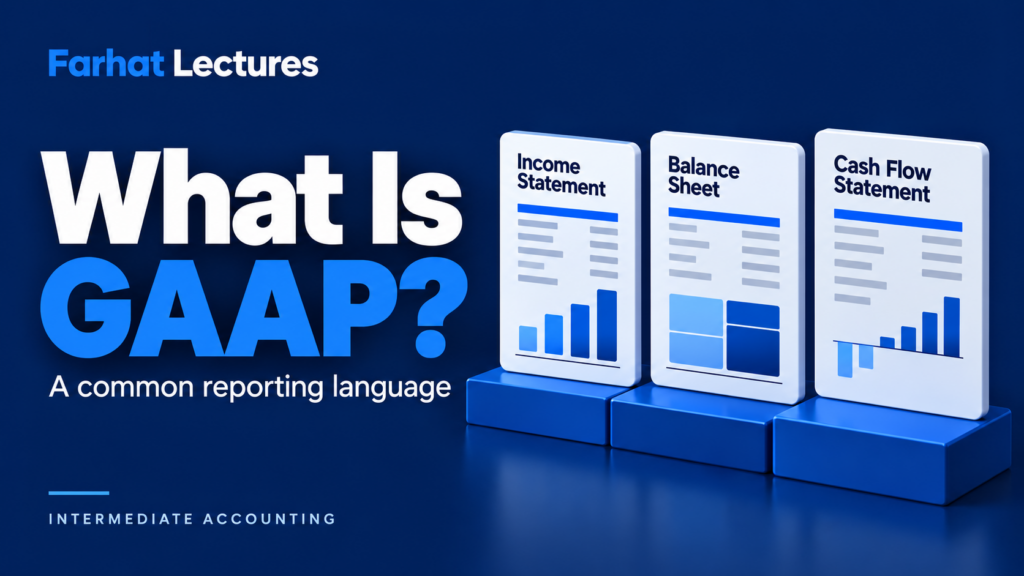
If the abbreviations still feel crowded, start with what GAAP means and what FASB does. Then return to this comparison.
Practice questions: match the board and framework
1. Which organization develops IFRS Accounting Standards? The IASB. The wording asks for the standard-setting board, rather than the name of the accounting framework.
2. Does cooperation between the boards make U.S. GAAP and IFRS interchangeable? No. Cooperation can reduce differences, but the applicable requirements still need to be identified and followed.
3. A problem explicitly says an entity reports under U.S. GAAP. Should you choose IFRS guidance because the company sells internationally? No. International sales alone do not replace the reporting framework specified in the problem.
Quick concept review before the quiz
- Standards: U.S. GAAP is often described as more rules-based and IFRS as more principles-based. This is a broad comparison; both require judgment and contain detailed requirements.
- Stewardship: Evaluate how well management has used the resources entrusted to it.
- Prudence: Use caution when making uncertain estimates while remaining neutral.
- Measurement uncertainty: Consider relevance together with how faithfully an estimate can represent the underlying item. Some uncertainty does not make information useless.
- Reporting entity: Financial reporting boundaries need not match legal boundaries. Both the IASB and FASB conceptual frameworks recognize this.
Conceptual frameworks explain the ideas behind standards; they do not override applicable accounting requirements. See the IASB Conceptual Framework overview and FASB Concepts Statement No. 8 (Chapter 2, paragraph RE7).
Review your results: Explain why each correct choice fits, then revisit any concept you missed. To reinforce the basics, return to the FASB vs IASB comparison table or the board-and-framework practice questions.
Frequently asked questions about FASB vs IASB
Is IASB the same as IFRS? No. IASB names the board; IFRS Accounting Standards name the standards it develops.
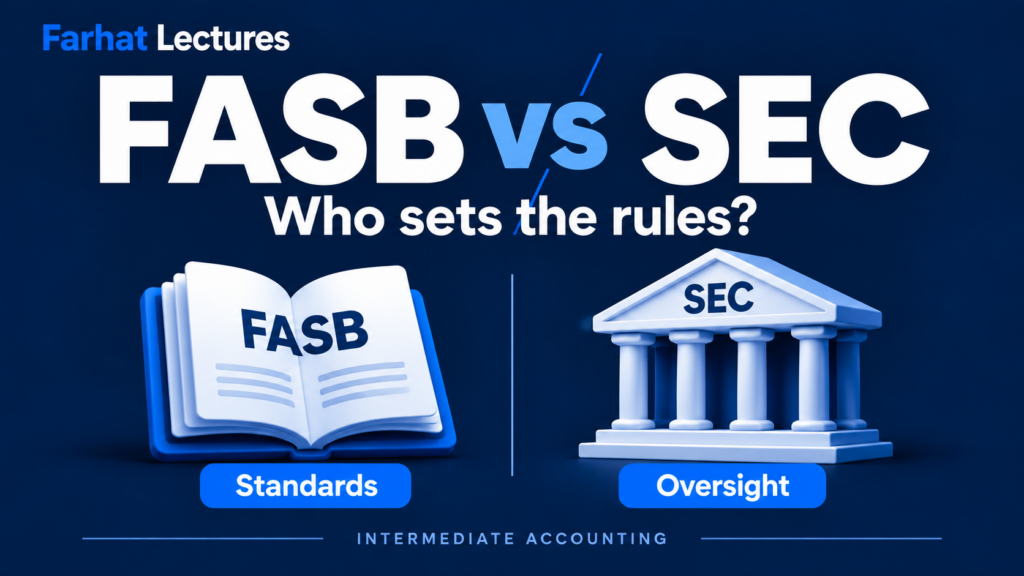
Is this the same comparison as FASB vs SEC? No. FASB vs IASB compares standard setters associated with different frameworks. FASB vs SEC explains the U.S. relationship between a private standard setter and a government regulator.
What should I remember first? Match each board to its framework, understand their shared purpose, and remember that cooperation does not eliminate all differences.
Continue learning
FASB vs SEC: 5 Key Differences Made Simple · FASB Codification: 4 Levels Explained Simply · Accounting Standards Update: A Simple ASU vs ASC Guide · What Is GAAP? 5 Essential Ideas for Accounting Students · What Is FASB? 7 Simple Steps in Setting Standards
Learn with Farhat Lectures
Build your understanding one step at a time. Explore the Farhat Lectures free sample course to see the teaching approach, then return to the practice questions in this lesson.

Responses