
Restricted Stock vs RSU Accounting: Awards, Units, and Journal Entries

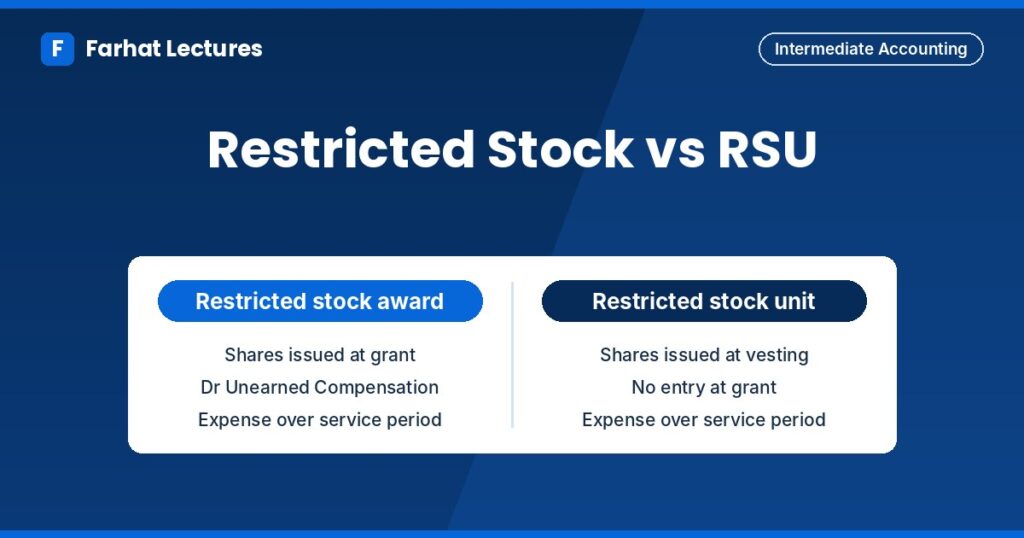
Restricted stock vs RSU comes down to when the shares are issued. A restricted stock award (RSA) gives the employee actual shares on the grant date, subject to vesting. A restricted stock unit (RSU) is a promise to deliver shares at settlement, which can occur at vesting or later. For both equity-classified awards, the employer measures compensation at grant-date fair value and recognizes it over the required service period.
The textbook method illustrated below records a restricted-stock award at grant with a debit to Unearned Compensation, a contra-equity account. Under ASC 718, an equity-classified award for future service generally has no compensation entry at grant. The employer recognizes compensation cost and credits additional paid-in capital as employees provide the required service. Taxes differ too: only restricted stock qualifies for a Section 83(b) election.
Why it matters: restricted stock, and especially RSUs, are among the most common forms of equity pay today. Because the two plans sound alike but use different accounts, they are a common source of confusion on exams and in practice.
This lesson compares the two side by side with original, hypothetical numbers. For the fair value method and other plan types, start with the stock-based compensation accounting overview.
Watch: Restricted Stock Units Explained
Professor Farhat explains how RSUs work as employee compensation and how the company accounts for them over the vesting period.
Watch this Farhat lesson on YouTube · Watch a restricted stock example with forfeiture
What is restricted stock?
In a restricted-stock plan, the company gives employees stock (or units that become stock) that cannot be sold, transferred, or pledged until it vests. If the vesting conditions are not met, for example the employee leaves early, the award is forfeited. There are two types:
- Restricted-stock award: shares are transferred to the employee on the grant date, subject to the restrictions.
- Restricted stock unit: the employee receives a commitment, represented by units, that the company will transfer shares at settlement once the vesting conditions have been met. In the examples below, settlement occurs at vesting.
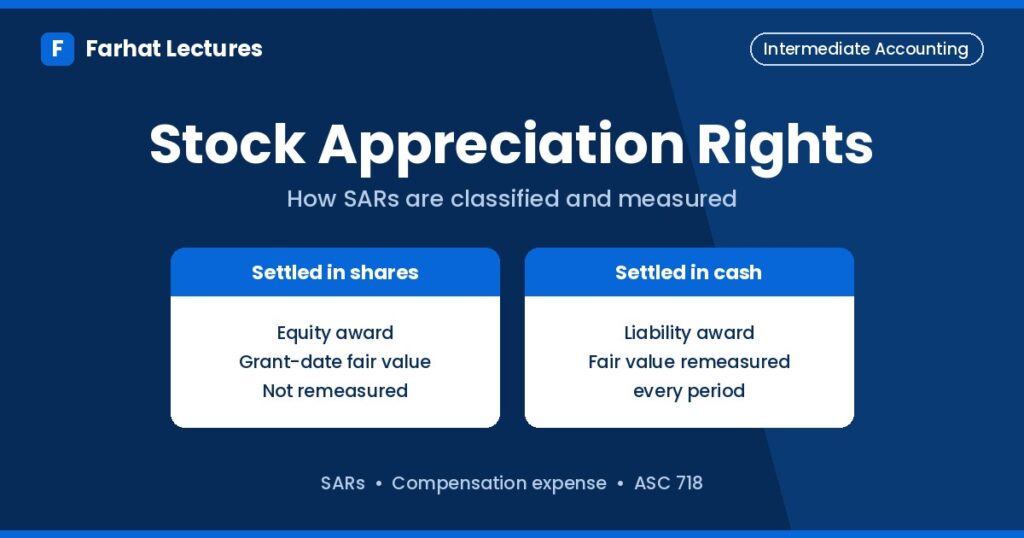
Most RSUs are settled in shares, and that is what this lesson covers. Some RSUs are settled in cash instead. Cash-settled units are recorded as liabilities and remeasured at fair value each reporting date, much like stock appreciation rights.
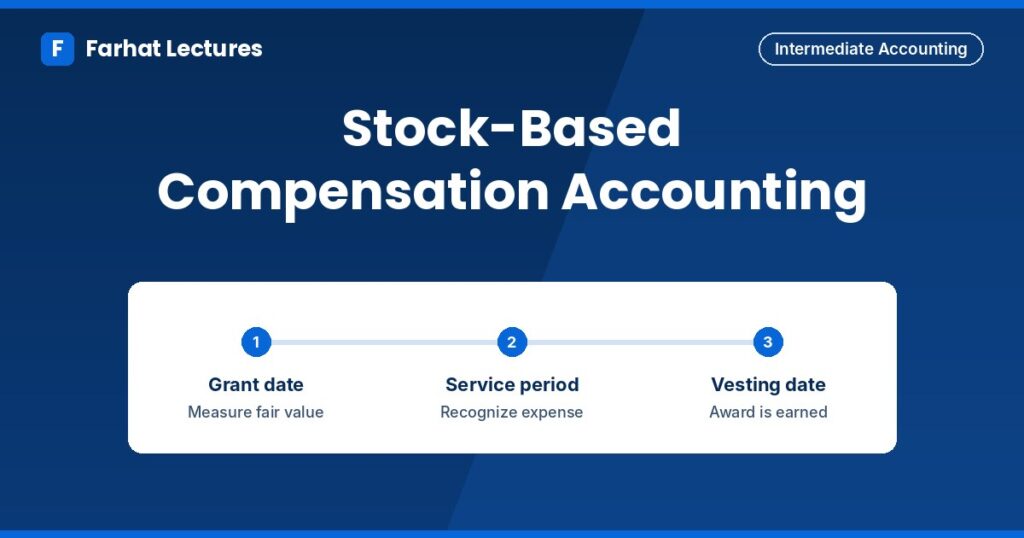
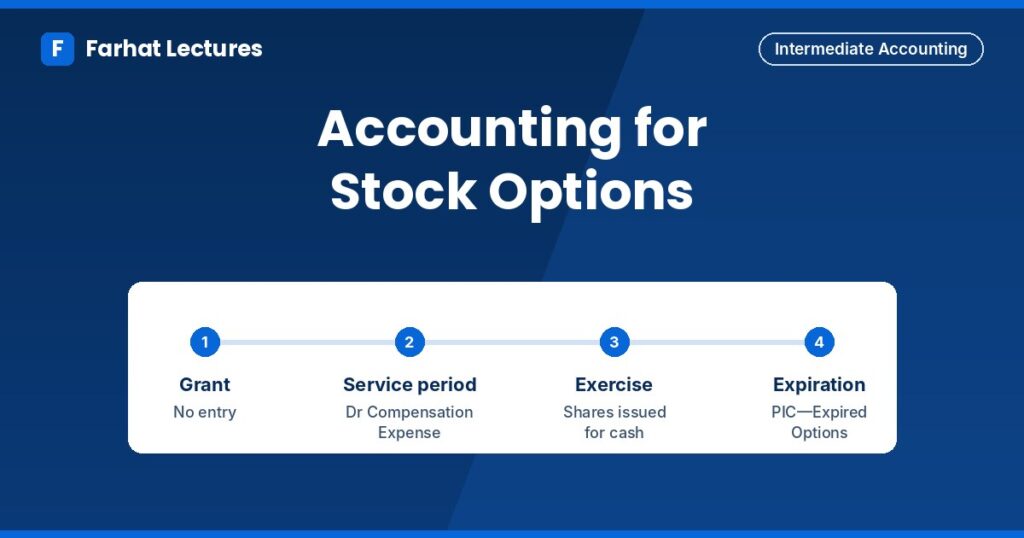
Equity-classified awards follow the same principles as accounting for stock options: measure total cost at the grant date and expense it over the required service period. The difference is that the employee does not pay an exercise price.
Restricted stock vs RSU at a glance
The table compares equity-classified awards and uses the textbook Unearned Compensation method for the restricted-stock award entries.
| Restricted-stock award (RSA) | Restricted stock unit (RSU) | |
|---|---|---|
| What the employee holds at grant | Actual shares, with restrictions | Units: a promise of future shares |
| Shares issued and outstanding at grant? | Yes, legally. But unvested shares are left out of basic EPS until they vest | No, issued at settlement |
| Grant-date entry under the textbook method | Dr Unearned Compensation; Cr Common Stock and Paid-in Capital in Excess of Par | None |
| Each year of service | Dr Compensation Expense; Cr Unearned Compensation | Dr Compensation Expense; Cr Paid-in Capital – Restricted Stock Units |
| At vesting or share settlement | No entry; restrictions lapse | Dr Paid-in Capital – Restricted Stock Units; Cr Common Stock and Paid-in Capital in Excess of Par |
| Total compensation cost | Grant-date fair value of the shares | Grant-date fair value of the shares |
Restricted stock vs RSU: taxes and shareholder rights
The accounting is only half the story. The employee’s tax treatment and rights also differ, and this is where many people, including EA and CPA REG candidates, get tripped up.
| Restricted-stock award (RSA) | Restricted stock unit (RSU) | |
|---|---|---|
| Property at grant under IRC Section 83? | Yes, actual shares are transferred | No, it is only a promise to deliver shares |
| Section 83(b) election available? | Yes, if filed within 30 days after the shares are transferred | No |
| When the employee is taxed (no election) | Ordinary income when the shares vest, equal to their fair value then, minus anything paid | Ordinary income when the shares are delivered, usually at vesting, equal to their fair value then |
| Voting and dividends before vesting | Often yes, because the employee holds actual shares (depends on the plan) | No shares are held yet; some plans pay dividend equivalents |
An 83(b) election lets a restricted stock holder report ordinary income based on the grant-date value instead of the vesting-date value. Any later growth is taxed as a capital gain when the shares are sold. The risk is that if the shares are forfeited, the employee generally gets no deduction for the income already reported.
For the employer, the tax deduction generally equals the amount the employee reports as income, taken in the year the employee reports it (IRC Section 83(h)). For equity-classified awards, book compensation is measured at grant-date fair value. The employer generally recognizes a deferred tax asset as it records book compensation for an award expected to generate a future tax deduction. When the deduction is determined, any excess tax benefit or deficiency is recognized in income tax expense or benefit. If a Section 83(b) election gives the employer a deduction before it recognizes the book expense, the employer can instead have a deferred tax liability that reverses as book expense is recognized.
Restricted-stock award journal entries
These textbook entries use Unearned Compensation to illustrate the grant, annual expense, and forfeiture of restricted shares.
Hypothetical facts: On January 1, 2027, Northgate Co. grants 2,000 shares of restricted stock to its CFO. The stock has a $1 par value and a fair value of $30 per share that day. The CFO must stay 4 years for the shares to vest. Total compensation cost is 2,000 × $30 = $60,000.
Grant date (January 1, 2027)
| Account | Debit | Credit |
|---|---|---|
| Unearned Compensation (2,000 × $30) | 60,000 | |
| Common Stock (2,000 × $1) | 2,000 | |
| Paid-in Capital in Excess of Par – Common Stock | 58,000 |
The credits show that Northgate has issued shares. The debit to Unearned Compensation (also called deferred compensation) represents the cost of services not yet performed. It is not an asset; it is a contra stockholders’ equity account, shown as a reduction in the stockholders’ equity section.
Each year-end (December 31, 2027 through 2030)
| Account | Debit | Credit |
|---|---|---|
| Compensation Expense ($60,000 ÷ 4) | 15,000 | |
| Unearned Compensation | 15,000 |
After four years, Unearned Compensation is zero and the CFO owns the shares outright. No entry is needed when the restrictions lapse.
Good to know: the Unearned Compensation method is the textbook approach, and it is what you should use on exams based on it. Under ASC 718, companies recognize compensation cost and credit additional paid-in capital as the required service is provided for an equity-classified award. When companies adopted 123(R), they reclassified existing unearned compensation balances into paid-in capital, and SEC staff questioned filers that kept the contra-equity line (example SEC comment letter response). Total equity and total expense are the same either way.
RSU journal entries
Now change one fact: Northgate grants the CFO 2,000 restricted stock units instead of shares. Each unit has a fair value of $30, equal to one share, with the same 4-year service period and $1 par value. Total cost is still $60,000.
Grant date (January 1, 2027)
No entry. Northgate has only promised to deliver shares if the CFO meets the vesting requirement; no shares are issued.
Each year-end (December 31, 2027 through 2030)
| Account | Debit | Credit |
|---|---|---|
| Compensation Expense ($60,000 ÷ 4) | 15,000 | |
| Paid-in Capital – Restricted Stock Units | 15,000 |
Vesting date (December 31, 2030)
| Account | Debit | Credit |
|---|---|---|
| Paid-in Capital – Restricted Stock Units (2,000 × $30) | 60,000 | |
| Common Stock (2,000 × $1) | 2,000 | |
| Paid-in Capital in Excess of Par – Common Stock | 58,000 |
Compare the two plans: compensation expense is $15,000 a year in both. In the textbook entries, the award records the shares at grant. The RSU example records the shares at settlement, which occurs at vesting here. For more on recording par value and excess-of-par amounts, see issuance of common stock. Want to know how these unvested shares affect the share count? Our earnings per share lesson walks through basic and diluted EPS step by step.
What happens when restricted stock or RSUs are forfeited?
Suppose the CFO resigns on March 1, 2029, before that year’s expense is recorded. Because the CFO never vested, the shares or units are forfeited and Northgate reverses the $30,000 of expense recorded for 2027 and 2028.
Restricted-stock award forfeiture
| Account | Debit | Credit |
|---|---|---|
| Common Stock (2,000 × $1) | 2,000 | |
| Paid-in Capital in Excess of Par – Common Stock | 58,000 | |
| Compensation Expense ($15,000 × 2) | 30,000 | |
| Unearned Compensation | 30,000 |
The entry removes the shares, reverses two years of expense, and clears the remaining $30,000 of Unearned Compensation.
RSU forfeiture
| Account | Debit | Credit |
|---|---|---|
| Paid-in Capital – Restricted Stock Units | 30,000 | |
| Compensation Expense | 30,000 |
Because no shares were issued, the RSU entry only reverses the expense and the related paid-in capital. Both plans end with zero net expense for the CFO.
A note on policy: for awards with service conditions, ASC 718 lets a company choose, as an entity-wide accounting policy, either to estimate forfeitures up front or to record them when they happen (ASU 2016-09). These examples record forfeitures when they happen. A company that estimates forfeitures bases compensation expense on the awards it expects to vest and adjusts cumulative expense when that estimate changes.
Why do companies use restricted stock and RSUs instead of options?
| Reason | What it means |
|---|---|
| Never completely worthless | An option is worthless if the price stays below the exercise price; restricted stock still has value. |
| Less dilution | Each restricted share carries its full value, so a company can grant fewer restricted shares than options to deliver the same value. Fewer shares are involved. |
| Better alignment | Holders think like stockholders, focused on long-term value rather than a short-term price spike. |
| RSUs: simpler and cheaper to run | Until vesting, an RSU is only an accounting entry; no shares are issued, so shares outstanding do not increase at grant. |
Companies also choose between time-based vesting and performance-based vesting. The stock-based compensation overview covers those trends.
Common mistakes
- Recording an RSU entry at grant. Units create no entry until year-end expense.
- Treating Unearned Compensation as an asset. It is contra-equity.
- Re-measuring share-settled awards for later price changes. For equity-classified awards, use grant-date fair value only. Cash-settled units are the exception: they are liabilities and are remeasured each reporting date.
- Forgetting to reverse expense on forfeiture. Unvested awards that are forfeited reverse expense recorded to date.
- Mixing up the credit account. In the textbook entries shown here, RSA expense credits Unearned Compensation and RSU expense credits Paid-in Capital – Restricted Stock Units.
Key takeaways
- A restricted stock award issues shares at grant. A share-settled RSU issues shares at settlement, which occurs at vesting in these examples.
- For the equity-classified awards in these examples, grant-date fair value drives compensation expense over the required service period.
- Textbook award entries use Unearned Compensation, a contra-equity account. RSU entries credit Paid-in Capital – Restricted Stock Units.
- Under the policy used here, the employer reverses the expense recorded for an award when the employee forfeits it by failing to complete the required service.
- Only restricted stock qualifies for a Section 83(b) tax election.
Interactive Restricted Stock and RSU Accounting Practice
For equity-classified restricted-stock awards and restricted stock units (RSUs), measure compensation at grant-date fair value and recognize it over the required service period. A restricted-stock award issues shares at grant. In the share-settled RSU examples, the company delivers shares at settlement, which occurs at vesting.
Restricted-Stock Plans: Awards, RSUs, and Vesting
Select one answer for each of the five questions on grant-date accounting, compensation expense, settlement, and forfeiture. For the restricted-stock award journal entry, use the textbook method shown above.
Practice questions with answers
1. A company grants 5,000 shares of restricted stock with a $1 par value and a $12 fair value per share. The service period is 3 years. Record the grant and the first year-end entry.
| Account | Debit | Credit |
|---|---|---|
| Unearned Compensation (5,000 × $12) | 60,000 | |
| Common Stock (5,000 × $1) | 5,000 | |
| Paid-in Capital in Excess of Par – Common Stock | 55,000 |
| Account | Debit | Credit |
|---|---|---|
| Compensation Expense ($60,000 ÷ 3) | 20,000 | |
| Unearned Compensation | 20,000 |
2. Same facts, but the company grants 5,000 RSUs instead. Record the year-end entry and the entry at vesting.
No entry is made on the grant date for the units. Here are the year-end entry and the vesting entry:
| Account | Debit | Credit |
|---|---|---|
| Compensation Expense | 20,000 | |
| Paid-in Capital – Restricted Stock Units | 20,000 |
| Account | Debit | Credit |
|---|---|---|
| Paid-in Capital – Restricted Stock Units | 60,000 | |
| Common Stock (5,000 × $1) | 5,000 | |
| Paid-in Capital in Excess of Par – Common Stock | 55,000 |
3. Under the RSU facts, the employees leave after one year of expense has been recorded and forfeit the units. Record the forfeiture.
| Account | Debit | Credit |
|---|---|---|
| Paid-in Capital – Restricted Stock Units | 20,000 | |
| Compensation Expense | 20,000 |
The company reverses the $20,000 of expense recorded so far because the employees never vested.
Frequently asked questions
Are RSUs counted as outstanding shares before they vest?
RSUs deliver shares at settlement, after any vesting conditions are met. A restricted-stock award issues shares at grant, but shares the company can take back generally stay out of the basic EPS share count until vesting. Unvested equity awards are evaluated for diluted EPS and included when dilutive. An unvested award with nonforfeitable rights to dividends or dividend equivalents is a participating security under the two-class method. See our earnings per share lesson for the full calculation.
Is Unearned Compensation an asset?
Under the textbook method, Unearned Compensation is a contra-equity account for compensation tied to future employee service. It reduces stockholders’ equity.
Why is the compensation expense the same for awards and units?
In the examples, both awards are equity-classified and have the same grant-date fair value and required service period. That is why the employer recognizes the same total compensation expense for both.
What happens if the stock price falls after the grant date?
For equity-classified awards, a later stock-price change alone does not change the grant-date measure of compensation cost. Cash-settled RSUs are liabilities, so the company remeasures them at each reporting date until settlement.
How is restricted stock different from a stock option?
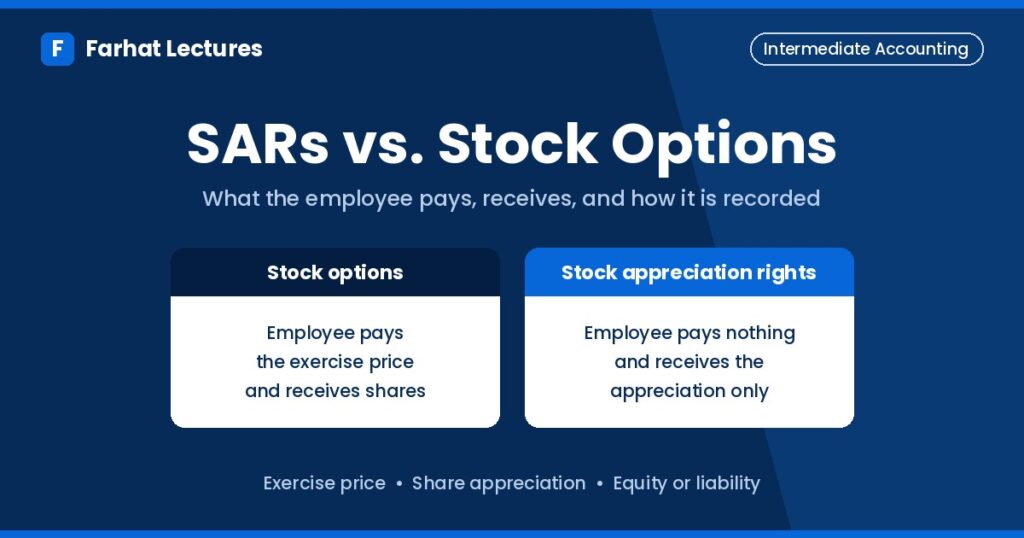
With restricted stock, the employee receives shares without paying for them, as long as vesting conditions are met. With a stock option, the employee must pay the exercise price to buy shares, and the option can end up worthless.
Can you file an 83(b) election for RSUs?
No. A Section 83(b) election is only available when property, such as restricted shares, is actually transferred to you. An RSU is just a promise to deliver shares later, so there is nothing to elect on. Restricted stock holders who want the election must file it within 30 days after the shares are transferred.
Are RSUs recorded as equity or a liability?
A share-settled RSU that meets the ASC 718 criteria for equity classification is recorded in equity. In the examples, the company credits Paid-in Capital – Restricted Stock Units as it records the expense. A cash-settled RSU is a liability and is generally remeasured at fair value each reporting date until settlement.
When does the company get a tax deduction for restricted stock or RSUs?
The deduction generally follows the employee’s taxable compensation. For a restricted-stock award without a Section 83(b) election, that is generally at vesting. A Section 83(b) election can accelerate the deduction. For a share-settled RSU, the deduction generally follows delivery of the vested shares. For an expected future deduction, any excess tax benefit or deficiency goes through income tax expense or benefit when the amount of the deduction is determined.
Sources
- FASB Accounting Standards Codification, Topic 718: Compensation—Stock Compensation
- SEC EDGAR: company response on presenting unearned compensation under SFAS 123(R)
- RSM: A guide for accounting for stock compensation
- FASB: Accounting Standards Update 2016-09, Improvements to Employee Share-Based Payment Accounting
- RSM: Section 83(b) considerations for employees receiving stock compensation
About the author: Mansour Farhat, CPA, CIA, DBA, is the instructor behind Farhat Lectures, where he teaches accounting courses and CPA, CMA, and EA exam review. Learn more about Professor Farhat.
Continue learning with Farhat Lectures
Strengthen your accounting understanding with clear explanations and guided practice.
Want the whole chapter? The Intermediate Accounting course covers dilutive securities and stock compensation from start to finish, with video lessons and practice.

Responses