
Operating Lease Journal Entries: A Lessee Example With Both Schedules

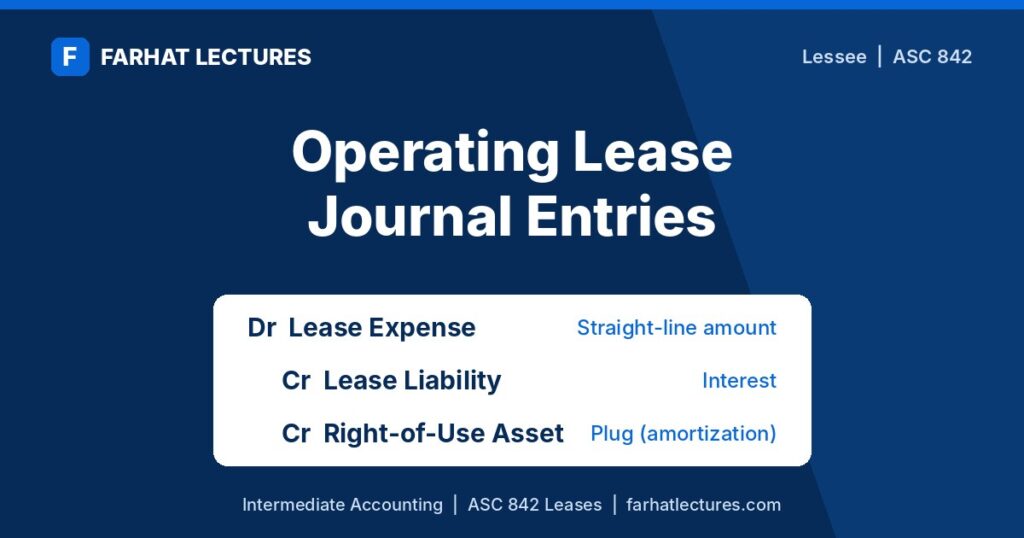
Under ASC 842, a lessee records an operating lease in three steps. At commencement, credit Lease Liability for the present value of unpaid lease payments and credit Cash for rent paid that day. In this example, debit Right-of-Use (ROU) Asset for the sum of those credits. For each subsequent payment, debit Lease Liability and credit Cash. At year-end, debit Lease Expense for the straight-line amount, credit Lease Liability for interest, and credit ROU Asset for the difference.
Why it matters: lease problems on intermediate accounting and CPA exams often give the facts and ask for every entry over the lease term. Two schedules, one for the liability and one for the expense, make those entries easy. If you need the concepts first, start with operating lease accounting for lessees.
Watch Professor Farhat: At 3:39, Professor Farhat records the lessee’s right-of-use asset and lease liability, then splits the single lease expense into interest and amortization.
Watch “Operating Lease: CPA Exam Simulation. Intermediate Accounting” on YouTube
Example facts
Hypothetical example. On January 1, 2027, Ridgeview Dental leases a digital X-ray system from Brightline Equipment Leasing.
| Item | Detail |
|---|---|
| Lease term | 4 years, non-cancelable |
| Payments | $15,000 each January 1, starting January 1, 2027 |
| Fair value of the equipment | $80,000 |
| Economic life | 8 years |
| Ownership and options | Equipment returns to Brightline; no purchase or renewal option |
| Nature of the asset | Standard equipment, not specialized; Brightline can lease it to other customers |
| Discount rate | 7% incremental borrowing rate (Brightline’s implicit rate is not known to Ridgeview) |
How do you know it is an operating lease?
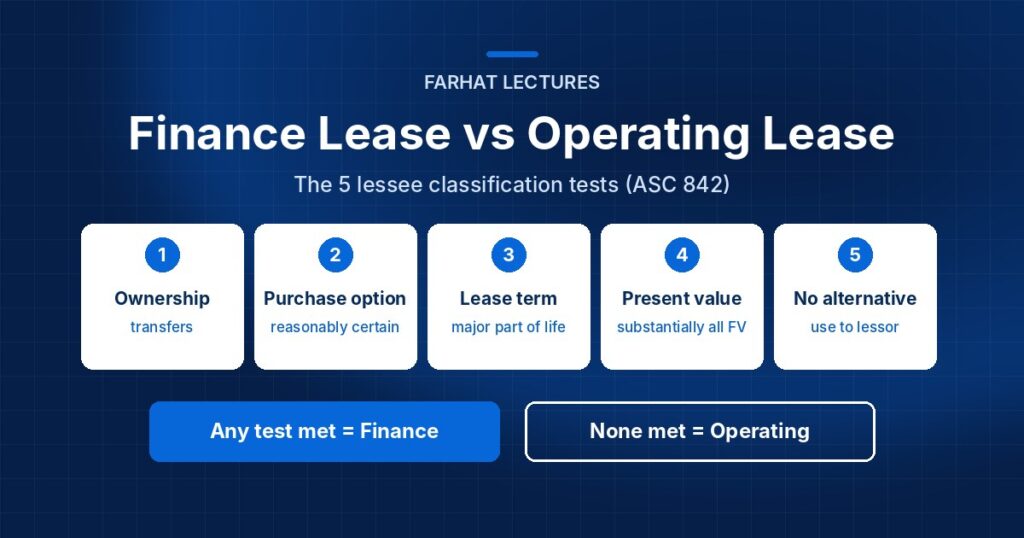
Under ASC 842-10-25-2, a lease is a finance lease if it meets any one of five tests. Ridgeview’s lease meets none of them:
- Ownership transfers to the lessee: No. The equipment goes back to Brightline.
- Purchase option the lessee is reasonably certain to exercise: No. There is no purchase option.
- Lease term is a major part of the economic life: No. 4 ÷ 8 = 50%.
- Present value of payments is substantially all of fair value: No. $54,364.74 ÷ $80,000 = 68%.
- Asset is so specialized it has no other use to the lessor: No. It is standard equipment.
ASC 842 has no bright lines, but its implementation guidance (ASC 842-10-55-2) says one reasonable approach treats 75% or more as a major part and 90% or more as substantially all. Because no test is met, Ridgeview has an operating lease. See operating lease vs. finance lease for how a finance lease would change the numbers.
How do you measure the lease liability?
Ridgeview discounts the payments at its 7% incremental borrowing rate. That is the rate it would pay to borrow a similar amount, on a secured basis, over a similar term. Under ASC 842-20-30-3, a lessee uses the rate implicit in the lease when it is readily determinable and its incremental borrowing rate when it is not.
All four $15,000 payments are due at the beginning of a lease year. Their combined present value is $15,000 × 3.624316 = $54,364.74. This annuity-due amount includes the $15,000 Ridgeview pays at commencement.
Under ASC 842-20-30-1, the initial lease liability includes only the three unpaid payments. Their present value is $54,364.74 − $15,000 = $39,364.74. Under ASC 842-20-30-5, the commencement payment forms part of the ROU asset’s cost. With no other adjustments, Ridgeview records an ROU asset of $39,364.74 + $15,000 = $54,364.74.
Schedule 1: lease liability
The first row shows the cash paid at commencement and the opening liability for the three unpaid installments. Interest accrues at 7% on the outstanding balance. The three subsequent payments retire $39,364.74 of principal.
| Date | Payment | Interest (7%) | Reduction of liability | Lease liability |
|---|---|---|---|---|
| 1/1/2027 (commencement) | $15,000.00 | $0.00 | $0.00 | $39,364.74 |
| 1/1/2028 | $15,000.00 | $2,755.53 | $12,244.47 | $27,120.27 |
| 1/1/2029 | $15,000.00 | $1,898.42 | $13,101.58 | $14,018.69 |
| 1/1/2030 | $15,000.00 | $981.31 | $14,018.69 | $0.00 |
| Total | $60,000.00 | $5,635.26 | $39,364.74 |
Schedule 2: lease expense
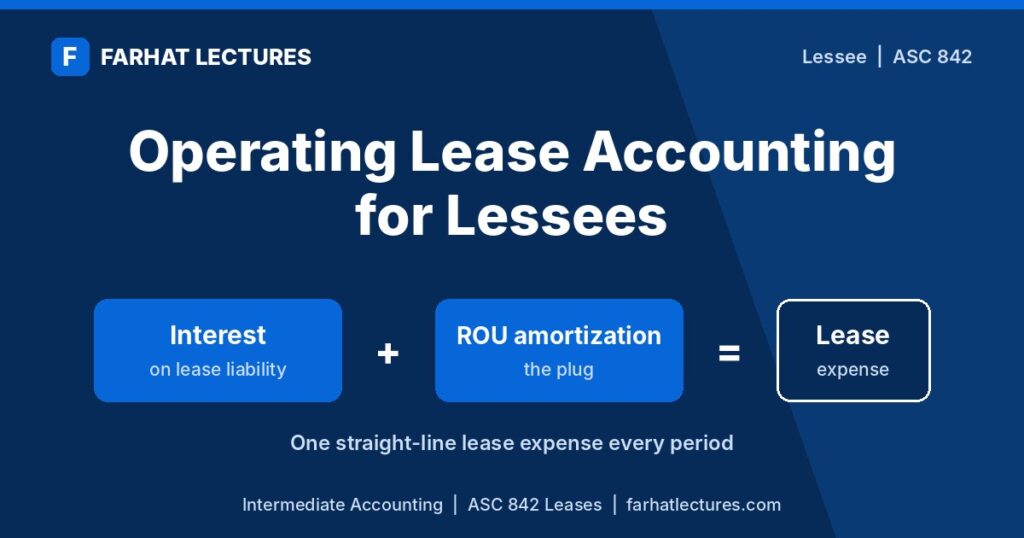
Straight-line lease expense = $60,000 ÷ 4 = $15,000. ROU amortization = $15,000 − interest for the year.
| Year ended | Lease expense | Interest | ROU amortization | ROU asset, Dec. 31 |
|---|---|---|---|---|
| Start | $54,364.74 | |||
| 12/31/2027 | $15,000.00 | $2,755.53 | $12,244.47 | $42,120.27 |
| 12/31/2028 | $15,000.00 | $1,898.42 | $13,101.58 | $29,018.69 |
| 12/31/2029 | $15,000.00 | $981.31 | $14,018.69 | $15,000.00 |
| 12/31/2030 | $15,000.00 | $0.00 | $15,000.00 | $0.00 |
| Total | $60,000.00 | $5,635.26 | $54,364.74 |
At each year-end, the ROU asset equals the lease liability after accruing interest. For example, at December 31, 2027, the liability is $39,364.74 + $2,755.53 = $42,120.27, the same as the ROU asset.
What are the operating lease journal entries for each year?
| Date | Account | Debit | Credit |
|---|---|---|---|
| 1/1/2027 | Right-of-Use Asset | $54,364.74 | |
| Lease Liability | $39,364.74 | ||
| Cash | $15,000.00 | ||
| 12/31/2027 | Lease Expense | $15,000.00 | |
| Right-of-Use Asset | $12,244.47 | ||
| Lease Liability | $2,755.53 | ||
| 1/1/2028 | Lease Liability | $15,000.00 | |
| Cash | $15,000.00 | ||
| 12/31/2028 | Lease Expense | $15,000.00 | |
| Right-of-Use Asset | $13,101.58 | ||
| Lease Liability | $1,898.42 | ||
| 1/1/2029 | Lease Liability | $15,000.00 | |
| Cash | $15,000.00 | ||
| 12/31/2029 | Lease Expense | $15,000.00 | |
| Right-of-Use Asset | $14,018.69 | ||
| Lease Liability | $981.31 | ||
| 1/1/2030 | Lease Liability | $15,000.00 | |
| Cash | $15,000.00 | ||
| 12/31/2030 | Lease Expense | $15,000.00 | |
| Right-of-Use Asset | $15,000.00 |
Each year-end entry produces one $15,000 lease expense. Each January 1 payment after commencement settles the interest accrued the previous December and reduces the outstanding principal.
Common mistakes
- Charging interest on the first payment. The commencement payment is part of the ROU asset’s cost. Interest begins accruing on the $39,364.74 liability for the unpaid installments.
- Crediting Cash in the year-end entry. Here, cash moves on January 1. The December 31 entry only records lease expense.
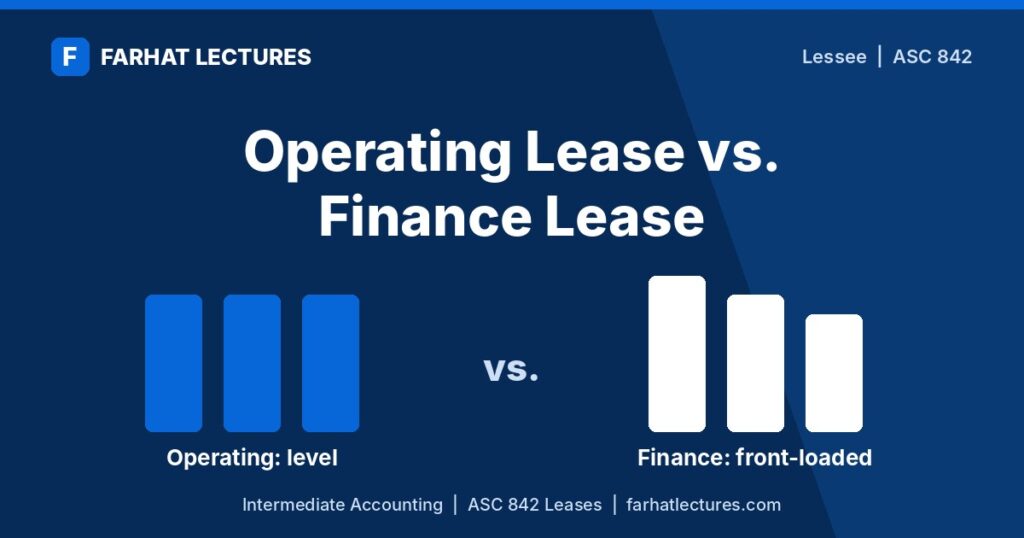
- Debiting Interest Expense. For an operating lease, interest is part of Lease Expense.
- Forgetting the final year. The 2030 expense is still $15,000, all of it ROU amortization.
Practice questions with answers
Question 1: Commencement amount
A three-year operating lease requires $12,000 payments each January 1, starting at commencement. The discount rate is 6%, and the annuity due factor is 2.833393. What are the initial ROU asset and lease liability after the commencement payment? Assume no initial direct costs or lease incentives.
Answer: $12,000 × 2.833393 = $34,000.72. Debit Right-of-Use Asset for $34,000.72. Credit Cash for the $12,000 paid at commencement and credit Lease Liability for the remaining $22,000.72. Using the unrounded factor gives an ROU asset of $34,000.71. On the exam, use the factor the question gives you.
Question 2: First year-end entry
Continue Question 1. After the first payment, what is the December 31 entry for year 1?
Answer: The liability after the first payment is $22,000.72. Interest = 6% × $22,000.72 = $1,320.04. Debit Lease Expense $12,000.00; credit Lease Liability $1,320.04 and Right-of-Use Asset $10,679.96.
Question 3: Year-end balances
Using Questions 1 and 2, what are the ROU asset and lease liability at the end of year 1?
Answer: ROU asset = $34,000.72 − $10,679.96 = $23,320.76. Lease liability = $22,000.72 + $1,320.04 = $23,320.76.
Operating Lease Journal Entries for Lessors (Interactive Practice)
Switch to the lessor’s perspective for a separate operating lease example. A lessor defers rent collected in advance, recognizes lease revenue as it is earned, and depreciates the equipment it continues to carry on its balance sheet. Use the Riverton Automation facts to choose the debit and credit accounts and enter the amount for each first-year transaction. Round amounts to the nearest cent where needed.
Here is the pattern the lessor follows, before you try the numbers:
| Event | Debit | Credit |
|---|---|---|
| Rent received in advance | Cash | Unearned Lease Revenue |
| Rent earned over the year (straight-line) | Unearned Lease Revenue | Lease Revenue |
| Year-end depreciation | Depreciation Expense | Accumulated Depreciation – Equipment |
Unlike the lessee, the lessor records no lease liability and no ROU asset. It keeps the equipment on its own balance sheet and depreciates it. For the full walkthrough, see lessor accounting for operating leases.
Frequently asked questions
Why is there no interest on the first operating lease payment?
When the first payment is due on the commencement date, no time has passed, so no interest has built up. The commencement payment is included in the ROU asset’s cost, and the opening lease liability covers the remaining unpaid installments.
Which account is credited for interest in an operating lease entry?
Lease Liability. The interest portion of lease expense increases the liability, and the next payment reduces it.
Why does the last year’s entry credit only the ROU asset?
With payments at the start of each year, the liability is fully paid on the last payment date. No interest remains, so the whole straight-line expense is amortization of the right-of-use asset.
Do the ROU asset and lease liability always have the same balance?
In a simple lease with equal payments and no initial direct costs, prepaid rent, or incentives, the two balances match at each year-end, as in this example. Once those adjustments exist, the balances can differ.
Where do operating lease payments go on the statement of cash flows?
For Ridgeview, the operating lease payments are operating cash outflows. Under ASC 842-20-45-5, any portion of an operating lease payment that represents a cost of bringing another asset to the condition and location necessary for its intended use is an investing cash outflow. For a finance lease, principal repayments are financing cash outflows.
Do short-term leases need these journal entries?
Not if the lessee elects the short-term lease exemption. A short-term lease has a term of 12 months or less and no purchase option the lessee is reasonably certain to exercise. With this election, made by class of underlying asset, the lessee records no ROU asset or lease liability and simply expenses the payments on a straight-line basis.
Can a private company use a different discount rate?
Yes. A lessee that is not a public business entity can elect, by class of underlying asset, to use a risk-free rate instead of its incremental borrowing rate (ASU 2021-09). If the rate implicit in the lease is readily determinable, it must use that rate instead.
Do operating leases exist for lessees under IFRS 16?
No. IFRS 16 uses a single lessee model, so a lessee records depreciation on the right-of-use asset and interest on the lease liability for almost every lease. The main exceptions are optional exemptions for short-term leases and leases of low-value assets. The operating lease entries on this page are a US GAAP (ASC 842) concept.
Sources: FASB Accounting Standards Codification, Topic 842 (Leases), including ASC 842-10-25-2 (lease classification), ASC 842-10-55-2 (classification guidance), ASC 842-20-30-1 and 842-20-30-5 (initial measurement), ASC 842-20-30-3 (discount rate), ASC 842-20-25-6 (single lease cost), ASC 842-20-35-3 (subsequent measurement), and ASC 842-20-45-5 (cash flow presentation); Deloitte Roadmap: Leases, 8.4 Recognition and Measurement; KPMG, ASC 842 for lessees.
Continue learning with Farhat Lectures
Strengthen your lease accounting skills with clear explanations and guided practice.
Explore the free sample course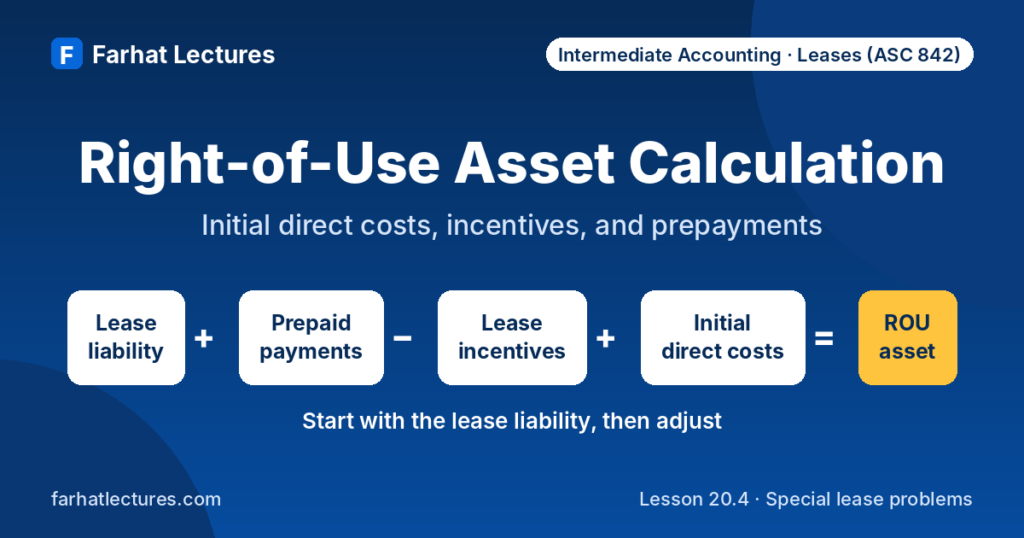
Responses