
Goodwill Accounting: A Simple Guide with Journal Entries

Goodwill accounting records the amount a buyer pays for a business above the fair value of its identifiable net assets (identifiable assets minus liabilities assumed). Goodwill arises only in a business acquisition, never from a company’s own reputation. Public companies report it as a separate asset, do not amortize it, and test it for impairment at least annually.
Here’s the quick formula: Goodwill = Purchase price minus fair value of identifiable net assets.
This guide follows U.S. generally accepted accounting principles (GAAP) set by the Financial Accounting Standards Board (FASB), mainly Accounting Standards Codification (ASC) Topic 805 for acquisitions and Topic 350 for goodwill. It’s written for accounting students and CPA candidates. On the CPA exam, business combinations and goodwill are a core topic in the Business Analysis and Reporting (BAR) section. All examples and practice questions are hypothetical.
Video lesson with Professor Farhat
Prefer to learn by watching? In this video, Professor Farhat explains what goodwill is in plain language. Watch it first, then work through the original calculation and journal entry below.
What does goodwill represent?
A business may be worth more as an operating whole than the separately identifiable resources it owns. Buyers may expect benefits from an assembled workforce, operating relationships, or combining activities. Goodwill captures the remaining acquisition value that is not assigned to separately recognized assets.
Identifiable net assets means identifiable assets minus liabilities assumed. Include both tangible assets, such as equipment, and qualifying intangible assets, such as patents. Goodwill is a residual: calculate it after completing those measurements, not by assigning a guessed value to reputation.
What makes an asset “identifiable”?
Under ASC 805, an intangible asset is identifiable if it passes either of two tests:
- Separable: it can be sold, licensed, or transferred on its own, like a customer list.
- Contractual-legal: it comes from a contract or legal right, like a patent, trademark, or franchise agreement, even if it can’t be sold separately.
If an item fails both tests, its value stays inside goodwill. The classic example is an assembled workforce. A trained, skilled team is valuable, but it is not recognized as a separate intangible asset, so its value becomes part of goodwill.
Purchased versus internally created goodwill
| Situation | Treatment | Reason |
|---|---|---|
| A company builds customer loyalty through its own operations | Do not recognize internally generated goodwill | A management estimate of reputation is not an acquired goodwill asset. |
| A buyer acquires an identifiable patent in a business combination | Recognize the patent separately when it meets the requirements | An identifiable intangible is not automatically goodwill. |
| A buyer pays more than the recognized identifiable net assets of a business | Recognize the residual as purchased goodwill | The acquisition provides the basis for measuring the residual. |
The seller may have expensed the costs of developing a customer-related asset. That does not prevent the buyer from recognizing a qualifying acquired intangible separately. The buyer must investigate what was acquired, including items absent from the seller’s balance sheet.
Calculate goodwill using fair values
Goodwill = purchase price − (fair value of identifiable assets − fair value of liabilities assumed). This simplified goodwill accounting formula assumes a 100% acquisition with no previously held ownership interest. Partial and staged acquisitions require additional terms and are outside this lesson.
Hypothetical example. Harbor Services buys the operating business of Summit Repairs for $620,000 cash. The following acquisition-date amounts are given. Assume no tax effects or special measurement exceptions.
| Item | Amount |
|---|---|
| Cash | $30,000 |
| Accounts receivable | 70,000 |
| Inventory | 110,000 |
| Equipment | 360,000 |
| Identifiable customer-related intangible | 80,000 |
| Total identifiable assets | $650,000 |
| Less: liabilities assumed | (170,000) |
| Identifiable net assets | $480,000 |
| Purchase price | $620,000 |
| Goodwill: $620,000 − $480,000 | $140,000 |
Suppose the seller’s recorded net assets were only $390,000. Subtracting that amount from the price would incorrectly produce $230,000 of goodwill. The $90,000 difference belongs to the acquisition-date adjustments to identifiable net assets, not to goodwill.
New to fair value? Our guides on historical cost vs. fair value and fair value Levels 1, 2, and 3 explain where acquisition-date numbers like these come from.
Exam trap: acquisition costs are not part of the price. Legal, accounting, valuation, and other advisory fees the buyer pays to complete the deal are expensed as incurred. They do not increase the purchase price or goodwill. For example, if Harbor also paid $25,000 in legal and valuation fees, goodwill would still be $140,000, and Harbor would record $25,000 of expense. Costs to issue debt or equity securities follow separate rules.
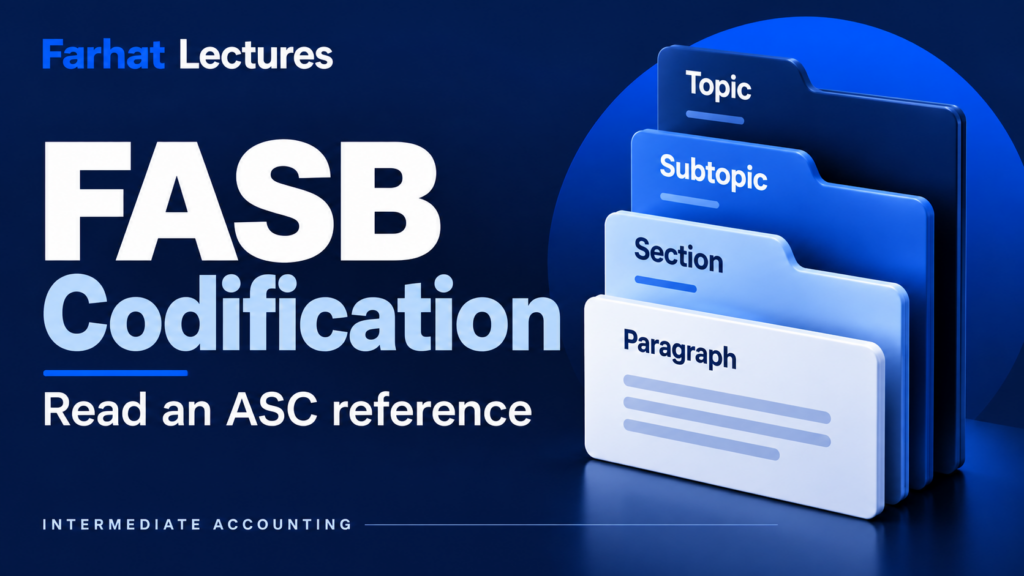
The historical foundation of these principles is FASB Statement 141(R): paragraphs 12 and 13 (recognition), paragraph 20 (fair value measurement), and paragraph 34 (goodwill). Today, the authoritative guidance is in the FASB Accounting Standards Codification: ASC 805-20 covers recognizing and measuring the identifiable assets and liabilities, and ASC 805-30 covers goodwill.
Record the goodwill journal entry
Assume Harbor acquires Summit’s business assets and assumes its liabilities directly, so the following entry records them on Harbor’s books. A purchase of shares in a continuing subsidiary involves separate investment and consolidation accounting.
| Account | Debit | Credit |
|---|---|---|
| Cash acquired | $30,000 | — |
| Accounts receivable | 70,000 | — |
| Inventory | 110,000 | — |
| Equipment | 360,000 | — |
| Customer-related intangible | 80,000 | — |
| Goodwill | 140,000 | — |
| Liabilities assumed | — | $170,000 |
| Cash paid | — | 620,000 |
| Totals | $790,000 | $790,000 |
The acquired cash and the cash paid are separate facts. Recording both makes the entry easier to check. The seller’s common stock and retained earnings do not become extra acquired assets in this direct acquisition entry.
If part of the price is a note issued to the seller, include the note’s acquisition-date fair value in consideration. For example, $540,000 cash plus an $80,000 note measured at fair value still gives a $620,000 price. Do not confuse this new purchase-price obligation with liabilities already owed by the acquired business.
Want more practice like this? Try the free first chapter of our Intermediate Accounting course. Ready for consolidations and more complex acquisitions? Those topics continue in our Advanced Accounting course.
Where does goodwill appear on the balance sheet?
Goodwill is reported as its own line item among the noncurrent assets on the balance sheet. Under the general model, goodwill is not amortized. Instead, it is tested for impairment at the reporting unit level at least once a year, and between annual tests when events or changes in circumstances make it more likely than not that the reporting unit’s fair value is below its carrying amount (ASC 350-20-35-30). A separately recognized intangible with a finite life is amortized over its useful life. Our goodwill impairment guide explains subsequent write-downs and reporting.
If the price is below identifiable net assets, do not record negative goodwill. Reassess the measurements and follow the bargain purchase gain calculation.
Do private companies amortize goodwill?
They can. Private companies and not-for-profit entities may elect an accounting alternative that lets them amortize goodwill on a straight-line basis over 10 years, or less if a shorter life is more appropriate. Entities that elect it test goodwill for impairment only when a triggering event occurs. Public business entities cannot use this alternative.
How is goodwill treated for tax purposes?
Tax rules differ from GAAP. Under Internal Revenue Code (IRC) Section 197, goodwill acquired in a purchase of business assets is amortized straight-line over 15 years (180 months) for federal income tax purposes, starting in the later of the acquisition month or the month the trade or business begins. A purchase of stock generally does not create tax-deductible goodwill unless a special tax election applies. Goodwill a business builds on its own is generally not amortizable. When acquired goodwill has an amortizable tax basis under Section 197, tax amortization and the general GAAP treatment of goodwill can create temporary differences that affect deferred tax accounting.
Common goodwill accounting mistakes
Watch out for these common mistakes on homework and exam questions:
- Using the seller’s book values instead of acquisition-date fair values.
- Forgetting to subtract the liabilities assumed.
- Leaving an identifiable intangible, such as a patent or customer list, inside goodwill.
- Adding legal or advisory fees to the purchase price instead of expensing them.
- Recording a company’s own reputation as goodwill.
- Amortizing goodwill for a public company.
A useful check is to ask: Have I identified the assets, deducted the liabilities, and included the complete purchase price? Only then calculate the residual.
Key takeaways
- Goodwill = purchase price minus the fair value of identifiable net assets (for a 100% acquisition with no prior ownership interest).
- Only purchased goodwill is recorded. Internally created goodwill never is.
- Measure identifiable assets and liabilities at acquisition-date fair value, not the seller’s book values.
- Recognize identifiable intangibles (separable or contractual-legal) apart from goodwill.
- Acquisition costs are expensed, not added to goodwill.
- Public companies do not amortize goodwill; they test it for impairment at least annually. Private companies may elect to amortize it over 10 years or less.
- If the price is below identifiable net assets, recognize a bargain purchase gain, not negative goodwill.
Interactive goodwill accounting practice
For a 100% acquisition with no prior ownership interest, calculate goodwill by subtracting the acquisition-date fair value of identifiable net assets from the purchase price. Try these two questions before reviewing the worked practice below.
Practice questions with explained answers
1. A business costs $740,000. Identifiable assets have fair value of $880,000 and assumed liabilities are $260,000. What is goodwill?
Answer: $120,000. Net assets are $880,000 − $260,000 = $620,000. Subtract $620,000 from the $740,000 price.
2. A company estimates its own excellent reputation is worth $200,000. Can it debit Goodwill?
Answer: No. Internally created goodwill is not recognized merely because management estimates a value. An acquisition residual is different from an internal reputation estimate.
3. A newly identified acquired patent has a $30,000 fair value. All other amounts stay unchanged. What happens to calculated goodwill?
Answer: Goodwill decreases by $30,000. Recognizing the patent increases identifiable net assets by the same amount; the fixed purchase price has not changed.
Frequently asked questions
Is goodwill the same as a trademark?
Answer: No. A qualifying acquired trademark is separately identifiable. Goodwill is the remaining amount after identifiable assets and liabilities are recognized.
Does goodwill prove the buyer overpaid?
Answer: No. It can reflect expected benefits beyond separately identified assets. Whether the acquisition succeeds is a separate economic question.
Is goodwill always amortized over a fixed number of years?
Answer: No. Under U.S. GAAP, public companies do not amortize goodwill; they test it for impairment at least once a year. Private companies and not-for-profit entities may elect to amortize goodwill on a straight-line basis over 10 years or less. For federal income tax purposes, goodwill acquired in a purchase of business assets is amortized over 15 years.
Do acquisition costs increase goodwill?
Answer: No. Legal, accounting, valuation, and other advisory fees paid to complete an acquisition are expensed as incurred under ASC 805. They are not part of the purchase price, so they do not change goodwill.
Is goodwill a current or noncurrent asset?
Answer: Noncurrent. Goodwill is reported as its own line item among the noncurrent assets on the balance sheet, separate from other intangible assets.
Is goodwill amortized under IFRS?
Answer: No. Under full IFRS Accounting Standards, goodwill is not amortized. IAS 36, Impairment of Assets, requires it to be tested for impairment at least annually.
Is the FASB changing goodwill accounting?
Answer: In July 2026, the FASB added a project to its technical agenda to consider targeted improvements to goodwill impairment testing. On November 11, 2026, the Board voted to remove the project from its agenda, as reported by Bloomberg Law. The project did not result in a new standard. The accounting requirements described in this guide continue to apply.
Sources and lesson context
This original article supports Wiley Intermediate Accounting, section 11.3: Goodwill. The section’s explanations, tables, illustrations, and worked solutions were reviewed. Examples here are newly created. Consult ASC 805 for acquisition accounting and ASC 350 for goodwill; the linked FASB Statement is historical background rather than the current authoritative Codification.
Continue learning: Intermediate Accounting course · Advanced Accounting course · Farhat Lectures free sample course.
About the author: Mansour Farhat, CPA, CIA, DBA, teaches accounting and CPA, CMA, and EA exam preparation at Farhat Lectures. Last updated: November 14, 2026.


Responses