
Materiality in Accounting: Simple Examples and Judgment

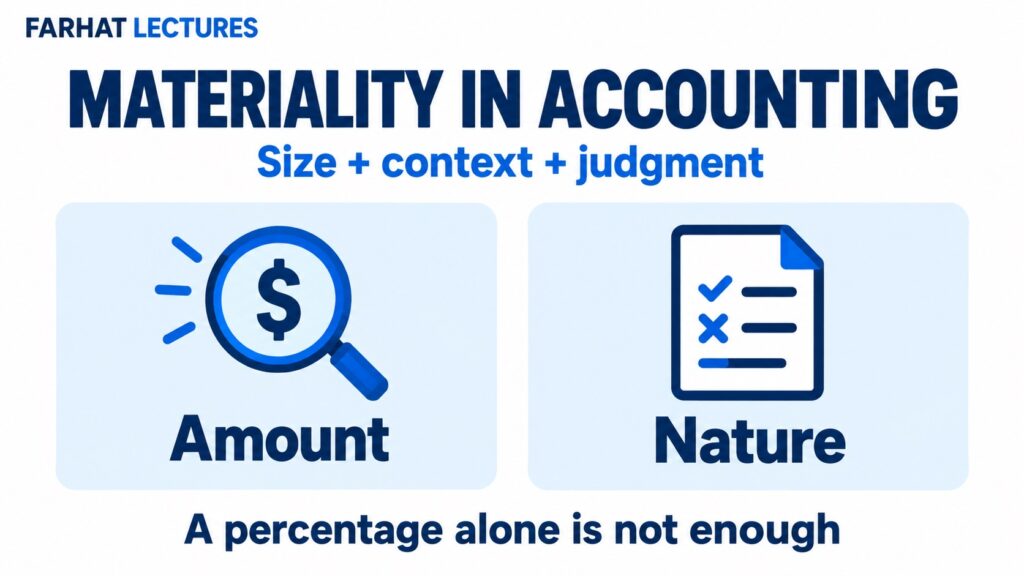
Materiality in accounting means an omission or misstatement is material when it is probable that a reasonable person relying on the financial report would have been influenced by its inclusion or correction. The FASB conceptual framework and SEC Staff Accounting Bulletin No. 99 both use this test, which weighs the item’s amount, its nature, and the entity’s circumstances.
A percentage can start the analysis, but it cannot finish it. Financial reporting should communicate information that affects decisions. Treating every tiny detail as equally important can distract readers, while overlooking a significant omission can mislead them.
Materiality in accounting at a glance
- Definition: an omission or misstatement is material if it would probably influence a reasonable person relying on the report (FASB Concepts Statement No. 8, Chapter 3; SEC Staff Accounting Bulletin No. 99).
- It is entity specific: the same $6,000 can be trivial for one company and decisive for another.
- Amount, nature, and circumstances all count: a small item that flips a loss to a profit, triggers a bonus, or hides an unlawful payment can be material.
- The 5% figure is a screening tool, not a rule.
Watch: Materiality in accounting
Watch Professor Farhat explain materiality within the FASB conceptual framework. The player starts at 9:34, where the materiality discussion begins in FASB Qualitative Characteristics: Relevance & Faithful Representation. The materiality segment runs to 10:48, so it takes under two minutes; the full lecture covers all of the qualitative characteristics and the cost constraint.
Watch the materiality section on YouTube (9:34) · Watch the full lecture
Connect the video to the examples below: The dollar amount in the lecture is an illustration, not a universal cutoff. As you work through Atlas and Brook, consider both relative size and the circumstances that could make a smaller item significant.
What does materiality in accounting mean?
Materiality is entity specific. You evaluate an item in the context of the company and the report that users actually rely on. The same dollar amount can carry different significance for a small business and a much larger business.
It also covers more than whether a number was recorded. A missing explanation, a misleading classification, or a wrong amount can all change the message a report sends. The question to ask is what a reader of the statements would conclude, not just whether the books balance.
The Financial Accounting Standards Board (FASB) sets out this definition in Concepts Statement No. 8, Chapter 3, Qualitative Characteristics of Useful Financial Information, paragraph QC11, as amended in August 2018. That amendment restored the wording already used by the SEC, the Public Company Accounting Oversight Board (PCAOB), the American Institute of CPAs (AICPA), and U.S. courts. The same paragraph separates this entity-specific test from the broader idea of relevance. Our qualitative characteristics guide shows where materiality sits among the qualitative characteristics.
Quantitative factors: put the amount in context
Quantitative factors are about size: how large the item is compared with a relevant base such as income, sales, or total assets.
Hypothetical example 1: An expense of $6,000 is missing from each of two companies’ reports. Atlas has $300,000 of income before correcting the error. Brook has $20,000.
| Comparison | Atlas | Brook |
|---|---|---|
| Income before correction | $300,000 | $20,000 |
| Omitted expense | $6,000 | $6,000 |
| Expense ÷ stated income | 2% | 30% |
| Income after correction | $294,000 | $14,000 |
The identical error changes Brook’s reported performance much more in relative terms. That makes it an especially strong concern. However, the 2% result does not prove the error is immaterial for Atlas. We still need to examine the nature and circumstances.
For a classroom calculation, state your denominator. Here it is income before correction. Do not silently switch between sales, income, and assets and then compare the resulting percentages as if they measured the same relationship.
Qualitative factors: why a small item may matter
Qualitative factors are about nature and circumstances: what the item does to the story the statements tell, regardless of its size.
Hypothetical example 2: A company with $400,000 of sales reports a $1,200 profit but has omitted a $1,700 expense. Correcting it creates a $500 loss. The expense is less than half a percent of sales, yet the report changes from profitable to unprofitable.
Hypothetical example 3: A manager receives a bonus only if income reaches $100,000. Income is actually $99,200, but a $1,000 overstatement lifts reported income above the bonus threshold. The connection to compensation is important context when evaluating the error.
Other warning signs include concealing an unlawful payment or masking a change in an earnings trend. These features explain why accounting judgment cannot be reduced to one universal dollar amount.
Is 5% the materiality threshold in accounting?
The Securities and Exchange Commission (SEC) staff addressed this in Staff Accounting Bulletin No. 99, Materiality, issued in August 1999 and now found in SAB Topic 1.M. The staff said that relying only on a percentage has no basis in the accounting literature or the law. A rule of thumb such as 5% can be an initial step, but an amount below it is not automatically immaterial. The bulletin’s own fact pattern is a 4% overstatement of net income that management wanted to leave uncorrected because nothing was misstated by more than 5%. The staff’s answer was no.
SAB 99 lists circumstances that can make a quantitatively small misstatement material, including masking a change in earnings trends, hiding a failure to meet analysts’ expectations, turning a loss into income or income into a loss, affecting compliance with loan covenants or regulatory requirements, increasing management bonuses, and concealing an unlawful transaction. It also warns that an intentional misstatement is never safe just because it is small.
When a problem withholds important context, identify the missing facts and explain how they could affect the materiality assessment. A small percentage supports analysis but does not establish a final conclusion.
What materiality thresholds do accountants actually use?
GAAP does not establish a universal numerical materiality threshold. A quantitative assessment compares an item with a relevant benchmark, such as income, revenue, total assets, equity, or an affected line item. The benchmark must fit the entity and the information being assessed.
When income is unusually low or volatile, a percentage of income may be misleading. Explain the benchmark selected and assess qualitative factors before reaching a conclusion. The same percentage cannot be transferred automatically between companies.
How do you determine materiality? A 5-step approach
- Identify the information problem. What amount, classification, or explanation is wrong or missing?
- Measure relative size. Compare it with a relevant figure and show the calculation.
- Examine its nature. Does it change the story of performance or affect an important threshold?
- Connect it to a user’s judgment. Explain why the inclusion or correction could matter.
- Assess aggregation and conclude. Evaluate misstatements individually and together with other misstatements. Explain the combined quantitative and qualitative effects before giving a reasoned conclusion.
This approach is a study tool, not a new accounting standard. The lesson’s goal is to recognize how quantitative and qualitative information work together. Audit planning uses the same definition in layers, which is covered in the auditing section below and in our AUD lesson on materiality.
Materiality also does not mean “an error is acceptable if nobody notices.” Deliberately shaping figures to reach a desired result conflicts with neutral reporting. The point is to evaluate significance honestly, not create a tolerance for manipulation.
How is materiality different from relevance and the cost constraint?
Relevance asks whether a type of information can affect decisions. Materiality applies that concern to an entity’s facts. The cost constraint asks whether information’s benefits justify the costs of providing and using it.
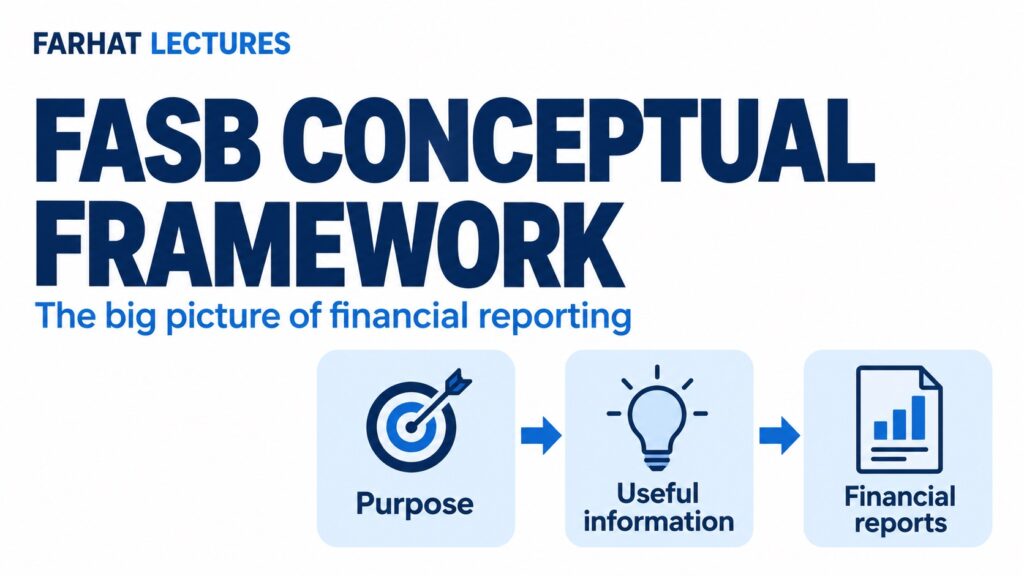
For example, saying “the system is expensive to operate” does not establish that omitted information is immaterial. Cost and decision significance are different questions. Review the FASB conceptual framework overview to see how both fit into useful reporting.
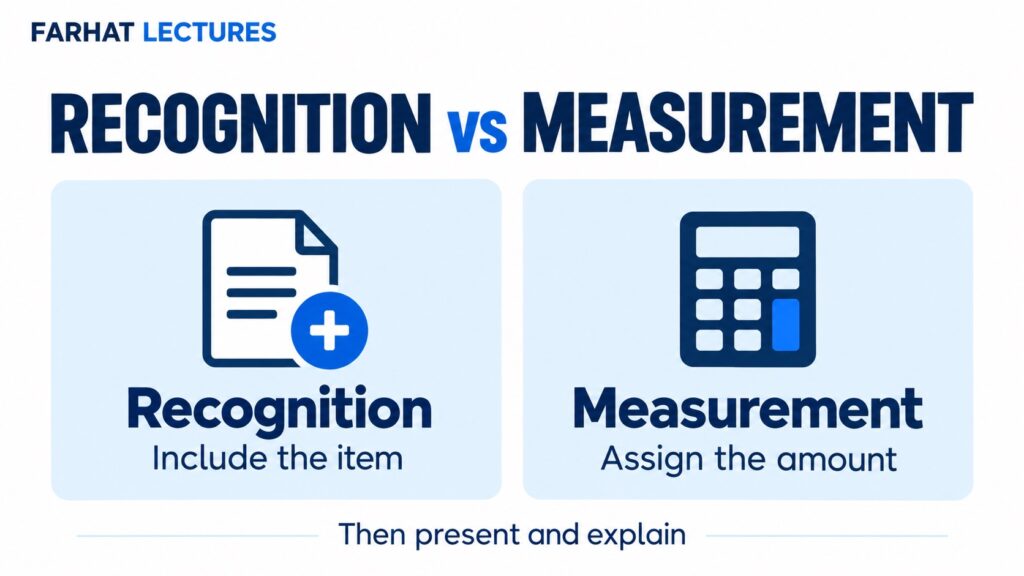
Do not assume that a footnote cures every problem either. If an amount must be recognized under the applicable standards, merely discussing it in a note is not a substitute. The distinction is explained in recognition versus measurement and disclosure.
Is materiality the same under IFRS and US GAAP?
Both frameworks focus on information that matters to financial statement users, but their definitions are not identical. The FASB definition considers whether an omission or misstatement would probably influence the judgment of a reasonable person relying on the report, in light of surrounding circumstances.
Under IFRS, information is material if omitting, misstating, or obscuring it could reasonably be expected to influence decisions of primary users based on the financial statements of a specific reporting entity. Obscuring includes presenting important information in a way that makes it difficult for users to identify.
For both frameworks, assess the item’s nature, magnitude, and context. Under US GAAP, ASC 105-10-05-6 states that Codification provisions need not be applied to immaterial items; this does not remove the need to assess items individually and in aggregate.
How do auditors apply materiality?
Auditors establish materiality for the financial statements as a whole using professional judgment. This amount supports audit planning and the evaluation of identified misstatements; it is not a precise boundary below which every error is acceptable.
| Concept | Application |
|---|---|
| Overall materiality | An amount established for the financial statements as a whole, considering users’ information needs, relevant benchmarks, and qualitative factors. |
| AICPA performance materiality | Under AU-C section 320, an amount or amounts below overall materiality intended to reduce the probability that aggregate uncorrected and undetected misstatements exceed overall materiality to an appropriately low level. |
| PCAOB tolerable misstatement | Under AS 2105, an amount below financial statement materiality used at the account or disclosure level to plan and perform audit procedures, considering aggregation risk. |
| Clearly trivial misstatements | Auditors may establish an amount below which misstatements need not be accumulated. Clearly trivial is not another expression for immaterial; nature and circumstances also matter. |
These concepts do not prescribe universal percentages. For a fuller treatment, see our lesson on materiality in auditing.
Review your reasoning. A complete answer considers both relative size and qualitative factors. The free sample course works through more conceptual framework problems with Professor Farhat, and the full FAR course covers every topic in this area with lectures, quizzes, and practice exams.
Practice questions with explanations
1. An error is 3% of income. Is that enough to call it immaterial?
Answer: No. Relative size is evidence, not a complete conclusion. Its nature and the surrounding circumstances may make it important.
2. A $900 correction turns a $600 profit into a loss. What qualitative concern exists?
Answer: It changes the direction of reported performance. After correction the company has a $300 loss, which may affect a user’s interpretation.
3. A student compares a $4,000 error with $80,000 income. What is the percentage and next step?
Answer: 5%. Calculate $4,000 ÷ $80,000. Then examine context and explain its likely effect on users; do not stop at the percentage.
Common exam traps on materiality
- “Below 5%, so immaterial.” Exam questions reward an answer that checks size and then nature. The percentage alone is never the final answer.
- Mixing up materiality and relevance. Relevance is a general quality of information. Materiality is that quality applied to one company’s facts.
- Mixing up materiality and the cost constraint. “Expensive to produce” is a cost question. “Would it change a decision” is a materiality question.
- Treating a footnote as a cure. If a standard requires recognition, disclosure in a note is not a substitute.
- Borrowing another company’s threshold. Materiality is entity specific. A number that works for Atlas does not transfer to Brook.
- Switching denominators mid-answer. State your base (income, sales, or assets) and stick to it when comparing percentages.
Frequently asked questions
Is there one materiality amount for every company?
No. The entity’s circumstances and the information’s nature affect the judgment.
Can a disclosure be material without a large dollar figure?
Yes. A missing explanation can change how users interpret the numbers or the company’s situation.
Is materiality the same as an audit threshold?
Financial reporting materiality concerns the significance of information to users. Audit planning applies that concept through overall materiality and lower amounts used to design procedures. AU-C section 320 uses performance materiality; PCAOB AS 2105 uses tolerable misstatement at the account or disclosure level. These audit amounts do not make every smaller error acceptable.
What is the materiality principle in accounting?
Materiality determines whether an omission or misstatement is significant to financial statement users in the entity’s circumstances. ASC 105-10-05-6 states that Codification provisions need not be applied to immaterial items. Assess items individually and in aggregate, considering their nature and circumstances as well as their amounts. This is not permission to omit small transactions indiscriminately or manipulate reported results.
Is there a materiality threshold or percentage in GAAP?
No universal numerical threshold applies. SEC Staff Accounting Bulletin No. 99 explains that a percentage may provide an initial assessment, but a conclusion must also consider qualitative factors and surrounding circumstances.
What is the difference between materiality and relevance?
Relevance is a general quality: information is relevant if it is capable of making a difference to a decision. Materiality applies that idea to one company’s facts. FASB Concepts Statement No. 8, Chapter 3, calls materiality an entity-specific aspect of relevance.
What happens when a material error is found in prior financial statements?
Under ASC 250, Accounting Changes and Error Corrections, a material error in previously issued financial statements is corrected by restating those statements. SEC registrants also follow Staff Accounting Bulletin No. 108, which requires evaluating uncorrected misstatements using both the rollover method and the iron curtain method so that small errors do not build up into a material one over time.
About the author
Mansour Farhat, CPA, CIA, DBA, teaches accounting and CPA, CMA, and EA exam preparation through Farhat Lectures and the Farhat Lectures YouTube channel. He writes the examples, quizzes, and practice questions on this site. More about Professor Farhat.
Learn with Farhat Lectures
Build your understanding with clear explanations and guided practice. Explore the free sample course, then continue studying at your own pace.
Try the free sample course →

Responses