
Sale-Leaseback Journal Entries for the Seller-Lessee and Buyer-Lessor

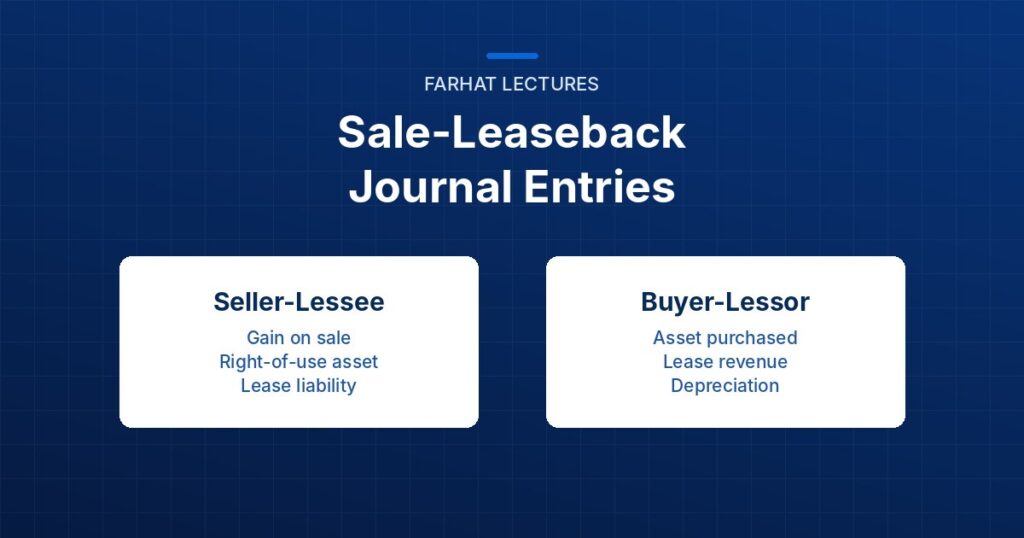
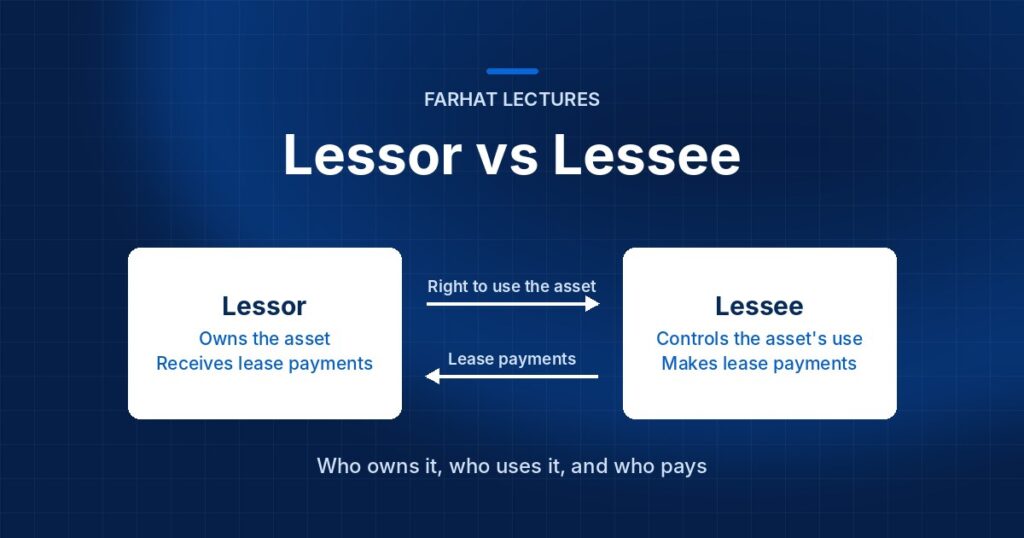
Sale-leaseback journal entries record two linked events under ASC 842. On the sale date, the seller-lessee removes the asset, records cash and a gain or loss, and books a right-of-use (ROU) asset and lease liability. Each year, it records one straight-line lease expense. The buyer-lessor records the asset, lease revenue, and depreciation.
Why it matters: exam questions often show both sides of the same deal and ask you to match the entries. Seeing the seller-lessee and buyer-lessor together makes it clear who owns the asset, who depreciates it, and where the gain comes from.
Exam tip: On the CPA exam, sale-leaseback transactions are tested in BAR (Business Analysis and Reporting), while basic lessee accounting is covered in FAR. Intermediate accounting courses cover both sides, so expect to see this in class too.
These entries assume the transfer qualifies as a sale. If you need a refresher on that test, start with sale-leaseback accounting under ASC 842. All figures below are hypothetical.
Watch: Sale-Leaseback Accounting: Journal Entries & Failed Sales | ASC 842 (an aircraft example with the seller-lessee’s entries)
The facts
Hypothetical example. On January 1, 2027, Summit Air Charter sells a used jet to Crestline Leasing and leases it back.
| Item | Amount or term |
|---|---|
| Sale price (equal to fair value) | $9,500,000 |
| Jet’s cost / accumulated depreciation | $11,000,000 / $3,000,000 |
| Carrying amount | $8,000,000 |
| Lease term | 5 years, non-cancelable |
| Remaining economic life | 12 years |
| Annual payment | $1,600,000 at each December 31, starting 2027 |
| Rate | 6% (Summit’s incremental borrowing rate and the rate Crestline earns) |
| Options | No renewal, purchase, or repurchase option; the jet returns to Crestline |
| Residual value guarantee | No party guarantees the jet’s residual value. |
Step 1: Does the transfer qualify as a sale?
The present value of the payments is $1,600,000 × 4.212364 (the 5-period, 6% ordinary annuity factor) = $6,739,782. Summit cannot readily determine the rate implicit in the lease at commencement. It therefore discounts the payments at its 6% incremental borrowing rate, the rate it would pay to borrow a similar amount over a similar term with similar collateral.
| Test | Result |
|---|---|
| Transfer of ownership | No |
| Purchase option | No |
| Lease term | 5 ÷ 12 = 41.7% of remaining life. Not a major part. |
| Present value | $6,739,782 ÷ $9,500,000 = 70.9% of fair value. Not substantially all. |
| Specialized asset | No. A standard jet has other users. |
No test is met, so the leaseback is an operating lease for Summit, and Crestline would not classify it as a sales-type lease. With no residual value guarantee to add, the present value for Crestline’s direct financing lease test is still 70.9% of fair value. Crestline therefore classifies the leaseback as an operating lease. There is also no repurchase option. We assume the other ASC 606 control indicators are met, since Crestline takes legal title and pays the full price. With nothing in ASC 842-40 blocking sale accounting, the transfer is a sale.
Step 2: Record the sale (January 1, 2027)
| Entry | Account | Debit | Credit |
|---|---|---|---|
| Sale | Cash | $9,500,000 | |
| Accumulated Depreciation—Aircraft | $3,000,000 | ||
| Aircraft | $11,000,000 | ||
| Gain on Disposal of Plant Assets | $1,500,000 | ||
| Leaseback | Right-of-Use Asset | $6,739,782 | |
| Lease Liability | $6,739,782 |
| Entry | Account | Debit | Credit |
|---|---|---|---|
| Purchase | Aircraft | $9,500,000 | |
| Cash | $9,500,000 |
Summit’s gain is $9,500,000 − $8,000,000 = $1,500,000, recognized in full because the sale is at fair value.
What if the sale price is not fair value?
Summit’s gain is simple because the price equals fair value. When the price is off-market, ASC 842-40 moves the difference out of the gain, so the gain still equals fair value minus carrying amount.
- Price below fair value: the shortfall is treated as prepaid rent and added to the ROU asset.
- Price above fair value: the excess is treated as extra financing from the buyer-lessor and recorded as a separate financial liability.
Here is a quick check using Summit’s jet (fair value $9,500,000, carrying amount $8,000,000). Assume the jet’s $9.5 million fair value is more readily determinable than market rent. Use that fair value to measure the adjustment in both cases.
| Case | Cash received | Off-market adjustment | Gain |
|---|---|---|---|
| Sold for $9,000,000 | $9,000,000 | Debit Right-of-Use Asset (prepaid rent) $500,000 | $1,500,000 |
| Sold for $10,000,000 | $10,000,000 | Credit Financial Liability $500,000 | $1,500,000 |
In both cases the gain stays at $1,500,000. And if fair value had been below the $8,000,000 carrying amount, Summit would recognize the full loss on the sale date.
Step 3: Build the lease schedule
Interest is 6% of the opening liability. In an operating lease, ROU asset amortization is the straight-line lease expense minus that interest. Because the payments here are level, paid at year end, and there are no initial direct costs, lease incentives, or prepaid rent, the ROU amortization equals the liability reduction, so both balances stay equal. With uneven payments or prepaid rent, the two balances would differ.
| Date | Payment (lease expense) | Interest at 6% | Liability reduction = ROU amortization | Liability and ROU balance |
|---|---|---|---|---|
| Jan 1, 2027 | $6,739,782 | |||
| Dec 31, 2027 | $1,600,000 | $404,387 | $1,195,613 | $5,544,169 |
| Dec 31, 2028 | $1,600,000 | $332,650 | $1,267,350 | $4,276,819 |
Step 4: Year-end sale-leaseback journal entries
Crestline depreciates the jet straight-line over its 12-year remaining life. For simplicity, assume no salvage value: $9,500,000 ÷ 12 = $791,667 per year.
| Party | Account | Debit | Credit |
|---|---|---|---|
| Summit | Lease Expense | $1,600,000 | |
| Lease Liability | $1,195,613 | ||
| Right-of-Use Asset | $1,195,613 | ||
| Cash | $1,600,000 | ||
| Crestline | Cash | $1,600,000 | |
| Lease Revenue | $1,600,000 | ||
| Crestline | Depreciation Expense | $791,667 | |
| Accumulated Depreciation—Leased Aircraft | $791,667 |
| Party | Account | Debit | Credit |
|---|---|---|---|
| Summit | Lease Expense | $1,600,000 | |
| Lease Liability | $1,267,350 | ||
| Right-of-Use Asset | $1,267,350 | ||
| Cash | $1,600,000 | ||
| Crestline | Cash | $1,600,000 | |
| Lease Revenue | $1,600,000 | ||
| Crestline | Depreciation Expense | $791,667 | |
| Accumulated Depreciation—Leased Aircraft | $791,667 |
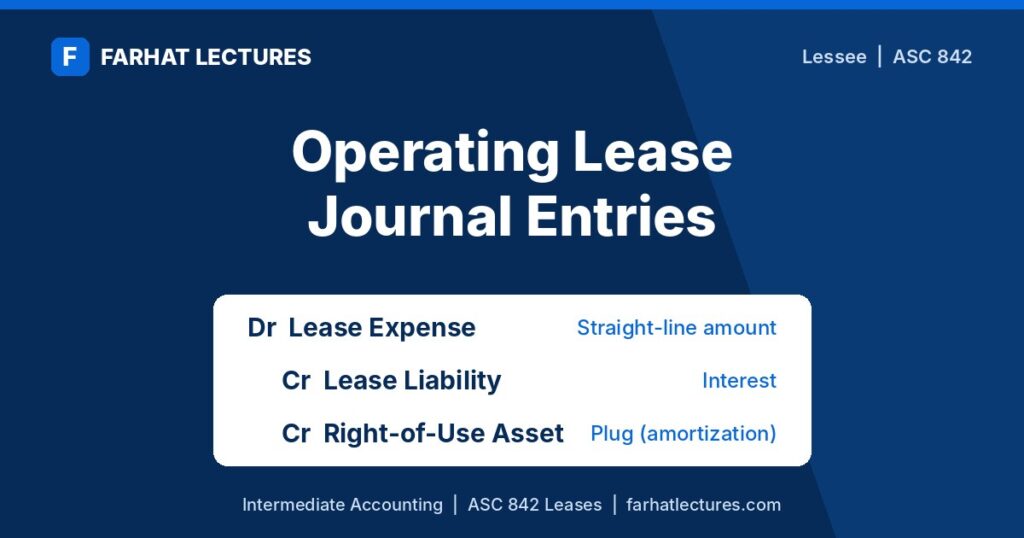
Summit’s $1,600,000 lease expense is the 2027 interest of $404,387 plus ROU amortization of $1,195,613. Summit records no depreciation on the jet, because it no longer owns it.
Seller-lessee vs buyer-lessor at a glance
| Item | Summit (seller-lessee) | Crestline (buyer-lessor) |
|---|---|---|
| Jet on the balance sheet | Removed; replaced by an ROU asset | Recorded at $9,500,000 |
| Gain on sale | $1,500,000 | None |
| Annual income statement | Lease expense $1,600,000 | Lease revenue $1,600,000; depreciation $791,667 |
| Liability | Lease liability | None |
Common mistakes
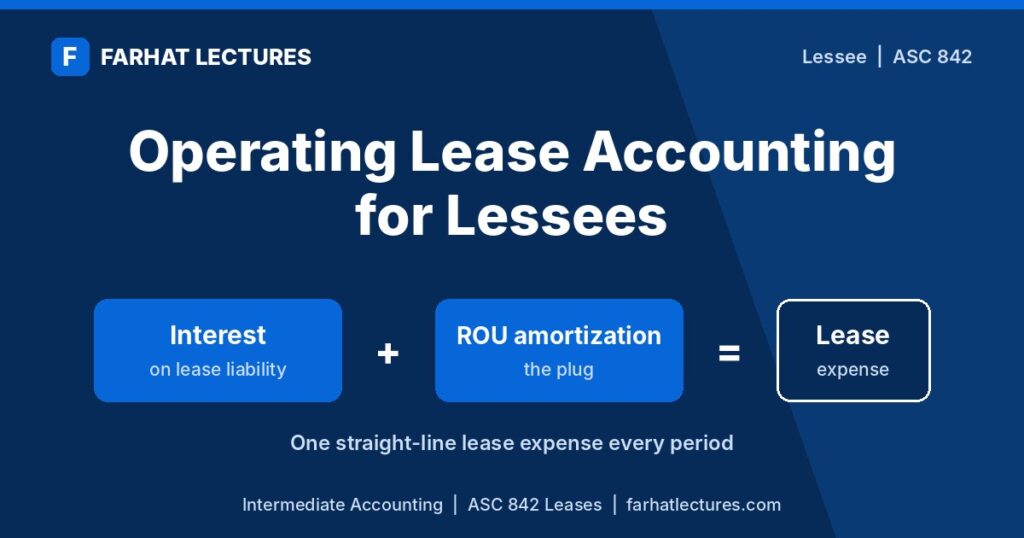
- Splitting the operating lease expense into interest expense and amortization expense. That is finance lease presentation. An operating leaseback shows one lease expense.
- Letting the seller-lessee depreciate the asset. After a sale, only the buyer-lessor depreciates it.
- Measuring the ROU asset at fair value. It equals the lease liability, the present value of the payments, absent prepaid rent or other adjustments.
- Deferring the gain over the lease term. That was the old ASC 840 approach, and older textbooks and websites still show it. Under ASC 842, a sale at fair value means the full gain is recognized on the sale date.
- Limiting the gain to the rights transferred. Measuring the ROU asset as a share of the old carrying amount and recognizing only part of the gain is the IFRS 16 approach. US GAAP recognizes the full gain.
Practice questions
Question 1
Using the Summit schedule, what is the interest on the lease liability for 2029?
Show answer
$4,276,819 × 6% = $256,609. ROU amortization for 2029 is $1,600,000 − $256,609 = $1,343,391, and lease expense is still $1,600,000.
Question 2
What is the carrying amount of the jet on Crestline’s books at December 31, 2028?
Show answer
$9,500,000 − (2 × $791,667) = $7,916,666 (or $7,916,667 if depreciation is not rounded each year).
Question 3
Bolt Manufacturing sells a machine (cost $200,000, accumulated depreciation $80,000) for its fair value of $150,000 and leases it back under an operating lease. The present value of the payments is $60,000. Record Bolt’s entries.
Show answer
Debit Cash $150,000 and Accumulated Depreciation $80,000; credit Machine $200,000 and Gain on Disposal $30,000. Then debit Right-of-Use Asset $60,000 and credit Lease Liability $60,000.
How do you classify an aircraft sale-leaseback under ASC 842?
Use the facts of this independent airline case to calculate the present value of the lease payments and decide whether the airline can record a sale and an operating leaseback.
Key takeaways
- On the sale date, the seller-lessee removes the asset, records the gain or loss, and books the ROU asset and lease liability.
- Each year, the seller-lessee records one straight-line lease expense equal to the payment.
- The buyer-lessor records the asset, lease revenue, and depreciation.
- Under ASC 842, a gain on a sale at fair value is recognized in full on the sale date, not deferred.
Frequently asked questions
Does the seller-lessee keep depreciating the asset after a sale-leaseback?
No. After a successful sale, the seller-lessee removes the asset. It amortizes the right-of-use asset instead, and in an operating lease that amortization is part of a single straight-line lease expense.
Who records depreciation in a sale-leaseback?
The buyer-lessor. In an operating lease the buyer-lessor keeps the asset on its balance sheet, depreciates it, and records lease revenue.
Why is the lease expense the same every year?
In an operating lease, ASC 842 requires a single lease cost recognized on a straight-line basis. Interest on the liability falls each year, and the ROU asset amortization rises by the same amount, so the total stays equal to the level annual payment in this example. If the payments escalated, the straight-line expense would equal the average payment instead.
What rate does the seller-lessee use for the lease liability?
The seller-lessee uses the rate implicit in the lease whenever it can readily determine that rate, even if it has elected to use a risk-free rate for that class of underlying asset. If the implicit rate cannot be readily determined, the seller-lessee uses its incremental borrowing rate unless it is eligible for and has made the risk-free rate election for that asset class.
What if the sale-leaseback fails?
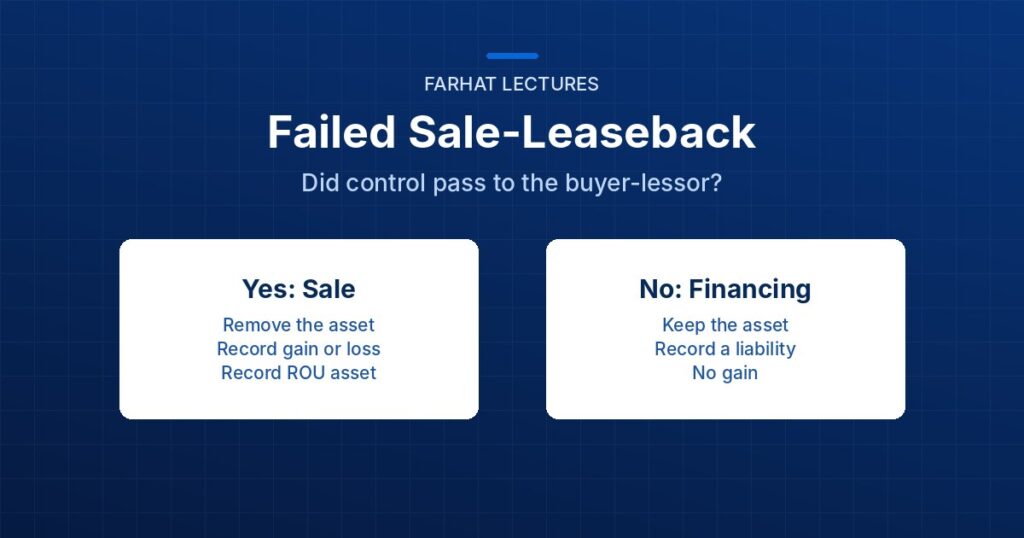
The seller-lessee keeps the asset and records the cash as a liability, so none of the entries in this lesson apply. See the failed sale-leaseback lesson for those entries.
Can a successful sale-leaseback have a finance leaseback?
No. If the seller-lessee would classify the leaseback as a finance lease, or the buyer-lessor would classify it as a sales-type lease, control has not transferred. The deal is a failed sale and is accounted for as a financing, so every successful sale-leaseback has an operating leaseback.
Is the gain on a sale-leaseback deferred?
No. Under ASC 842, when the sale is at fair value, the seller-lessee recognizes the full gain or loss on the sale date. Deferring the gain was the old ASC 840 rule.
What if the sale price is above or below fair value?
If the price is below fair value, the difference is treated as prepaid rent and added to the ROU asset. If the price is above fair value, the excess is recorded as a separate financial liability. Either way, the gain equals fair value minus carrying amount.
Sources
- FASB Accounting Standards Codification, Subtopic 842-40: Sale and Leaseback Transactions
- Deloitte Roadmap, 10.4 Recognition and Measurement
- Journal of Accountancy, Accounting for sale and leaseback transactions
- PwC Viewpoint, 6.4 When the transaction qualifies as a sale
About the author
Mansour Farhat, CPA, CIA, DBA, teaches accounting and CPA exam topics through Farhat Lectures and its YouTube lessons. Read more about Professor Farhat.
Continue learning with Farhat Lectures
Sale-leasebacks build on lease classification, right-of-use assets, and revenue recognition. Try a full lesson with worked problems before you move on.
Explore the free sample course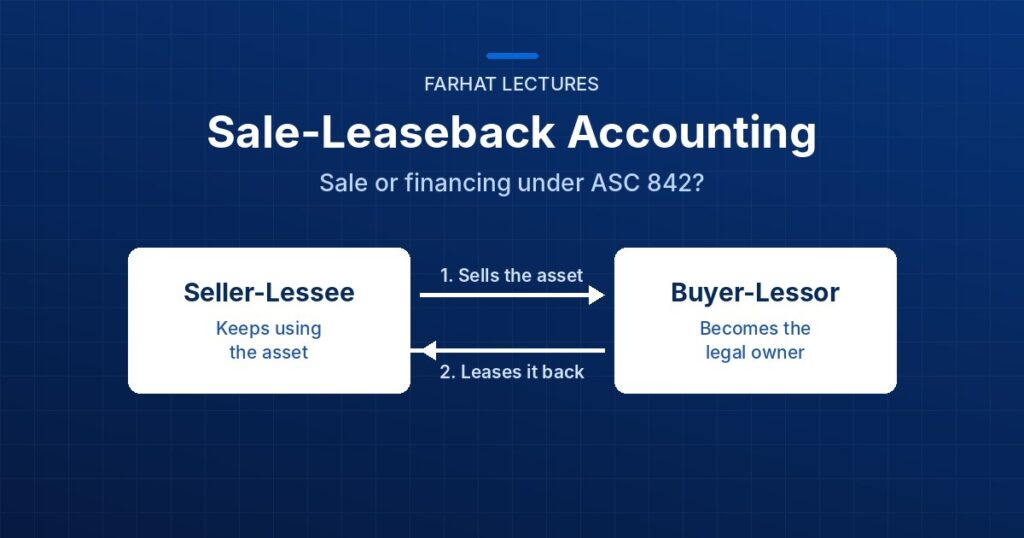
Responses