
Repurchase Agreements (ASC 606): Lease, Financing, or Sale?

A repurchase agreement under ASC 606 is a contract where a seller transfers an asset and promises, or has the option, to buy it back. Under a forward or call option, the seller records a lease or financing, not a sale, because the customer never obtains control. A customer-held put option can be a sale with a right of return.
In this lesson you will learn the three types of repurchase agreements, the price comparisons that decide the accounting, and the journal entries for each outcome. Work through the crane example, then test yourself with the four-question quiz. This topic shows up in the revenue recognition chapter of intermediate accounting and in the CPA FAR section. One quick note before we start: if you were looking for the money-market repo that banks use, that is a different thing, and the next section explains the difference.
Jump to the repurchase agreement practice quiz for instant feedback and detailed explanations.
Content updated: October 20, 2026.
What Are Repurchase Agreements in Revenue Recognition?
A repurchase agreement is a contract in which a seller transfers an asset and also promises, or has the option, to buy it back. The feature may be in the same contract or a separate agreement. It can cover the original asset, a substantially identical asset, or another asset containing the original asset as a component.
Repurchase Agreement vs. Repo: Not the Same Thing
If you searched for “repurchase agreement” and found pages about banks, Treasury bills, and overnight loans, you found the money-market repo. In a repo, a borrower sells securities and agrees to buy them back a day or a week later at a slightly higher price. It is a short-term loan, and it is typically accounted for as a secured borrowing under ASC 860, Transfers and Servicing.
This page covers the ASC 606 meaning: a seller of goods or equipment that promises, or has the option, to buy the item back from its customer. The question here is not “how do I account for a loan” but “did my customer really buy this, or did I just lend it out or borrow against it?”
Control Determines Whether a Sale Occurs
Physical possession and cash receipt do not, by themselves, establish a sale. Under ASC 606, the customer must obtain control: the ability to direct the asset’s use and obtain substantially all of its remaining benefits. Review Farhat’s revenue recognition framework under ASC 606 and IFRS 15 for the underlying five-step model.
For repurchase agreements, first identify who can require the asset to be returned. Then compare the repurchase price with the selling price, taking the time value of money into account (a dollar today is worth more than a dollar next year, so compare the two prices on a present-value basis). Finally, check for special terms such as a sale-and-leaseback. Do not apply the forward-and-call shortcut to every put option; puts get their own test.
The 3 Types of Repurchase Agreements
| Structure | Who controls the repurchase? | Starting point for the analysis |
|---|---|---|
| Forward contract | The seller must repurchase the asset. | The customer does not obtain control; evaluate lease or financing treatment. |
| Call option | The seller has the right, but not the obligation, to repurchase. | The customer does not obtain control; evaluate lease or financing treatment. |
| Put option | The customer can require the seller to repurchase. | Evaluate the repurchase price, expected market value, and economic incentive. |
Forward Contracts and Call Options
A forward contract creates an obligation for the seller. A call option gives the seller a choice. In either case, the repurchase provision limits the customer’s ability to direct the use of the asset and obtain its remaining benefits. An initial cash receipt is therefore not automatically sales revenue.
For additional instruction, open Farhat’s repurchase agreement lesson on forward contracts and call options. Course access may require a subscription.
Watch the Video Lesson: Forward Contracts and Call Options
In this video Professor Farhat walks through forward contracts and seller-held call options, shows how to compare the repurchase price with the selling price, and explains why the answer is a lease or a financing rather than a sale. Watch it now, then use the written crane example below to practice the journal entries. The put-option test is covered in the separate put-option lesson linked in the next section.
Put Options: Assess the Customer’s Economic Incentive
For a put option, the customer decides whether to return the asset. At contract inception, compare the repurchase price with the original selling price and the asset’s expected market value at the repurchase date. Consider the time value of money and how long the right remains available. A repurchase price substantially above expected market value may create a significant economic incentive to exercise the put.
| Put-option circumstances | Accounting treatment |
|---|---|
| Repurchase price below the original selling price; significant economic incentive to exercise. | Lease, subject to the sale-and-leaseback exception. |
| Repurchase price below the original selling price; no significant economic incentive to exercise. | Sale with a right of return. |
| Repurchase price at least equal to the original selling price and above expected market value. | Financing arrangement. |
| Repurchase price at least equal to the original selling price, no higher than expected market value, and no significant economic incentive to exercise. | Sale with a right of return. |
What “sale with a right of return” means in practice: the seller records revenue at transfer for the amount it expects to keep, a refund liability for the amount it expects to pay back, and an asset for its right to recover the product. If the customer never exercises the put, the refund liability is released to revenue and the recovery asset is released to cost of goods sold. The full mechanics are in ASC 606-10-55-22 through 55-29.
Put-option example: A seller receives $100,000 and must buy back equipment for $80,000 if the customer requests it in one year. Expected market value at that date is $60,000. Assume no other relevant factors, no sale-and-leaseback, and no time-value effect that changes the comparison. The $80,000 return price substantially exceeds expected market value, creating a significant economic incentive to return the asset. The arrangement is accounted for as a lease.
Want more practice with puts? The separate Farhat lesson on repurchase agreement put options works through several price and market-value combinations. It is part of the FAR course, and the free sample course will show you the teaching style before you commit.
Repurchase Agreements Under ASC 606: Lease or Financing?
For a forward contract or seller-held call option, apply the following comparison after considering the time value of money. The table assumes the contract is not part of a sale-and-leaseback transaction.
| Repurchase price compared with original selling price | Accounting treatment | Effect at the initial transfer |
|---|---|---|
| Lower | Lease under ASC 842 | Apply lease accounting instead of recognizing an immediate asset sale. |
| Equal to or greater than | Financing arrangement | Continue recognizing the asset and record a financial liability for cash received. |
What If the Repurchase Price Equals the Selling Price?
The financing criterion includes equal to, not just greater than. If a forward or call option has a $100,000 original selling price and a $100,000 repurchase price, and the time value of money has no effect on the comparison, financing treatment applies. When payments occur on different dates, evaluate the time value of money before reaching that conclusion.
Lower Repurchase Price: A Simplified Lease Example
A seller transfers a bulldozer for $100,000 and can repurchase it for $80,000 after one year. Assume an operating lease, no sale-and-leaseback, no other payments or services, and no time-value effect that changes the comparison. The $20,000 difference represents consideration for temporary use. Under these assumptions, the seller recognizes $20,000 of lease income over the use period rather than $100,000 of sales revenue at transfer.
Here are the journal entries for the lease model. To keep the liability clear, assume the seller must buy the bulldozer back (a forward contract) on the same terms, so the $80,000 is a true obligation.
Step 1: Record the cash on the transfer date
| Account | Debit | Credit |
|---|---|---|
| Cash | $100,000 | |
| Unearned Lease Revenue | $20,000 | |
| Repurchase Obligation (Liability) | $80,000 |
The bulldozer stays on the seller’s balance sheet and keeps being depreciated. No sales revenue and no cost of goods sold are recorded.
Step 2: Recognize lease revenue over the year
| Account | Debit | Credit |
|---|---|---|
| Unearned Lease Revenue | $20,000 | |
| Lease Revenue | $20,000 |
Under an operating lease, this is recognized straight-line over the use period, so interim statements show a pro-rata share.
Step 3: Repurchase the bulldozer at year-end
| Account | Debit | Credit |
|---|---|---|
| Repurchase Obligation (Liability) | $80,000 | |
| Cash | $80,000 |
Check: $20,000 of lease revenue plus the $80,000 returned equals the $100,000 originally received. The seller never recorded a sale, which is the whole point of the lease model.
Higher Repurchase Price: Financing and Its Costs
If the seller receives $80,000 and must or may repurchase the asset for $100,000, financing applies when the required time-value assessment supports that classification. The seller retains the asset and records a liability. The difference is recognized over the arrangement as interest and, when applicable, processing or holding costs, such as insurance.
Sale-and-leaseback exception: A lower repurchase price does not automatically make the contract a lease when the transfer is part of a sale-and-leaseback (the seller sells an asset and immediately leases it back from the buyer). In that case, ASC 606-10-55-68(a) says to account for the contract as a financing arrangement, not as a sale-and-leaseback under ASC 842-40. In plain terms, the seller keeps the asset on its books and records a liability for the cash received.
Repurchase Agreements: Financing Journal Entries
The following example combines classification, interest accrual, and settlement. It illustrates why collecting cash and recognizing sales revenue can occur in different periods.
Worked Example: Falcon Equipment’s Crane
On January 1, Falcon Equipment transfers a crane to Horizon Contractor for $420,000. Falcon has a call option to repurchase it for $455,000 at year-end. Assume the crane is inventory held for sale, the arrangement qualifies as financing after considering the time value of money, and there are no processing or holding costs. The option expires on December 31.
The total financing cost is $455,000 − $420,000 = $35,000. For the one-year period, the implied annual rate is $35,000 ÷ $420,000 = approximately 8.33%.
Step 1: Record Cash Received on January 1
| Account | Debit | Credit |
|---|---|---|
| Cash | $420,000 | |
| Financial Liability | $420,000 |
Step 2: Recognize Interest Over the Year
Accrue the $35,000 financing cost over the one-year term. The entry below summarizes the full year’s accrual; it is not an entry to recognize all interest on January 1. For interim reporting, recognize the portion attributable to the elapsed financing period.
| Account | Debit | Credit |
|---|---|---|
| Interest Expense | $35,000 | |
| Financial Liability | $35,000 |
Step 3a: If Falcon Exercises the Call Option
If Falcon repurchases the crane for $455,000, it settles the financial liability. The original transfer does not become a sale.
| Account | Debit | Credit |
|---|---|---|
| Financial Liability | $455,000 | |
| Cash | $455,000 |
Step 3b: If the Call Option Expires Unexercised
Alternatively, if the option expires unexercised on December 31, Horizon keeps the crane and Falcon’s repurchase right ends. Falcon removes (derecognizes) the liability and recognizes revenue, as ASC 606-10-55-71 requires. Steps 3a and 3b are alternative outcomes; only one of them happens.
| Account | Debit | Credit |
|---|---|---|
| Financial Liability | $455,000 | |
| Sales Revenue | $455,000 |
Falcon also removes the crane from inventory and recognizes cost of goods sold. Because its carrying amount was not provided, use C for that amount:
| Account | Debit | Credit |
|---|---|---|
| Cost of Goods Sold | C | |
| Inventory — Crane | C |
The $455,000 revenue and $35,000 interest expense are separate items. Together, they produce $420,000 before the crane’s carrying amount is deducted. This reconciliation does not replace the required gross journal entries.
Exam trap: When the option lapses, revenue is $455,000, the full liability on that date, not the $420,000 of cash originally received. The $35,000 difference was already expensed as interest during the year. Students who record $420,000 of revenue on the lapse date are double-counting the interest. Record the full liability as revenue, then record cost of goods sold separately.
Timing checkpoint: January 1 creates cash and a financial liability. Interest accrues during the year. Revenue arises on December 31 only in the unexercised-call outcome described above.
If this example clicked for you, the practice quiz below gives you four more in the same style. If you would rather watch first, the video lesson above walks through the same logic with Professor Farhat on the whiteboard.
Repurchase Agreement Practice Quiz: Lease vs. Financing (ASC 606)
This quiz has four multiple-choice questions on forwards and seller-held call options. Each one asks you to compare the repurchase price with the selling price and pick lease or financing, then think through the journal entries. Here is a warm-up question in the same style.
Warm-up question: On January 1, Delta Co. transfers a machine to a customer for $200,000 and has the right to buy it back for $190,000 on December 31. Ignore the time value of money and assume the contract is not part of a sale-and-leaseback. How does Delta account for the transfer?
A) Sale with a right of return
B) Financing arrangement
C) Lease
D) Consignment
Answer: C. Delta holds a call option, and the repurchase price ($190,000) is lower than the selling price ($200,000). Under ASC 606-10-55-68(a), that is a lease under ASC 842. The customer effectively paid $10,000 to use the machine for the year.
Common Repurchase Agreement Mistakes
- Recognizing sales revenue from cash receipt alone. Determine whether control transfers before recording an asset sale.
- Ignoring equal repurchase prices. The forward-and-call financing criterion includes equality after considering the time value of money.
- Using the same rule for every put option. Assess expected market value and the customer’s economic incentive.
- Confusing lease income with sales revenue. A lease can generate income during the use period even though the initial asset transfer is not a sale.
- Recording all interest at inception. Recognize financing costs over the appropriate period and separate applicable processing or holding costs.
- Treating an obligation like an option. A forward must be settled under its contractual terms; it is not simply a right that the seller can leave unexercised.
Key Takeaways for Repurchase Agreements
- Identify the structure first: forward, seller-held call, or customer-held put.
- For forwards and calls, compare prices after considering the time value of money and applicable sale-and-leaseback provisions.
- A lower repurchase price generally indicates a lease; an equal or higher price indicates financing under the stated forward-and-call assumptions.
- Put options can produce lease, financing, or sale-with-return accounting.
- In financing, retain the asset and recognize a liability for cash received. Recognize interest and applicable processing or holding costs over the arrangement.
- When a financing call option expires unexercised, derecognize the liability and recognize revenue; also account for the asset’s carrying amount.
- A put option that was treated as financing follows the same path when it lapses: derecognize the liability and recognize revenue (ASC 606-10-55-78).
- IFRS 15 paragraphs B64 to B76 contain the same rules, so the analysis is the same for international students, with leases under IFRS 16.
Frequently Asked Questions About Repurchase Agreements
Do all repurchase agreements prevent a sale?
No. Forwards and seller-held call options generally prevent the customer from obtaining control at the initial transfer. Certain customer-held put options are accounted for as sales with a right of return. Identify the contractual rights before selecting the accounting model.
What is the difference between a forward contract and a call option?
A forward obligates the seller to repurchase the asset. A call option gives the seller the right to repurchase it without requiring exercise. Both use the forward-and-call analysis to determine lease or financing treatment.
What happens when the repurchase price equals the selling price?
For a forward or call option, an equal repurchase price meets the financing criterion when the time value of money does not change the comparison. Always consider the dates and financing effects before classifying the arrangement.
When is revenue recognized in repurchase agreements?
The answer depends on the accounting model. Lease income follows lease accounting. A qualifying sale with a right of return follows the ASC 606 return guidance. In the financing call-option example above, revenue is recognized when the option expires unexercised. Repurchasing the asset instead settles the liability without creating a sale.
Is the difference between transfer and repurchase prices always interest?
No. In a financing arrangement, the difference is recognized as interest and, if applicable, processing or holding costs. The crane example treats the full difference as interest because it expressly assumes no such other costs.
How should I study repurchase agreements for accounting exams?
Practice a consistent sequence: identify the option holder, determine whether control transfers, compare the relevant prices, and then prepare the entries. Explain why the rejected accounting models do not apply. The quiz on this page focuses on forwards and call options under its stated simplifying assumptions.
Is a repurchase agreement under ASC 606 the same as a repo?
No. A repo is a short-term loan in the money market: a borrower sells securities and agrees to buy them back a short time later at a slightly higher price. It is typically accounted for as a secured borrowing under ASC 860. The ASC 606 guidance covers a seller of goods or equipment that promises, or has the option, to buy the item back from its customer.
What happens when a put option expires unexercised?
It depends on which model you applied. If the put was accounted for as a financing arrangement, derecognize the liability and recognize revenue when the option lapses (ASC 606-10-55-78). If the put was treated as a sale with a right of return, revenue was already recognized at transfer for the amount not expected to be returned, and any remaining refund liability is released to revenue when the return right expires.
Does IFRS 15 treat repurchase agreements the same way?
Yes. IFRS 15 paragraphs B64 to B76 contain the same forward, call, and put option guidance, including the lease versus financing comparison. The only wording difference is that leases follow IFRS 16 instead of ASC 842.
Why does a lower repurchase price point to a lease?
Because the customer paid the difference for the use of the asset for a period of time. If a customer pays $100,000 and the seller buys the asset back for $80,000, the customer effectively paid $20,000 to use the asset. That is a lease payment, so ASC 606-10-55-68 sends the contract to ASC 842.
How does the time value of money change the comparison?
Compare the repurchase price with the selling price on a present-value basis, not just at face amounts. A repurchase price that is slightly above the selling price in nominal dollars can be below it once discounted, which points to a lease instead of financing. ASC 606-10-55-69 and 55-77 require this step for forwards, calls, and puts.
Continue Learning with Farhat Lectures
After the quiz, keep going with the Farhat FAR test bank for more multiple-choice practice, or start with the free sample course to see how Professor Farhat teaches. If you are working through this as part of a college course, the Intermediate Accounting course covers the full revenue recognition chapter, and the FAR podcast lessons let you review on the go. Come back to the worked entries until you can explain every debit, credit, and recognition date out loud.
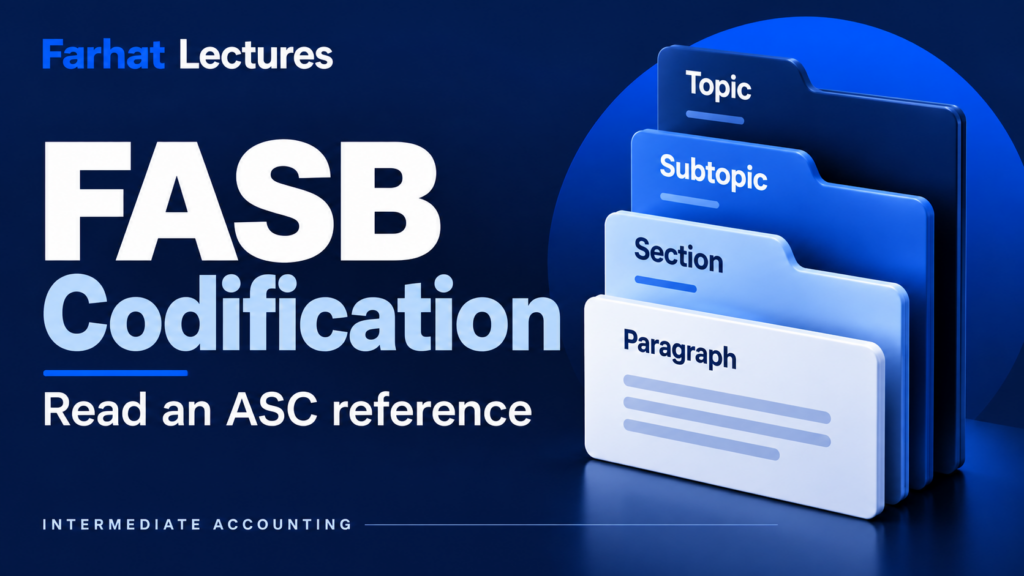
This lesson covers the repurchase guidance in ASC 606-10-55-66 through 55-78. You can read the original wording in the FASB’s Accounting Standards Update 2014-09, Section A (PDF), which contains the Codification text for Topic 606. The lease references in that text were later updated to ASC 842 by ASU 2016-02. The same rules appear in IFRS 15 paragraphs B64 to B76, and the FASB and IASB published a side-by-side comparison of Topic 606 and IFRS 15 (PDF). If you are new to reading Codification references like 606-10-55-68, our guide to the FASB Codification structure walks through what each number means.
About Professor Farhat
Professor Mansour Farhat, DBA, CPA, CIA, MAcc, is an accounting educator and the founder of Farhat Lectures. His lessons help college students and professional exam candidates develop accounting knowledge through explanations, worked examples, and practice.



Responses