
Objective of Financial Reporting: Definition, Users, and Examples

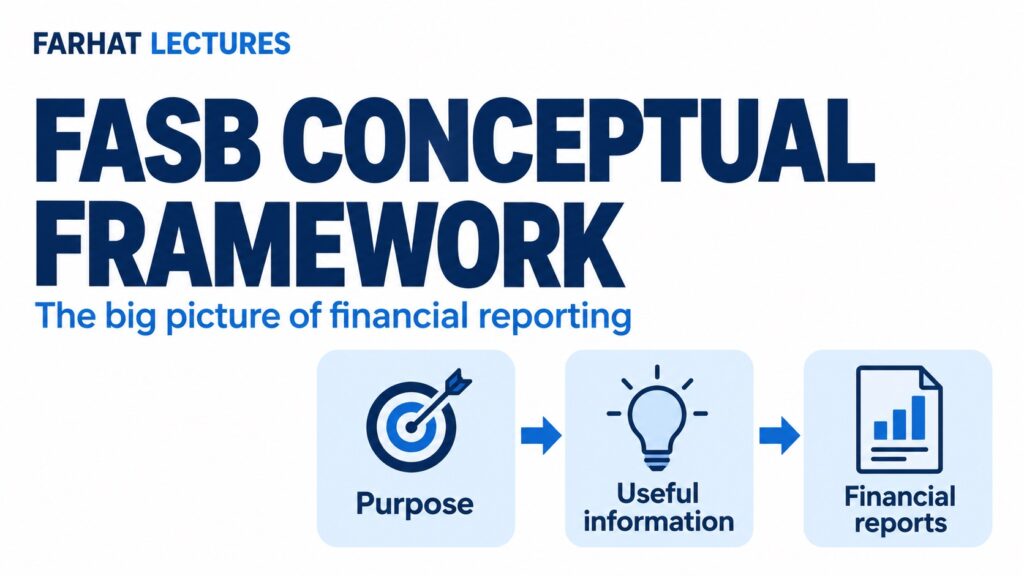
The objective of financial reporting is to provide financial information about a reporting entity that is useful to existing and potential investors, lenders, and other creditors in deciding whether to provide resources to it, such as buying its shares or lending it money. This summarizes the objective in FASB Concepts Statement No. 8, Chapter 1.
This guide covers who the primary users are, why they focus on future cash flows, what reports can and cannot tell you, and the exam traps accounting students and CPA candidates fall into.
The Objective of Financial Reporting at a Glance
- Decision usefulness: Financial information helps users evaluate investment and lending choices.
- Primary users: Reports focus on current and potential investors, lenders, and other creditors.
- Future cash flows: Users assess how much cash an entity may generate, when it may arrive, and how uncertain it is.
- Management stewardship: Reports help users judge how efficiently and effectively management has used the resources entrusted to it.
- Useful information has limits: Reports inform decisions but do not establish an entity’s exact value or guarantee investment returns.
These ideas come from FASB Concepts Statement No. 8, Chapter 1, The Objective of General Purpose Financial Reporting (as amended December 2021). They explain why financial reporting matters before you begin applying detailed recognition and measurement rules.
Why the Objective of Financial Reporting Matters
Understanding the objective of financial reporting gives journal entries and financial statements a clear purpose. Farhat Lectures connects this concept to intermediate accounting, financial accounting, and FAR CPA Exam preparation. Begin with the users of the information, then consider the decisions they need to make.
This concept provides a foundation for studying financial accounting, intermediate accounting, and financial reporting topics on professional accounting examinations.
Watch: Objective of Financial Reporting
In this Farhat Lectures lesson, Professor Farhat explains why financial reporting serves investors and creditors, how users assess future cash flows, and how financial statements communicate useful information.
Who are the Users of Financial Reporting?
General purpose financial reports communicate financial information for users who cannot demand reports tailored to their individual needs. Financial statements and related notes are a central part of these reports, but financial reporting is broader. The primary users are existing and potential investors, lenders, and other creditors. They are primary because many of them must rely on these reports for most of the financial information they need.
Investors evaluate ownership interests, while lenders and other creditors consider repayment and credit risk. Creditors include suppliers that sell goods on account, as well as banks.
Management also uses financial information, but it can obtain internal reports directly, so it is not the primary audience. Regulators and members of the public may also find the reports useful, but the reports are not directed primarily at them.
Why Do We Provide Financial Information?
Investors use financial information when deciding whether to buy, hold, or sell ownership interests. Lenders and other creditors use it when deciding whether to extend, maintain, or settle credit and on what terms. Information about financial position, performance, and cash flows helps these users assess expected returns and the risks involved.
Why Do Users Focus on Future Cash Flows?
Financial information helps users assess the amount, timing, and uncertainty of future cash flows. A profitable business may still experience cash shortages if customers pay slowly. Investors consider the possibility of dividends and changes in share value, while lenders evaluate interest payments and repayment of principal. Therefore, users read the income statement together with the balance sheet, cash flow statement, and related notes.
Practical Example: Profit and Cash Flow
Suppose a company reports net income of $80,000 but only $20,000 of cash provided by operating activities. The difference does not automatically indicate an accounting error. For example, credit sales can increase revenue before customers pay. An investor would investigate whether earnings can support future cash generation, while a lender would examine whether cash will be available when loan payments are due. This is the objective of financial reporting in practice: providing information that supports a decision.
Here is one simplified reconciliation. Assume accounts receivable increased by $60,000 during the year because recognized credit sales exceeded customer collections by that amount. Also assume there are no other adjustments to reconcile net income to operating cash flow. Under the indirect method, $80,000 of net income minus the $60,000 increase in accounts receivable equals $20,000 of cash provided by operating activities. The increase in receivables reflects revenue recognized before collection; it does not mean those sales increased net income dollar for dollar, because related expenses also affect income.
How Do We Provide Financial Information?
Financial information is communicated through financial statements and related notes. Read the statements together because each answers a different question:
| Statement | Information provided |
|---|---|
| Balance sheet | Assets, liabilities, and equity at a specific date. |
| Income statement | Revenues, expenses, gains, losses, and net income for a period. |
| Statement of comprehensive income | Net income plus other comprehensive income. Under ASC 220 it is shown either in one continuous statement with the income statement or in a separate statement that immediately follows it. |
| Statement of cash flows | Cash flows from operating, investing, and financing activities. |
| Statement of shareholders’ equity | Changes in equity, including owner contributions, distributions, and comprehensive income. |
The notes explain accounting policies, estimates, commitments, and other matters needed to interpret the reported amounts.
What Information Do Financial Reports Provide?
Chapter 1 says general purpose financial reports give users two kinds of information.
First, information about the entity’s economic resources and the claims against it. This is financial position, and it appears mainly on the balance sheet. It helps users judge liquidity (can the company pay its bills soon?), solvency (can it meet its long-term obligations?), and how much additional financing it may need.
Second, information about changes in those resources and claims. Some changes come from financial performance, which the income statement and statement of comprehensive income show. Other changes come from transactions with owners and creditors, such as issuing shares or borrowing, which the statement of shareholders’ equity and the statement of cash flows show. Users need to tell these two sources apart to judge how well the business itself is performing.
The framework also explains why accrual accounting matters. Accrual accounting records the effects of transactions in the period they happen, even if the cash moves in a different period. The FASB says this gives a better basis for judging past and future performance than cash receipts and payments alone. Cash flow information complements accrual-based performance information. Applicable accounting standards establish when a statement of cash flows must be presented; the conceptual framework explains why the information is useful.
What Are the Limits of Financial Reporting?
Financial reports are powerful, but the FASB is clear about what they do not do.
They do not show what a company is worth. Reports give users information to estimate the value of the entity, but the reported amounts are not a valuation.
They do not contain everything a user needs. Investors and creditors also need information from other sources, such as general economic conditions, political events, and industry and company outlooks.
They rely on estimates and judgment. Many reported amounts, such as allowances for bad debts, depreciation, and warranty costs, are estimates and models rather than exact figures. That does not make them unreliable, but it means readers should understand the assumptions behind them.
Financial Accounting vs Financial Reporting: What Is the Difference?
Financial accounting involves identifying, measuring, recording, and summarizing transactions. Financial reporting communicates financial information to users through statements and related disclosures. The activities are closely connected, but the terms are not exact synonyms.
Financial statements are the central part of financial reporting, but financial reporting is broader. It also includes other ways a company communicates financial information to outside users, such as management’s discussion and analysis in an annual report. The FASB objective applies to financial reporting as a whole. Useful reporting helps capital providers compare alternatives and assess a business even when they cannot request detailed internal information from its management.
What Makes Financial Information Useful?
As a future accountant or CPA, you help prepare and evaluate information that others use to make decisions. That requires careful application of accounting standards, sound judgment, and clear disclosures.
Chapter 3 of the FASB conceptual framework names two fundamental qualitative characteristics of useful information: relevance and faithful representation. Faithful representation means the information is complete, neutral, and free from error. Free from error does not mean perfectly accurate. For an estimate, faithful representation requires a clear description of what is being estimated, an appropriate estimation process selected and applied without errors, and an explanation of relevant assumptions and limitations. Neutrality also requires that the process and presentation be free from bias. Comparability, verifiability, timeliness, and understandability then enhance the usefulness of information that is already relevant and faithfully represented.
How Do Investors Calculate a Realized Return?
Investors may earn returns through dividends and capital gains. Dividends are distributions to shareholders, while a capital gain arises when shares are sold for more than their cost. For example, assume an investor pays $100,000 for shares and earns a combined $10,000 in dividends and realized gains over one year. Ignoring taxes and transaction costs, the return is $10,000 ÷ $100,000 = 10%. Financial reporting helps investors assess the business behind an investment, but it does not guarantee a particular return.
Common Exam Traps on the Objective of Financial Reporting
Trap 1: Picking management as a primary user. Management uses financial information, but it can get what it needs internally, so it is not a primary user of general purpose reports.
Trap 2: Saying reports show the value of the company. They do not. They help investors, lenders, and other creditors estimate value.
Trap 3: Treating financial reporting and financial statements as the same thing. Financial statements are the central part of financial reporting, but reporting is broader.
Trap 4: Overlooking management stewardship. Users assess how efficiently and effectively management has used the resources entrusted to it. This assessment helps them evaluate management’s performance and make decisions about providing resources.
Trap 5: Cash basis versus accrual basis. The framework says accrual accounting gives a better basis for assessing performance than cash receipts and payments alone. Cash flow information is useful, but it is not the primary measure of performance.
Practice Questions
Question 1. According to FASB Concepts Statement No. 8, Chapter 1, the primary users of general purpose financial reports are:
A. Management and the board of directors
B. Existing and potential investors, lenders, and other creditors
C. Regulators and tax authorities
D. All parties interested in the entity
Answer choice B is correct. Existing and potential investors, lenders, and other creditors are the primary users because many cannot demand tailored information directly from the entity.
A is incorrect: Management and the board have access to internal information; general purpose reports are not directed primarily at them.
C is incorrect: Regulators and tax authorities may use financial reports, but they are not the primary users identified by the framework.
D is incorrect: The reports may benefit many interested parties, but the framework identifies a specific primary user group.
Question 2. Which statement best describes a limitation of general purpose financial reports?
A. They show the current market value of the reporting entity.
B. They provide all the information investors and creditors need.
C. They are not designed to show the value of the entity, but they help users estimate it.
D. They are based only on exact measurements, never on estimates.
Answer choice C is correct. General purpose financial reports help users estimate an entity’s value but are not designed to show that value directly.
A is incorrect: Reported financial position is not the current market value of the entire entity.
B is incorrect: Users also need information about the economy, industry, and other relevant conditions.
D is incorrect: Financial reports necessarily include estimates, judgments, and models.
Question 3. Why does the conceptual framework favor accrual accounting over information about cash receipts and payments alone?
A. Accrual accounting eliminates the need for a statement of cash flows.
B. Accrual accounting reports the effects of transactions in the periods they occur, which gives a better basis for assessing past and future performance.
C. Accrual accounting guarantees that reported earnings equal future cash flows.
D. Accrual accounting is required only for public companies.
Answer choice B is correct. Accrual accounting captures economic effects in the periods in which they occur, even when cash receipts or payments occur in another period. This provides a better basis for assessing performance than cash information alone.
A is incorrect: Accrual accounting does not eliminate the usefulness of cash flow information or applicable cash flow statement requirements.
C is incorrect: Accrual earnings do not guarantee future cash flows; estimates, timing differences, and uncertainty remain.
D is incorrect: Accrual accounting is also used by nonpublic entities, and public-company status does not explain the framework’s preference.
You can find more practice like this in the free sample course.
Frequently Asked Questions
What is the objective of financial reporting according to the FASB?
To provide financial information about the reporting entity that is useful to existing and potential investors, lenders, and other creditors in making decisions about providing resources to the entity. The definition is in FASB Concepts Statement No. 8, Chapter 1, paragraph OB2.
Who are the primary users of general purpose financial reports?
Existing and potential investors, lenders, and other creditors. They are the primary users because many of them cannot demand information directly from the company and must rely on general purpose reports.
Is management a primary user of financial reports?
No. Management is interested in the information, but it can obtain what it needs internally, so general purpose financial reports are not directed at management. Regulators and the public may find the reports useful, but they are not primary users either.
Do financial reports show what a company is worth?
No. General purpose financial reports are not designed to show the value of a reporting entity. They provide information that helps investors, lenders, and other creditors estimate that value for themselves.
What is the difference between financial reporting and financial statements?
Financial statements are the central part of financial reporting, but financial reporting is broader. It includes the financial statements and notes plus other ways a company communicates financial information to outside users. The FASB objective applies to financial reporting as a whole.
Key Takeaway and Further Study
The objective of financial reporting is decision usefulness. Keep the primary users, future cash flow assessment, and management stewardship in mind when studying accounting. Reports provide a foundation for analysis, but users also need information about the industry, economy, and business outlook.
Continue with the Farhat Lectures lesson on the objective of financial reporting and GAAP. To see how this objective connects to qualitative characteristics, elements, recognition, and measurement, read the guide to the FASB conceptual framework. For broader practice, explore the free sample course and connect each accounting treatment to the information it provides to users.
About the author: Mansour Farhat, CPA, CIA, DBA, is the founder of Farhat Lectures and the instructor in the video above. He teaches financial accounting, intermediate accounting, and CPA Exam review.


Responses