
Accounting Assumptions: 4 Basics Explained With Examples

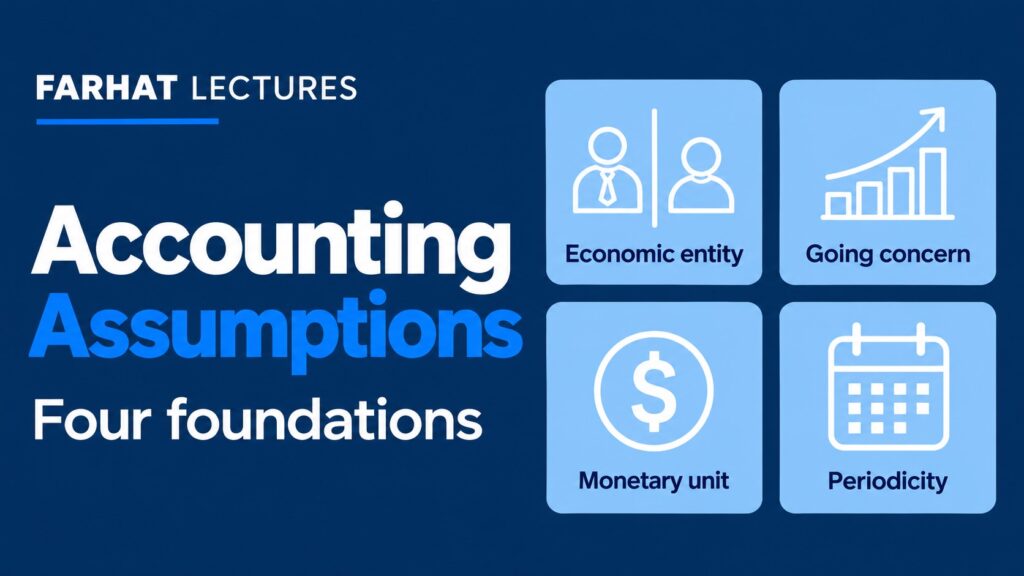
Four accounting assumptions commonly taught in introductory and intermediate accounting are economic entity (whose activity is reported), going concern (continued operation), monetary unit (a common monetary measure), and periodicity (defined reporting periods). This teaching framework helps explain financial reporting under U.S. generally accepted accounting principles (GAAP); specific authoritative standards govern recognition, measurement, presentation, and disclosure.
These ideas matter because a correct calculation can still answer the wrong question. Mixing an owner’s personal spending with business expenses, or combining transactions from different periods, can make a financial report misleading. Learn to identify the boundary first; then apply the relevant recognition and measurement rules.
Watch: accounting assumptions explained
In this Farhat Lectures video, Professor Farhat explains economic entity, going concern, periodicity, and monetary unit before moving on to related accounting principles. The player starts at the assumptions overview (1:47). Watch through 5:53 for the four assumptions, then use the examples and practice questions below to check your understanding.
Jump to an assumption on YouTube: Economic entity (2:02) · Going concern (2:29) · Periodicity (4:01) · Monetary unit (5:18).
This lesson is part of the Intermediate Accounting course, which covers the full conceptual framework with lectures, practice questions, and notes.
What are the four accounting assumptions?
| Assumption | Main question | Simple clue |
|---|---|---|
| Economic entity | Whose activity belongs in these records? | Separate business and personal transactions |
| Going concern | Is continued operation the reporting basis? | Assets are used in ongoing operations |
| Monetary unit | What common unit measures the activity? | Amounts expressed in dollars |
| Periodicity | Which reporting period is being measured? | Monthly, quarterly, or annual results |
Assumptions provide the setting. Principles guide decisions inside that setting. For example, periodicity establishes the month being reported; the revenue recognition principle determines which revenue belongs in that month. These concepts work together rather than compete with one another.
What is the economic entity assumption?
The economic entity assumption separates the activity of a defined accounting unit from the activity of its owners and other units. A business owner’s grocery bill does not become a business operating expense simply because the owner paid it from the business bank account.
Example: Lina owns Cedar Design. She pays a $180 personal grocery bill with the business debit card. The company must account for the cash leaving its bank account, but it should classify the transaction according to its substance, such as an owner withdrawal where appropriate. It should not report groceries as a design-business expense.
If Cedar Design is a sole proprietorship, the entry is:
| Account | Debit ($) | Credit ($) |
|---|---|---|
| Lina, Drawings | 180 | — |
| Cash | — | 180 |
If Cedar Design is a corporation, assume the payment is solely personal and is neither compensation nor reimbursement of a business expense. A documented obligation to repay may support a receivable from Lina; an authorized payment to her as an owner may be a distribution. Classification depends on the facts and documentation. Using the business bank account does not make a personal purchase a business expense.
An economic entity is not always identical to one legal entity. Consolidated financial statements may combine a parent and its subsidiaries into one reporting group even though those companies are legally separate. Likewise, managers can prepare internal reports for a division. Always ask which accounting boundary the report is intended to describe.
What is the going concern assumption?
The going concern assumption supports preparing statements for a business that continues operating. Equipment can provide services over several years, making depreciation across its useful life meaningful. Current and noncurrent classifications also help users understand the timing of resources and obligations in an ongoing business.
Example: Cedar Design acquires a printer that it expects to use for four years. Allocating its cost over its useful life makes sense when the business expects continued use. Valuing everything as if an immediate closing-down sale were required would answer a different question.
A loss or a difficult year does not automatically require liquidation accounting. Under ASC 205-40, management evaluates conditions and events, considered in the aggregate, that may raise substantial doubt about the company’s ability to meet its obligations as they become due within one year after the financial statements are issued (or are available to be issued, when applicable). The initial evaluation excludes the mitigating effect of management’s plans that have not been fully implemented.
If substantial doubt is raised, management evaluates whether its plans are both probable of being effectively implemented and probable of mitigating the conditions within the assessment period. Disclosures are required when substantial doubt is alleviated by those plans and when it remains; the required disclosures differ. When substantial doubt remains, the notes explicitly state that conclusion.
Substantial doubt does not by itself require liquidation accounting. ASC 205-30 addresses when liquidation is imminent and the liquidation basis is required for entities within its scope. See FASB ASU 2014-15 on going concern and FASB ASU 2013-07 on the liquidation basis. Detailed liquidation calculations are outside this lesson.
What are the monetary unit and periodicity assumptions?
Monetary unit
Money provides a common measurement unit. A company can add the dollar amounts of cash, equipment, and liabilities because each amount uses the same unit. U.S. financial statements generally use nominal dollars without restating every amount for changes in general purchasing power.
This convention does not mean inflation is unreal. The basic U.S. reporting model generally does not restate all historical amounts for changes in purchasing power. Monetary measurement also does not mean every valuable resource qualifies for recognition. Recognition depends on the applicable accounting requirements as well as measurement. Employee morale and internally generated reputation generally are not recognized as separate assets, while acquired identifiable intangible assets and goodwill may be recognized under the relevant standards.
Periodicity, or the time period assumption
Periodicity divides a continuing business’s activities into reporting intervals. Users need information before the business ends, so companies prepare monthly, quarterly, and annual reports. Shorter periods often require more estimates and careful cutoffs.
Example: Cedar finishes a $2,400 customer project on September 29 and collects the fee on October 12. Assume an enforceable customer contract meets the revenue-recognition criteria, the single performance obligation is satisfied on September 29, and Cedar has an unconditional right to the payment on that date. Revenue is recognized in September; October records collection of the receivable:
| Date | Account | Debit ($) | Credit ($) |
|---|---|---|---|
| September 29 | Accounts Receivable | 2,400 | — |
| September 29 | Service Revenue | — | 2,400 |
| October 12 | Cash | 2,400 | — |
| October 12 | Accounts Receivable | — | 2,400 |
October shows a cash collection, not new revenue. The timing decision follows the revenue and expense recognition principles, not the bank deposit date. The SEC’s financial-statement guide also distinguishes statements covering a period from a balance sheet at a particular date.
Common mistakes when identifying accounting assumptions
- Calling every rule an assumption. Recording an asset at acquisition cost concerns measurement. Learn the distinction in historical cost versus fair value.
- Treating going concern as a guarantee. It is a reporting basis, not a promise of future profitability or permanent survival.
- Confusing dollars with cash accounting. Monetary measurement does not require waiting for cash before recognizing an item.
- Assuming everything important must appear as a number. The full disclosure principle also involves narrative information in notes.
A useful exam method is to underline the fact that creates the issue. An owner’s transaction suggests entity; continued use suggests going concern; the measurement unit suggests monetary unit; the reporting interval suggests periodicity. Then explain why that clue matters rather than merely naming a term.
Is accrual basis a fifth accounting assumption?
Terminology varies among textbooks and courses. This lesson uses the traditional four-assumption framework and discusses accrual accounting separately. Accrual accounting depicts the effects of transactions and other events in the periods in which those effects occur, even when the related cash receipts or payments occur in another period.
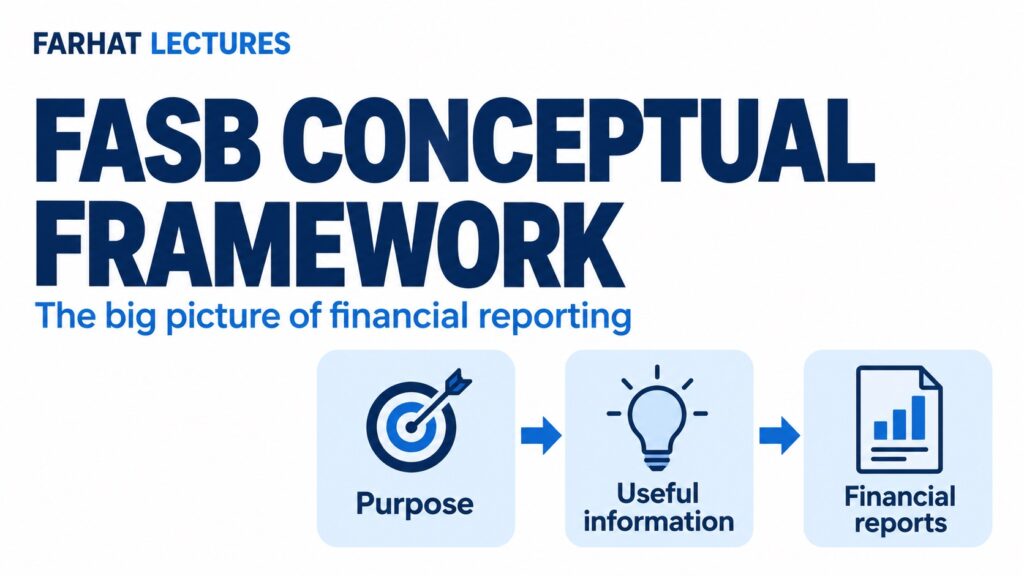
For an exam, follow the framework used in your course and identify the concept supported by the facts. The presence of accrual accounting among the answer choices does not establish that the question uses a five-assumption framework; it may be a distractor. Revenue and expense recognition follows the applicable standards rather than simply the date cash changes hands. For the bigger picture, see the FASB Conceptual Framework lesson.
Need a refresher? Review what the four accounting assumptions are, or continue to the worked questions below.
Practice questions and explained answers
1. A parent and two subsidiaries prepare one set of consolidated statements. Does this necessarily violate the economic entity assumption?
Answer: No. The reporting boundary can include a group of legally separate companies. Economic entity and legal entity are not interchangeable terms.
2. A company issues a report for each quarter. Which assumption most directly explains the reporting schedule?
Answer: Periodicity. The company divides its continuing activities into useful time intervals instead of waiting until the business closes.
3. A business has one unprofitable month. Must it immediately use liquidation accounting?
Answer: No. A loss alone does not establish that liquidation is imminent. Going-concern issues require evaluating the relevant facts, and some situations call for disclosure while the going-concern basis continues.
Key takeaways
- Economic entity: report the business, not the owner. Clue: personal transactions running through business accounts.
- Going concern: assume the business keeps operating unless liquidation is imminent. Clue: depreciation over useful life and current versus noncurrent classification.
- Monetary unit: measure in dollars and treat the dollar as reasonably stable. Clue: amounts from different years added together.
- Periodicity: divide a continuing life into months, quarters, and years. Clue: cutoff questions about which period a sale or expense belongs in.
- Assumptions set the stage. Principles (measurement, revenue recognition, expense recognition, full disclosure) decide what gets recorded and when.
Frequently asked questions
Are accounting assumptions the same as GAAP?
No. They explain basic ideas underlying accounting practice. Specific authoritative GAAP requirements determine how particular transactions are accounted for.
Does the monetary unit assumption mean inflation is ignored in every business decision?
No. Managers and investors can analyze inflation. The assumption describes the common monetary measurement convention used in the basic U.S. reporting model.
Can one transaction involve several assumptions?
Yes. A company’s credit sale can involve the entity boundary, monetary measurement, and a reporting-period cutoff at the same time.
What is the difference between accounting assumptions and accounting principles?
Assumptions describe the setting: which entity, continuing operations, a stable dollar, and defined periods. Principles guide decisions inside that setting: how to measure items, when to recognize revenue and expenses, and what to disclose.
How far ahead does a going concern evaluation look under U.S. GAAP?
Under ASC 205-40, the assessment covers one year after the financial statements are issued (or are available to be issued, when applicable). If conditions raise substantial doubt, management evaluates qualifying mitigation plans and provides the applicable disclosures, whether those plans alleviate the doubt or it remains. Substantial doubt alone does not require liquidation accounting; ASC 205-30 addresses the liquidation basis.
Is accrual basis an accounting assumption?
Terminology varies by source. This lesson presents the traditional four accounting assumptions and treats accrual accounting separately. Follow your course’s terminology and identify the concept described in the question; an answer choice alone does not establish the framework being used.
Are accounting assumptions tested on the CPA and CMA exams?
Yes. They appear in the conceptual framework material of the CPA exam’s FAR section and in CMA Part 1, External Financial Reporting Decisions. Questions usually give a short scenario and ask which assumption or principle applies.
Learn with Farhat Lectures.
Build confidence with clear explanations and guided accounting practice. Explore the free sample course and keep your study momentum going.
Try the free sample course →



Responses