
Inventory Disclosures Explained in 4 Questions, With a Sample Note


Inventory disclosures are the notes and policy statements that explain a company’s inventory balance. They typically show the major inventory classes, the cost method (such as first-in, first-out, or FIFO), the valuation basis (such as lower of cost and net realizable value), and any inventory pledged as collateral. U.S. accounting standards (ASC 330) and SEC rules set the requirements.
On a classified balance sheet, goods held for sale or use in the normal operating cycle generally appear under current assets. Start with that total, then read the inventory note and the significant accounting policies.
Suppose two lamp makers each report $90,000 of inventory. One has boxed lamps ready to ship. The other has mostly brass and unfinished lamps, with some goods pledged to a bank. The identical balances tell a buyer or lender very different things about the companies’ ability to fill orders and raise cash.
Watch the lesson segment
In this short clip (7:58 to 8:27) from his full disclosure principle lesson, Professor Farhat identifies the cost method, valuation basis, and pledged goods a reader can find in an inventory note. Watch the segment on YouTube.
What do inventory disclosures tell you?
Read a U.S. manufacturer’s annual report with four questions in mind. A single sentence in the accounting policies may answer two of them. The remaining answers may appear in an inventory schedule or a borrowing note.
| Question | What to look for |
|---|---|
| 1. What goods make up the balance? | Amounts for major classes, such as raw materials, work in process, and finished goods. These amounts add to the total inventory reported. |
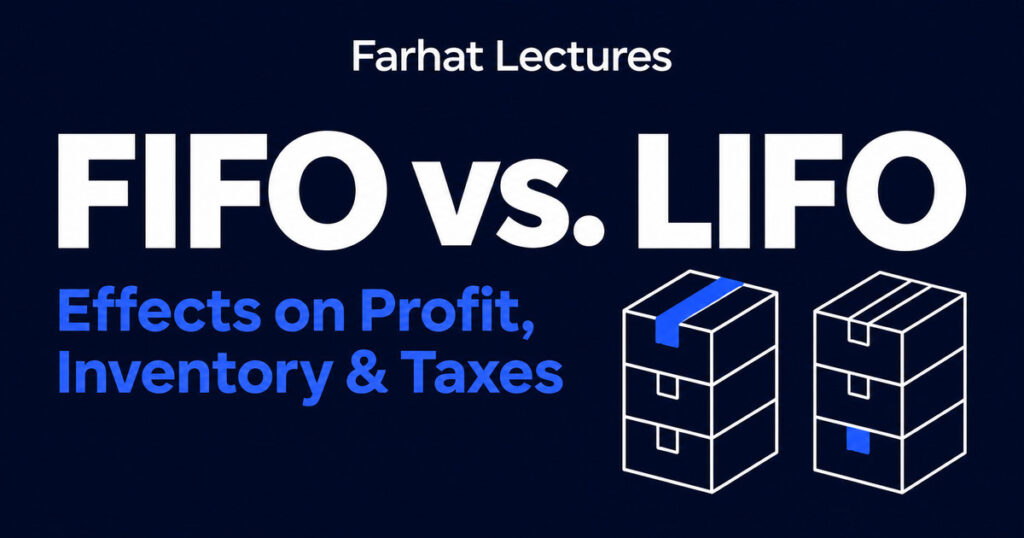
| 2. How did the company assign cost? | Specific identification traces a particular item’s cost. First-in, first-out (FIFO), last-in, first-out (LIFO), and average cost assign costs under different assumptions. See how each cost flow method works. |
| 3. What valuation rule did it apply? | The policy explains when a decline in value reduces the amount a company carries on its books. |
| 4. What claims or commitments matter? | Look for goods pledged to secure borrowing and significant arrangements that could affect the reader’s assessment of the balance. |
For registrants covered by the U.S. Securities and Exchange Commission (SEC) rule for commercial and industrial companies, the balance sheet or related note gives the amounts of major inventory classes when practicable. The rule also calls for the basis of measurement and a description of the cost method. Read Regulation S-X Rule 5-02, item 6.
Companies that prepare financial statements under U.S. GAAP follow ASC 330 even when they do not file with the SEC. The Financial Accounting Standards Board’s Accounting Standards Codification (ASC) covers inventory in Topic 330. ASC 330 requires a company to disclose the basis it uses to state inventory and to apply that basis consistently. If the company changes it, the note explains the nature of the change and, if material, the effect on income. Substantial and unusual losses from writing inventory down must also be disclosed.
Worked example: read a lamp maker’s inventory note
In this hypothetical example, Larkspur Lighting reports inventory of $90,000 at December 31. Its note lists brass and other raw materials of $24,000, partially assembled lamps of $16,000, and boxed lamps of $50,000. Check the reconciliation first: $24,000 + $16,000 + $50,000 = $90,000. Adding the footnote amounts to the balance-sheet total would count the same goods twice.
The $50,000 of boxed lamps represents about 56% of inventory by carrying amount. That portion has completed production. A customer who orders a particular model could still face a delay. The note gives dollar amounts by stage, while the availability of a particular lamp depends on which models the company has in stock.
Larkspur uses FIFO and reports inventory at the lower of cost and net realizable value. FIFO tells you which costs remain in the $90,000. Net realizable value (NRV) is the estimated selling price in the ordinary course of business, minus reasonably predictable costs of completion, disposal, and transportation. The lower-of test addresses whether the assigned cost is recoverable.
Exam tip: Keep two labels apart. FIFO, LIFO, average cost, and specific identification answer the question “How was cost assigned?” Lower of cost and net realizable value, or lower of cost or market, answers a different question: “Was that cost reduced?” Use the question’s wording to distinguish the method used to assign cost from the test used to assess whether that cost must be written down.
Under U.S. generally accepted accounting principles (GAAP), inventory measured using LIFO or the retail inventory method follows the lower-of-cost-or-market rule. For other inventory within the ordinary scope of this guidance, the comparison is cost versus net realizable value. Keeping the cost method consistent across periods helps readers interpret changes in the reported balance. Read the Financial Accounting Standards Board’s inventory measurement update.
How does pledged inventory appear on the balance sheet?
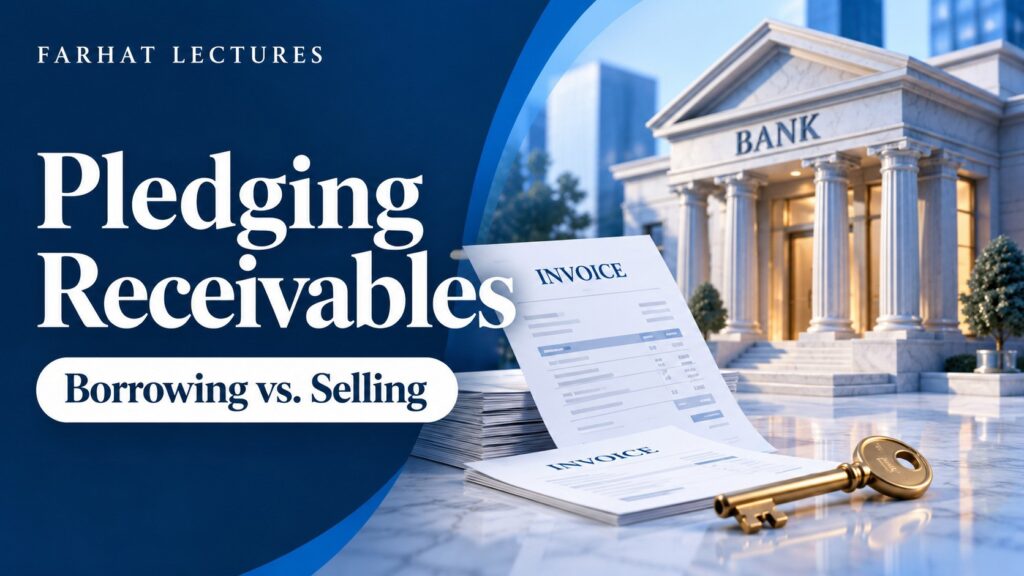
Suppose Larkspur pledges $30,000 of its boxed lamps as collateral for a $25,000 bank loan. Lenders usually lend less than the collateral is worth, which gives them a cushion if they ever have to sell the goods. A pledge gives the bank a security interest, which is a legal right to take and sell the lamps if Larkspur doesn’t repay. Larkspur still owns the lamps and reports the full $90,000 of inventory. It reports the $25,000 borrowing as a liability, separately from inventory. It does not subtract the loan from the inventory balance. The disclosure identifies the pledged assets, their approximate carrying amount, and the related obligation. See SEC Rule 4-08(b) on assets subject to a lien.
Companies pledge receivables the same way. If you want to compare, read pledging receivables: secured borrowing vs. sale.
Other facts may also warrant disclosure. A noncancelable purchase commitment can bind a company to future purchases before the goods arrive. A product financing arrangement looks like a sale, but the company agrees to buy the goods back at set prices. Because it is really a borrowing, the company keeps the goods in inventory and records a liability (FASB ASC 470-40). A material related-party arrangement may involve terms that an independent supplier would not offer. Read the agreement described in the note before deciding what the current inventory figure includes.
Also look for a significant involuntary LIFO liquidation. If a supply disruption forces a company to sell from older LIFO layers, and prices have been rising, those older and lower costs flow into cost of goods sold. That can lift current profit even though nothing about the business improved. Once you understand the balances and policies, use the companion lesson to calculate inventory turnover and average days to sell.
Sample inventory note you can model
Here’s how Larkspur’s note might read in its annual report. Notice how one short note answers all four questions.
Note 4: Inventories
Inventories are stated at the lower of cost and net realizable value. Cost is determined using the first-in, first-out (FIFO) method. Inventories at December 31 consisted of:
| Class | Amount |
|---|---|
| Raw materials | $24,000 |
| Work in process | $16,000 |
| Finished goods | $50,000 |
| Total inventories | $90,000 |
Finished goods with a carrying amount of $30,000 are pledged as collateral for a $25,000 bank loan.
Key takeaways
- Inventory disclosures answer four questions: what goods make up the balance, how cost was assigned, which valuation rule applies, and whether anyone has a claim on the goods.
- The cost method (FIFO, LIFO, average cost, or specific identification) and the valuation basis (lower of cost and NRV, or lower of cost or market for LIFO and retail method inventory) are two different policies.
- The class amounts in the note should add up to the inventory total on the balance sheet. Never add them to it.
- Pledged inventory stays in current assets at its full carrying amount. The loan is reported separately as a liability, and the note identifies the pledge.
- Read the notes for purchase commitments, product financing, related-party deals, and LIFO liquidations.
Practice questions and answers
A note lists $12,000 of components and $8,000 of finished goods. What is missing if total inventory is $35,000?
$15,000 of work in process, assuming those are the only three classes. Subtract the two known amounts from $35,000. The result represents costs already invested in goods still in production.
A student describes FIFO as the company’s test for a write-down. How would you correct the answer?
FIFO assigns cost. For Larkspur, the write-down test compares that assigned cost with net realizable value. Naming both policies tells the reader how the carrying amount was determined.
How much of Larkspur’s $50,000 in finished goods appears in inventory after the pledge?
All $50,000. The pledge changes the lender’s rights. The company continues to report the goods it owns and separately identifies the $30,000 securing its debt.
Frequently asked questions
Must each inventory class have a separate balance-sheet line?
A company can show a total on the balance sheet and present the applicable class amounts in a note. Check that the note and statement use the same date and units.
Will a retailer show work in process?
A retailer that buys completed goods for resale will usually describe merchandise inventory. The three production stages are particularly useful for manufacturers that transform materials into finished products.
What is the LIFO reserve, and where is it disclosed?
The LIFO reserve is the difference between inventory measured on a non-LIFO basis, commonly FIFO, and inventory measured using LIFO. When the disclosed reserve uses FIFO as its comparison basis, FIFO inventory equals LIFO inventory plus the LIFO reserve. SEC Regulation S-X Rule 5-02 requires disclosure, when material, of the excess of replacement or current cost over stated LIFO inventory. Check the disclosed comparison basis before using the reserve to convert inventory to FIFO. Learn how to compute the LIFO reserve.
How are inventory write-downs disclosed?
When net realizable value (or market, for LIFO and retail method inventory) drops below cost, the company writes inventory down and reports a loss, which many companies include in cost of goods sold. ASC 330 requires disclosure of substantial and unusual losses from these write-downs. Under U.S. GAAP, the reduced amount becomes the new cost, so a later price recovery is not written back up in a later year.
Is LIFO allowed under IFRS?
No. IAS 2, the international inventory standard, does not permit LIFO. Companies reporting under IFRS use FIFO or weighted average cost, and specific identification for items that are not interchangeable.
Do private companies follow the SEC inventory disclosure rules?
No. Regulation S-X applies to companies that file financial statements with the SEC. A private company following U.S. GAAP still discloses how it states inventory, including its cost method and valuation rule, under ASC 330 and in its significant accounting policies note. Many private companies also show inventory classes because lenders and other readers expect them.
Continue learning: Farhat Lectures free sample course.
Inventory Disclosures Practice Quiz
Inventory disclosures explain which goods make up the inventory balance, how a company assigns cost, which valuation rule it applies, and whether it has pledged inventory as collateral. Use these six multiple-choice questions to practice reading inventory notes and the balance sheet.
About the author
Mansour Farhat is the instructor behind Farhat Lectures, where he teaches accounting courses and prepares students for the CPA and CMA exams.
Related inventory lessons
Inventory Turnover and Days Sales in InventoryUse the reported inventory balances to assess how quickly goods sell.

Responses