
Fair Value Disclosures: Level 1, Level 2, and Level 3 Explained


Fair value disclosures are the notes to the financial statements that show which assets and liabilities a company measures at fair value and what evidence supports each amount. Under FASB ASC 820, fair value measurements are generally classified as Level 1, Level 2, or Level 3, based on how observable their significant inputs are. Investments measured using the net asset value (NAV) practical expedient are excluded from the hierarchy and disclosed separately.
Inputs are the prices, rates, and assumptions used to arrive at a fair value. To read the table, look at the amount and its level together. The amount gives you the value. The level identifies the observability of the significant inputs used to measure that value.
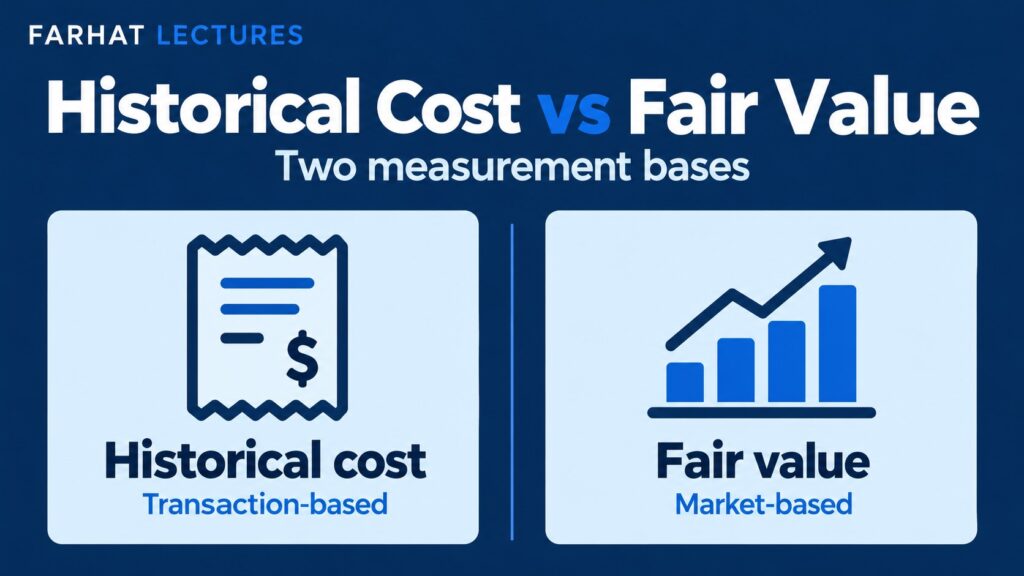
This distinction matters because two equal valuations may rely on very different evidence. For the broader measurement comparison, review historical cost versus fair value.
Key Takeaways
- Fair value disclosures appear in the notes to the financial statements. The Financial Accounting Standards Board (FASB) sets the rules in Accounting Standards Codification (ASC) Topic 820.
- For measurements included in the fair value hierarchy, each class of assets and liabilities is shown with its fair value and its hierarchy level.
- Level 1 uses unadjusted quoted prices in active markets for identical items. Level 2 uses other observable inputs. Level 3 uses significant unobservable inputs.
- The whole measurement takes the level of its least observable significant input.
- Level 3 gets the most disclosure, and nonpublic entities are required to disclose less than public companies.
- A level describes the evidence behind a number. It does not tell you how risky the investment is.
Watch Professor Farhat explain the concept
Start at 11:05 for Level 1 inputs, followed by Level 2 at 12:10 and Level 3 at 14:59. Use those distinctions to read the worked disclosure table below.
What Are Fair Value Disclosures?
Fair value disclosures are notes that explain the fair value numbers in the financial statements. A fair value is often an estimate, so readers need to know how strong the evidence behind it is.
Start with what fair value means. Fair value is an exit price. It is the price a company would receive to sell an asset, or pay to transfer a liability, in an orderly transaction between market participants on the measurement date. Market participants are independent, informed buyers and sellers. An orderly transaction is a normal sale with time to market the item, not a forced sale. So fair value is not a fire-sale price, a guaranteed future receipt, or the value management would like to report.
Financial instruments include cash, ownership interests in another entity, and qualifying contractual rights or obligations to exchange cash or other financial instruments. Investments, receivables, and payables are familiar examples. Being a financial instrument does not, by itself, mean every balance must be carried at fair value.
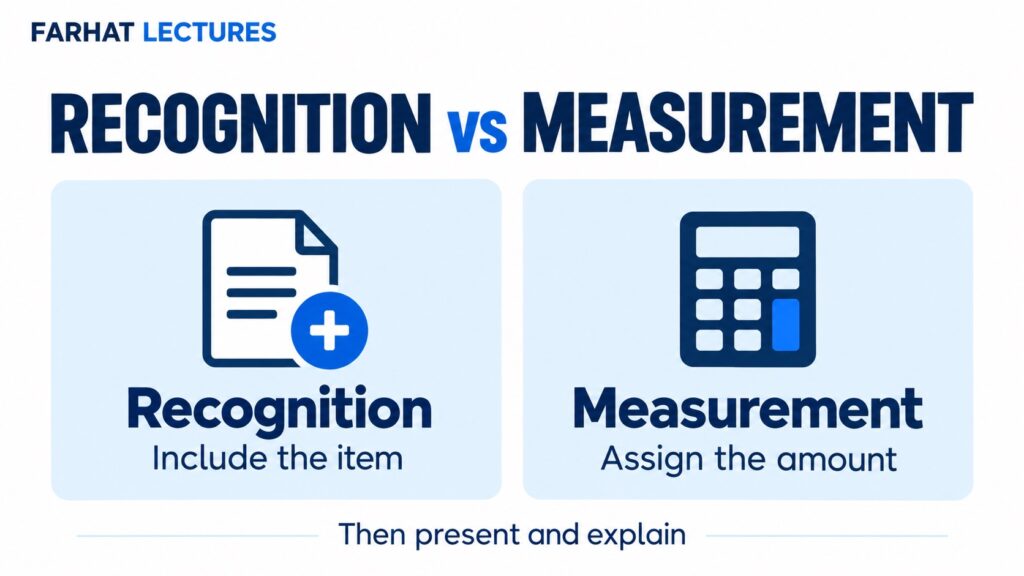
Fair value answers a measurement question: what amount should be reported? If the difference between recognizing an item and measuring it is new to you, see recognition vs measurement.
The applicable U.S. generally accepted accounting principles (GAAP) determine when fair value is required or permitted. The Financial Accounting Standards Board (FASB) sets these rules. Its Accounting Standards Codification (ASC) Topic 820, Fair Value Measurement, supplies the measurement framework and the related disclosures. Read the table heading carefully: some notes describe amounts measured at fair value, while others disclose fair values for items carried on another basis.
What Do Level 1, Level 2, and Level 3 Mean?
The fair value hierarchy is a three-level ranking of the inputs used to measure fair value. Level 1 inputs are the most observable. Level 3 inputs are the least observable.
| Level | Core evidence | Hypothetical illustration |
|---|---|---|
| Level 1 | Unadjusted quoted prices for identical items in an active market the entity can access | Identical publicly traded shares priced using an active-exchange quotation. |
| Level 2 | Observable inputs other than qualifying Level 1 quotations | A bond valued using observable prices for similar bonds and market yield data. |
| Level 3 | Significant unobservable inputs | A private investment valued using significant unobservable cash-flow assumptions reflecting market participants. |
Observable inputs come from market evidence. Unobservable inputs are used when relevant observable evidence is unavailable and must still reflect assumptions market participants would use. Level 3 is not permission to choose any desired amount.
When a measurement combines inputs from different levels, its overall classification follows the lowest-priority input that is significant to the entire measurement. Here, “lowest” means least observable: Level 3 has lower priority than Level 2. A valuation model is not automatically Level 3; the inputs determine the classification.
What Must Be Disclosed Under ASC 820?
ASC 820 asks for more detail as the evidence gets harder to observe. Level 1 needs the least explanation. Level 3 needs the most.
The disclosures are made for each class of assets and liabilities. A class is a group of items with a similar nature, characteristics, and risks.
Three terms help here. A valuation technique is the method used to estimate fair value, such as comparing market prices or discounting expected cash flows. A recurring measurement is made at fair value at the end of every reporting period, such as trading securities. A nonrecurring measurement is made at fair value only in particular circumstances, such as writing down an impaired asset.
| Applies to | What the company discloses | Relief for nonpublic entities |
|---|---|---|
| Every class measured at fair value, except investments measured using the NAV practical expedient | The fair value amount and its level in the hierarchy, shown in a table | None |
| Nonrecurring measurements | The reason for the measurement | None |
| Level 2 and Level 3 | A description of the valuation technique and the inputs used, plus any change in technique and the reason for it | None |
| Level 3 | Quantitative information about the significant unobservable inputs. Entities other than nonpublic entities also disclose the range and weighted average of those inputs, subject to the permitted alternatives explained below. | The range and weighted average of those inputs are not required |
| Recurring Level 3 | A rollforward from the beginning balance to the ending balance, showing gains and losses, purchases, sales, issues, settlements, and transfers in and out | The full rollforward is not required. Disclose transfers into and out of Level 3 and purchases and issues instead |
| Recurring Level 3 | Changes in unrealized gains and losses included in earnings and, separately, other comprehensive income for items still held at the reporting date, with the related statement line items | Not required |
| Recurring Level 3 | A narrative description of the uncertainty in the measurement that comes from the significant unobservable inputs | Not required |
| Nonfinancial assets | If the highest and best use of the asset differs from its current use, that fact and the reason. Highest and best use means the use that would maximize the value of the asset to market participants | None |
This table is a study summary. The full requirements are in ASC 820-10-50.
Entities required to disclose the weighted average also explain how they calculated it. For certain significant unobservable inputs, a median, arithmetic average, or other quantitative measure may replace the weighted average if it more reasonably and rationally reflects the distribution of those inputs.
You may also see an extra column in real notes for investments measured at net asset value (NAV). NAV per share is a practical expedient, which is an approved shortcut, that ASC 820 allows for certain investment funds. Those investments are not placed in Level 1, Level 2, or Level 3. They are listed separately so the table still adds up to the balance sheet amount.
CPA Exam tip: Fair value measurement is tested on the FAR section. Watch for two traps. First, if even one significant input is unobservable, the whole measurement is Level 3. Second, a quoted price for an identical asset in a market that is not active is a Level 2 input, not Level 1.
How to Read a Fair Value Disclosure Table: Worked Example
Hypothetical example. Harbor Learning reports the following investment assets at fair value on December 31, 20X8. All amounts are dollars. Assume the quoted shares qualify for Level 1, the bond’s significant inputs are observable, and the private investment relies on significant unobservable inputs. This is a simplified teaching table, not a complete disclosure checklist.
| Asset class | Total fair value | Level 1 | Level 2 | Level 3 |
|---|---|---|---|---|
| Quoted shares | $90,000 | $90,000 | — | — |
| Corporate bonds | $65,000 | — | $65,000 | — |
| Private investment | $25,000 | — | — | $25,000 |
| Total assets shown | $180,000 | $90,000 | $65,000 | $25,000 |
Read across each row
Each row reports one total and identifies where that measurement belongs. The quoted-share row is $90,000 in total, all in Level 1. Do not add its total column to its hierarchy column and report $180,000. The level columns explain the total; they are not additional assets.
Read down each column
The hierarchy columns reconcile: $90,000 + $65,000 + $25,000 = $180,000. Level 3 represents $25,000 ÷ $180,000 = 13.9% of the investment assets shown, rounded to one decimal place. This percentage describes the table’s composition. It is not a loss probability or the percentage of the entire company measured with estimates.
What Extra Disclosures Does Level 3 Require?
After locating the $25,000 Level 3 balance, read the accompanying explanation of the valuation technique and significant unobservable inputs. For example, a private investment valuation might depend on expected cash flows and a discount rate. Ask which assumptions could materially affect the amount and how the company explains measurement uncertainty.
For recurring Level 3 measurements, the note also includes a rollforward. A rollforward is a schedule that starts with the beginning balance and shows each change during the period until it reaches the ending balance. Here is a simple one for Harbor’s private investment. Assume Harbor is a public company. The amounts are hypothetical.
| Item | Amount |
|---|---|
| Beginning balance | $20,000 |
| Purchases | 3,000 |
| Unrealized gain included in net income | 2,000 |
| Ending balance | $25,000 |
Check the math: $20,000 + $3,000 + $2,000 = $25,000. The ending balance ties to the Level 3 column in Harbor’s fair value table. That tie is the first thing to check when you read a rollforward.
Entities that do not qualify for nonpublic-entity relief must show the full rollforward for recurring Level 3 measurements. For items still held at the reporting date, they also disclose the period’s changes in unrealized gains and losses included in earnings and, separately, other comprehensive income, identifying the related statement line items. Nonpublic entities get relief. Instead of the full rollforward, they disclose transfers into and out of Level 3 and purchases and issues of Level 3 items. The FASB’s 2018 disclosure amendments explain these differences. The summary table above covers the main requirements. For the full list, go to ASC 820-10-50.
These details belong within the broader notes to financial statements. They also follow from the full disclosure principle, which says financial statements should include the information a reader needs to make an informed decision. A table summarizes the numbers; the narrative supplies information that the columns cannot communicate on their own.
Common Mistakes When Reading Fair Value Disclosures
Confusing level with investment risk. An actively traded share can be volatile even though its quoted price is Level 1. A readily observable price does not guarantee a safe investment.
Assuming every amount is a sale or cash receipt. A fair value measurement can appear without a sale occurring. The disclosure date matters; a later price does not automatically replace the amount at the reporting date.
Treating every bond as Level 2 or every model as Level 3. The facts about significant inputs control the result. An instrument’s name alone is insufficient.
Netting unrelated assets and liabilities. A fair value table may show both, but presentation together does not authorize offsetting. Use the applicable presentation rules. For related presentation distinctions, see disclosure techniques and cross-references.
Fair Value Disclosures Quiz: Financial Instruments and Hierarchy
Test your understanding with nine questions before moving to the worked practice questions below. Practice classifying financial instruments, identifying Level 1, Level 2, and Level 3 fair value measurements, and recognizing fair value disclosures.
Choose one answer for each question, then select Check answers to see your score and explanations. Each question is worth one point.
Answered: 0 of 9
Study notes: fair value, financial instruments, and hierarchy levels
When is fair value information useful?
Fair value information may be more useful than historical cost for certain types of assets and liabilities, particularly financial instruments.
What are financial instruments?
Financial instruments include cash, an ownership interest, or a contractual right to receive or obligation to deliver cash or another financial instrument. Examples include cash, investments, accounts receivable, and payables.
- Contractual rights to receive cash or other financial instruments are assets.
- Contractual obligations to pay are liabilities.
What are the three fair value hierarchy levels?
- Level 1: The least subjective measures use unadjusted quoted prices in active markets for identical assets or liabilities.
- Level 2: More subjective measures use market-based inputs other than those in Level 1, such as market prices for similar assets or liabilities.
- Level 3: The most subjective measures use unobservable inputs, such as a company’s own data or assumptions about what market participants would use.
Why is the fair value hierarchy used?
The hierarchy helps increase consistency and comparability in the use of fair value measures and provides insight into how fair value is determined.
What fair value disclosures are required?
For each class of assets and liabilities included in the fair value hierarchy, companies must disclose the fair value measurement and the hierarchy level of the measurement as a whole, classified as Level 1, Level 2, or Level 3. Level 2 and Level 3 measurements also need a description of the valuation techniques and inputs used. Level 3 measurements need the most detail, including quantitative information about the significant unobservable inputs. Investments measured using the NAV practical expedient are excluded from the hierarchy and disclosed separately.
Practice questions and explained answers
1. Harbor obtains an unadjusted active-market quotation for identical shares. Which level applies?
Answer: Level 1, assuming Harbor can access that market at the measurement date. All parts of the description matter, including identical and active.
2. What amount in Harbor’s table uses inputs other than Level 1?
Answer: $90,000. Add Level 2 of $65,000 and Level 3 of $25,000. That is 50% of the $180,000 total; it does not mean half the investments are unreliable. Notice that $90,000 is also the Level 1 total. That is a coincidence in this example, so check that you added the Level 2 and Level 3 columns and did not simply read the Level 1 column.
3. A valuation includes observable bond data and a significant unobservable adjustment. Can the whole measurement remain Level 2?
Answer: no. The significant unobservable input places the entire measurement in Level 3. Do not classify it by whichever input contributes the largest number of data points.
Studying for the FAR section of the CPA Exam? Keep practicing with the Farhat Lectures FAR Test Bank.
Frequently asked questions
What are fair value disclosures?
Fair value disclosures are notes to the financial statements that explain fair value amounts, identify the hierarchy level for each class included in the hierarchy, and describe how Level 2 and Level 3 amounts were determined. Investments measured using the NAV practical expedient are excluded from the hierarchy and disclosed separately. Under U.S. GAAP, the requirements are in FASB ASC 820.
Are Level 3 values necessarily wrong?
No. They depend on significant unobservable inputs and require appropriate support and disclosure. The classification signals the nature of the evidence, not an automatic error.
Does the hierarchy tell me which assets must use fair value?
No. The applicable accounting topic determines the measurement basis. The hierarchy classifies inputs when fair value is measured.
Is the hierarchy table the entire fair value note?
Usually it is only part of the information needed. Read the heading, scope, explanatory text, and relevant additional disclosures together.
What is the difference between Level 1, Level 2, and Level 3?
Level 1 uses unadjusted quoted prices in active markets for identical assets or liabilities. Level 2 uses other observable inputs, such as quoted prices for similar items, or for identical items in markets that are not active. Level 3 uses significant unobservable inputs.
What is a Level 3 rollforward?
A Level 3 rollforward is a reconciliation of the beginning and ending balances of recurring Level 3 measurements. It shows gains and losses, purchases, sales, issues, settlements, and transfers into and out of Level 3. Nonpublic entities are not required to present the full rollforward.
Do private companies have to make fair value disclosures?
Yes, but fewer of them if the company meets the definition of a nonpublic entity. For measurements included in the fair value hierarchy, nonpublic entities still disclose the fair value amounts, the hierarchy levels, and how Level 2 and Level 3 amounts were determined. In place of the full Level 3 rollforward, they disclose transfers into and out of Level 3 and purchases and issues of Level 3 items.
Sources
Current requirements are in the FASB Accounting Standards Codification, Topic 820. The original FASB Statement 157, paragraphs 22–30, provides historical background on the hierarchy; Accounting Standards Update (ASU) 2018-13 explains the 2018 changes to the disclosure requirements.
About the author: Mansour Farhat, CPA, CIA, DBA, is the founder of Farhat Lectures. He holds a Doctor of Business Administration from Temple University and a Master of Accountancy from Bloomsburg University. He teaches accounting to college students and to CPA, CMA, and EA exam candidates.
Explore the connected lessons
- Notes to Financial Statements: A Simple Reading Guide — Read policies, estimates, contractual restrictions, and uncertainties.
- Disclosure Techniques: 5 Ways to Explain Financial Statements — Choose a presentation method and reconcile a supporting schedule.



Responses