
Intermediate Accounting
Time Value of Money in Accounting: A Simple Guide
Learn why the timing of cash matters in accounting. Identify present value, future value, interest rates, and periods before selecting an interest table.

Learn why the timing of cash matters in accounting. Identify present value, future value, interest rates, and periods before selecting an interest table.

Distinguish beginning-of-period and end-of-period payments. Compare future values on the same date, apply the extra-interest adjustment, and practice counting deposits correctly.
In this article Understanding continuing operations Key components Formula and calculation Why it matters Financial analysis Limitations Watch the video lesson Income statement formats Single-step
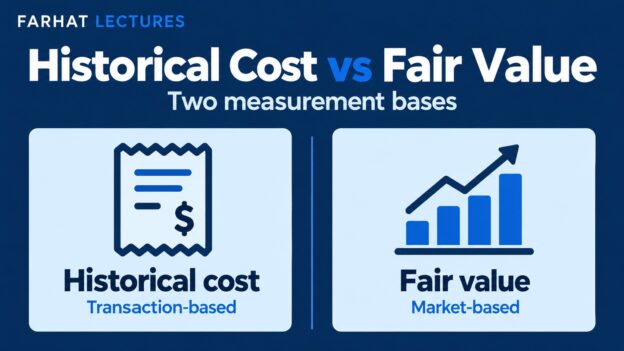
Compare transaction-based historical cost with market-based fair value. Understand the three hierarchy levels and why GAAP uses more than one measurement basis.
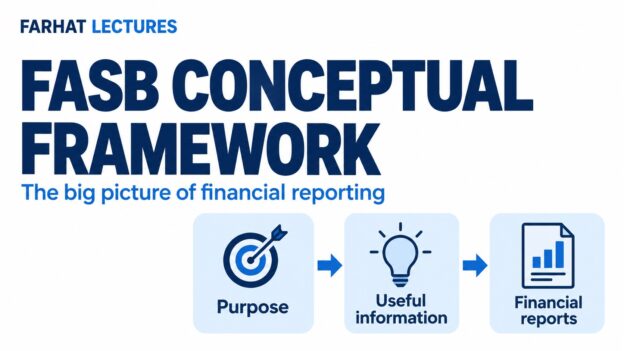
Understand the objective of financial reporting through five essential insights, a profit-versus-cash-flow example, and a concise financial statement guide from Farhat Lectures.

Compare franchisor and franchisee accounting under U.S. GAAP. Work through franchise fees, royalties, advertising contributions, inventory, leases, and startup costs with journal entries, a Farhat video, and practice questions.
Understand IFRS 16 lease accounting through an original worked example, journal entries, and a three-year amortization schedule. Review recognition exemptions, financial statement effects, and key differences from ASC 842.

Learn how to calculate a refund liability and return asset, prepare five sales-return journal entries, and reconcile net revenue and cost of goods sold. Includes a worked example, Farhat video, and practice questions.
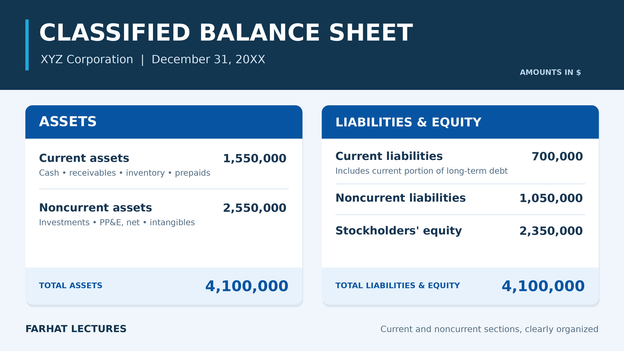
In this article Balance Sheet Video Income Statement Cash Flows GAAP vs. IFRS Examples Why It Matters Exam Tips Takeaways FAQ Classified financial statements are
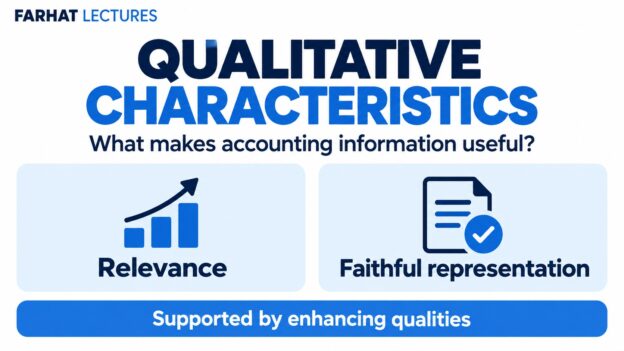
Learn the six qualitative characteristics of useful accounting information, with relevance vs faithful representation, examples, and practice answers.