Intermediate Accounting
Revenue Recognition Examples: ASC 606 Allocation and Journal Entries
Revenue recognition is the accounting rule that decides when, and how much, revenue a company records. Under ASC 606 (US GAAP) and IFRS 15, a

Revenue recognition is the accounting rule that decides when, and how much, revenue a company records. Under ASC 606 (US GAAP) and IFRS 15, a
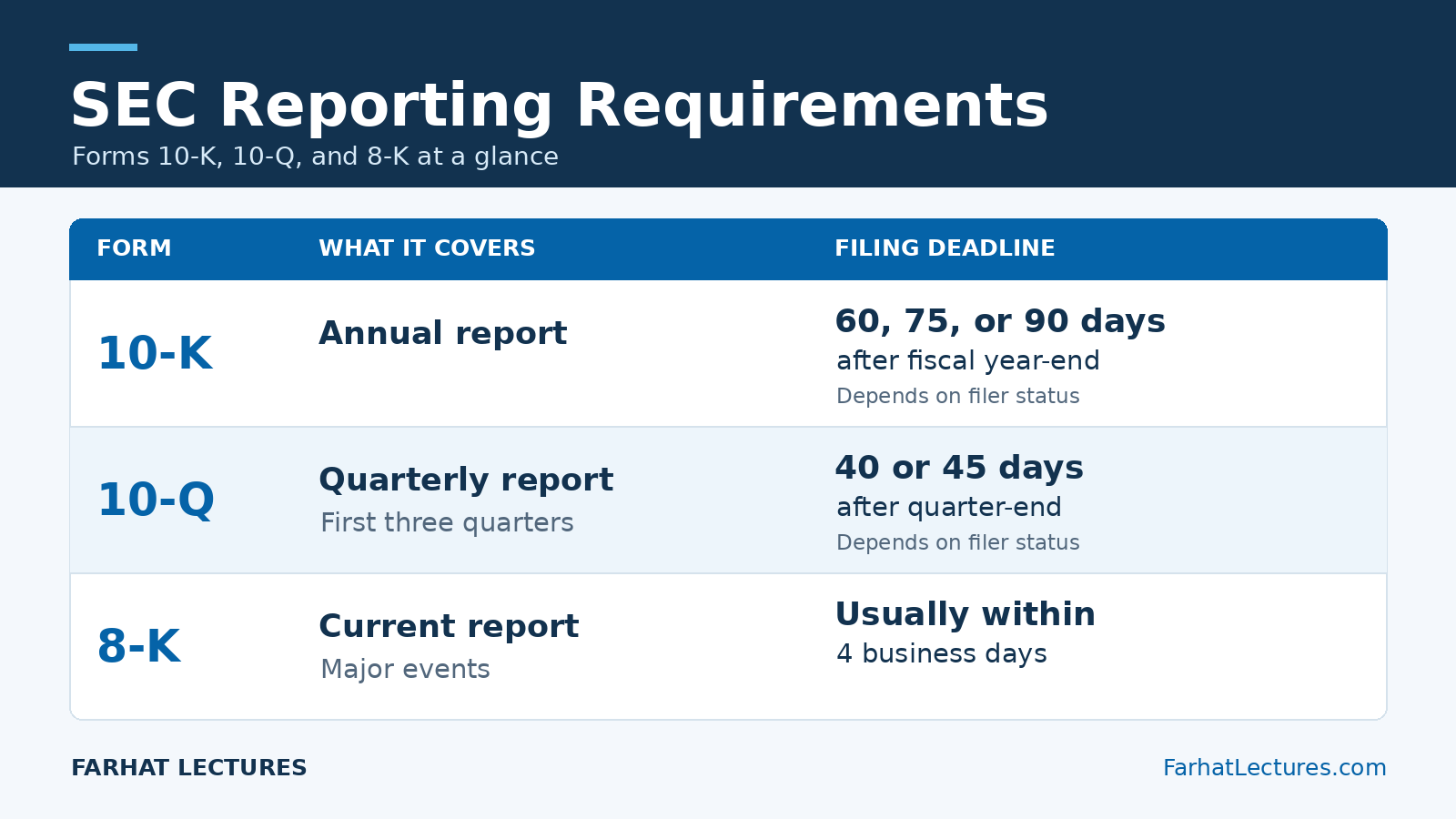
SEC reporting requirements are the disclosure rules that public companies must follow under the Securities Exchange Act of 1934. Most U.S. public companies file an
What Is Earnings Per Share (EPS)? Earnings per share (EPS) is the portion of a company’s net income allocated to each share of common stock.
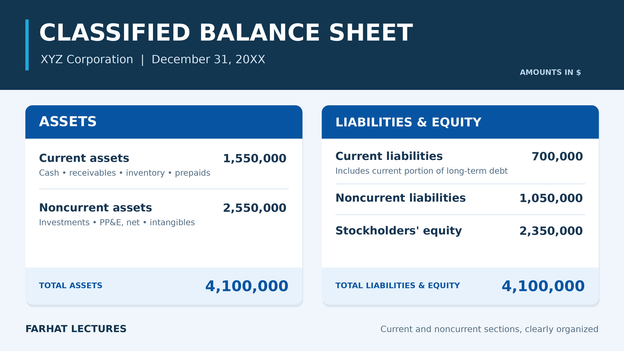
What Is a Classified Balance Sheet? A classified balance sheet groups a company’s assets and liabilities into current and noncurrent categories, with a subtotal for
A stock warrant is a contract issued by a company that gives the holder the right, but not the obligation, to buy the company’s shares

A CPA Exam score of 73 is two scaled-score points below passing, but it does not mean two more correct answers would guarantee a pass. Learn how to interpret your performance report and build a focused retake plan.
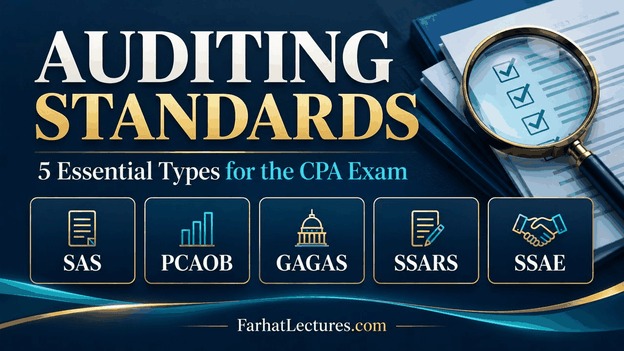
Compare SAS, PCAOB, GAGAS, SSARS, and SSAE for the CPA exam. Learn how to choose the applicable standards, distinguish assurance levels, and practice with original scenarios and Farhat Lectures resources.
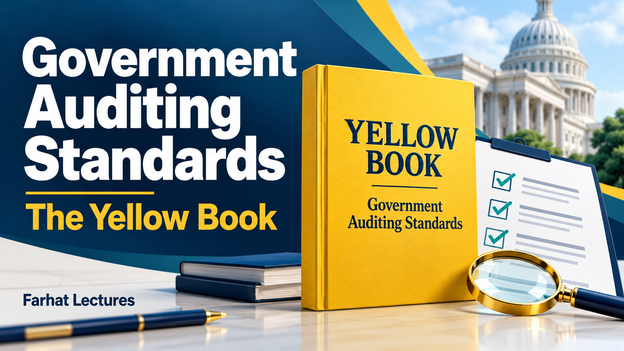
Government Auditing Standards, also called the Yellow Book or GAGAS, are audit standards issued by the U.S. Government Accountability Office (GAO). Auditors follow them when

Compare BAR, TCP, and ISC, assess your strengths, and choose a CPA exam discipline with practical examples, study-order guidance, and Farhat Lectures resources.
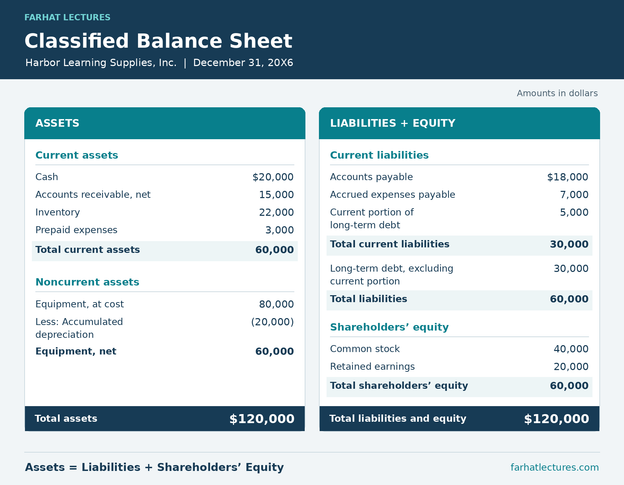
Learn what a balance sheet reports, explore assets, liabilities, and equity, and follow a worked example with clear explanations from Farhat Lectures.