
What Is Accounts Receivable? Definition, Journal Entries, and Examples


In This Guide
Accounts receivable (AR) is money customers owe a business for goods or services it has delivered on credit. For a completed credit sale with an unconditional right to payment, the company debits Accounts Receivable and credits Revenue. The receivable is reported on the balance sheet, usually as a current asset, reduced by an allowance for amounts it doesn’t expect to collect.
Below, you’ll find the journal entries, a worked example with real numbers, how the allowance for credit losses works, and the AR ratios and exam traps that show up in college accounting courses and on the FAR section of the CPA Exam.
Key Takeaways
- Accounts receivable is money customers owe for goods or services delivered on credit.
- It’s an asset, usually a current asset, reported net of an allowance for credit losses.
- Revenue is recognized when or as the performance obligation is satisfied. Collecting a recorded receivable at its carrying amount, without discounts or other adjustments, does not affect net income.
- U.S. GAAP (FASB ASC 326) requires an allowance for expected credit losses. The direct write-off method is used on tax returns, not in GAAP financial statements, unless the amounts are immaterial.
- AR turnover and days sales outstanding (DSO) show how quickly a company collects from customers.
Definition and Importance
What is Accounts Receivable?
Accounts receivable is the total of a company’s unpaid customer invoices: money customers owe for goods or services the company has already delivered on credit. A receivable is recorded when the company has an unconditional right to be paid, meaning nothing but the passage of time stands between it and the cash. That’s the test FASB ASC 606 (the revenue recognition standard) uses to tell a receivable apart from a contract asset, which is a right to payment that still depends on something else, such as finishing more work.
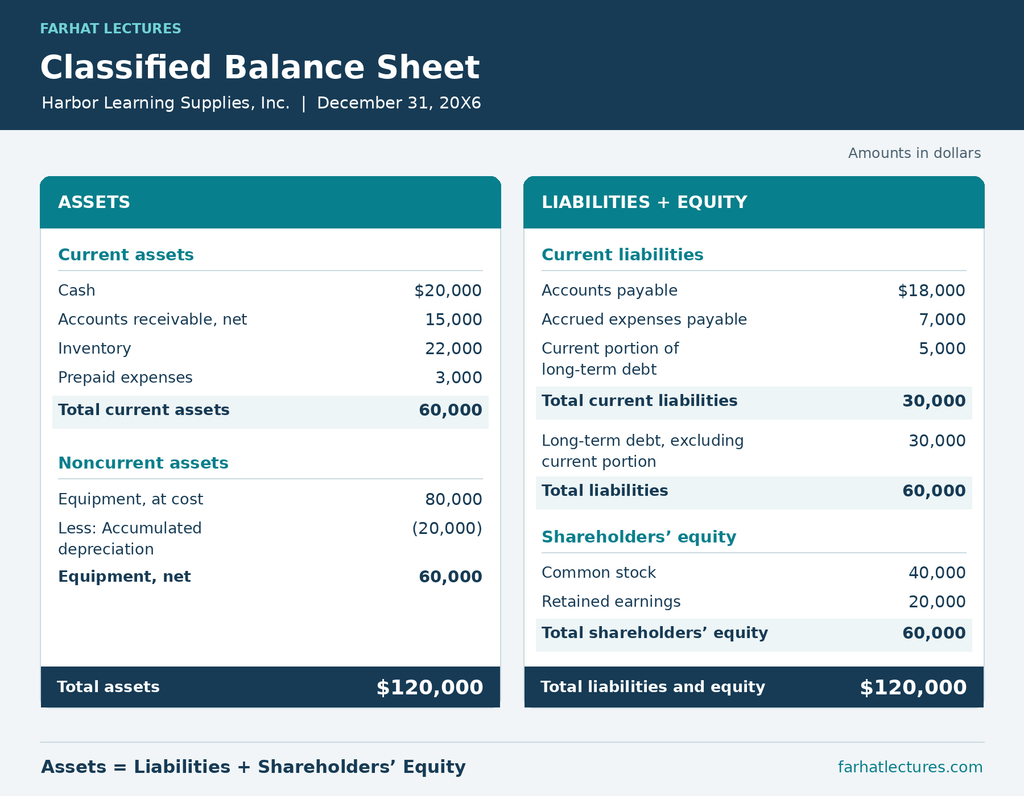
AR is classified as a current asset when the company expects to collect it within one year or within its operating cycle (the time it takes to turn cash into goods or services, sell them, and collect the cash), whichever is longer. Amounts expected after that point are reported as noncurrent assets. On the balance sheet, AR is shown at the amount the company actually expects to collect: the gross balance minus an allowance for credit losses.
Why Is Accounts Receivable Important?
AR is crucial because it directly impacts a company’s liquidity and cash flow. Efficient AR management ensures that a business can meet its financial obligations, reinvest in operations, and avoid excessive borrowing.
Payment Terms
Net 30 means payment is due 30 days from the invoice date. Terms of 2/10, net 30 allow a 2% discount if the customer pays within 10 days; otherwise, the full amount is due in 30 days. Distinguish the contractual payment terms from the date revenue is recognized.
Accounts Receivable Process
Recording Transactions
Every AR process starts with recording transactions. When a sale is made on credit, it’s recorded in the accounting system, creating an AR entry that tracks the amount owed by the customer.
Watch: Recording Credit Sales and Accounts Receivable
In this Farhat Lectures segment, Professor Farhat explains how credit sales are recorded in accounts receivable and sales revenue. The embedded excerpt runs from 4:17 to 7:37.
Watch the complete accounts receivable lesson on the Farhat Lectures YouTube channel.
Accounts Receivable Journal Entries: A Worked Example
Here’s how a typical credit sale moves through the books.
On March 1, 2026, Bright Path Consulting finishes a $5,000 project for a client on net 30 terms.
Step 1: Record the credit sale (March 1)
| Account | Debit | Credit |
|---|---|---|
| Accounts Receivable | $5,000 | |
| Service Revenue | $5,000 |
Revenue is recorded now because the work is done and Bright Path has an unconditional right to be paid.
Step 2: Record the collection (March 28)
| Account | Debit | Credit |
|---|---|---|
| Cash | $5,000 | |
| Accounts Receivable | $5,000 |
Notice there’s no revenue or expense in this entry. The income statement already picked up the $5,000 on March 1.
Exam tip: Collecting a previously recorded receivable at its carrying amount, without discounts, interest, or other adjustments, does not affect net income. In that case, the entry changes only Cash and Accounts Receivable.
Want more practice with entries like these? Our Financial Accounting Course covers accounting for receivables with video lectures, practice multiple-choice questions, and exercises.
Managing Accounts Receivable
Establish credit limits, issue accurate invoices promptly, apply receipts to the correct customer accounts, and review aging reports for overdue balances. Follow up on disputes and late payments consistently. Accounting software can automate reminders, but credit decisions and unusual transactions require review.
Reconcile the customer subsidiary ledger to the Accounts Receivable control account in the general ledger. Cash application—matching receipts to the invoices they settle—is a separate process.
Separate cash handling, receivable recordkeeping, and write-off approval. This helps prevent lapping, in which an employee steals one customer’s payment and conceals it using later receipts from other customers.
Financial Reporting
Balance Sheet Representation
AR is reported as a current asset when it’s expected to be collected within one year or the operating cycle, whichever is longer. It’s presented net of the allowance for credit losses, so readers see the amount the company actually expects to collect. For example, $80,000 of gross receivables with a $3,200 allowance is reported at $76,800. This helps users judge the company’s liquidity, meaning its ability to pay its short-term bills.
Income Statement And Cash Flow Impact
Accounts Receivable is a balance sheet account. The related revenue is recognized when or as the company satisfies its performance obligation under ASC 606. A receivable is recognized when the right to payment is unconditional; a conditional right to consideration is a contract asset.
Collecting the receivable at its carrying amount, without discounts, interest, or other adjustments, has no effect on the income statement. The entry is a debit to Cash and a credit to Accounts Receivable, which simply swaps one asset for another. The collection shows up on the statement of cash flows as cash from operating activities.
AR does affect the income statement in two other ways: credit loss expense (often called bad debt expense) when the company estimates amounts it won’t collect, and sales returns or discounts, which reduce revenue.
Allowance For Credit Losses: What Happens When Customers Don’t Pay?
Not every customer pays. U.S. GAAP handles this with the allowance method. At each balance sheet date, the company estimates how much of its AR it won’t collect and records that estimate in a contra-asset account (an account that reduces an asset) called the allowance for credit losses. You’ll also see it called the allowance for doubtful accounts.
Under FASB ASC 326, the current expected credit losses (CECL) model estimates losses expected over the contractual life of receivables using historical experience, current conditions, and reasonable and supportable forecasts. An aging schedule can support the estimate, but its loss rates should reflect relevant conditions rather than mechanically repeating historical percentages.
Example: Estimating The Allowance With An Aging Schedule
An aging schedule groups unpaid invoices by how long they’ve been outstanding and applies a higher loss rate to older balances. Here’s Bright Path’s aging schedule at December 31, 2026:
| Age of receivable | Balance | Estimated loss rate | Expected credit loss |
|---|---|---|---|
| 0 to 30 days | $50,000 | 1% | $500 |
| 31 to 60 days | $18,000 | 5% | $900 |
| 61 to 90 days | $8,000 | 10% | $800 |
| Over 90 days | $4,000 | 25% | $1,000 |
| Total | $80,000 | $3,200 |
The allowance needs an ending credit balance of $3,200. It already has a $500 credit balance before the adjustment, so Bright Path records only the difference ($3,200 minus $500 = $2,700):
| Account | Debit | Credit |
|---|---|---|
| Credit Loss Expense (Bad Debt Expense) | $2,700 | |
| Allowance for Credit Losses | $2,700 |
On the balance sheet, AR is reported at $76,800 ($80,000 minus $3,200).
Exam trap: If the allowance had a $300 debit balance before the adjustment (because write-offs during the year were larger than expected), the expense would be $3,500 ($3,200 plus $300). With an aging schedule, always adjust from the existing balance to the required ending balance.
Writing Off And Recovering An Account
On February 10, 2027, a customer who owes $1,100 files for bankruptcy, and Bright Path decides the account is uncollectible:
| Account | Debit | Credit |
|---|---|---|
| Allowance for Credit Losses | $1,100 | |
| Accounts Receivable | $1,100 |
This entry doesn’t touch the income statement, and on its own it doesn’t change net AR. Gross AR and the allowance both drop by $1,100, so net AR stays at $76,800 ($78,900 minus $2,100), assuming no other activity.
If the customer later pays after all, Bright Path reverses the write-off and then records the collection:
| Account | Debit | Credit |
|---|---|---|
| Accounts Receivable | $1,100 | |
| Allowance for Credit Losses | $1,100 | |
| Cash | $1,100 | |
| Accounts Receivable | $1,100 |
Allowance Method Vs. Direct Write-Off Method
The direct write-off method skips the estimate and records an expense only when a specific account is written off. U.S. GAAP doesn’t allow it for material amounts, because the expense often lands in a later period than the sale and AR is overstated in the meantime.
Tax rules work differently. For federal income tax, a business generally deducts a bad debt only in the year it becomes worthless, in whole or in part, and only if the amount was already included in income. A cash-method taxpayer that never reported the sale as income can’t deduct the unpaid invoice (see IRS Topic No. 453). Because the book expense usually comes before the tax deduction, the allowance creates a temporary difference that typically results in a deferred tax asset.
Accounts Receivable Financing
What is AR Financing?
AR financing means using your receivables to raise cash now instead of waiting for customers to pay. There are two basic ways to do it: borrow against the receivables, using them as collateral for a loan, or sell them to a third party, usually at a discount. Either way, the business gets quick access to funds without waiting for customer payments.
Types of AR Financing
- Factoring: Selling invoices to a factor (a finance company that buys receivables), which then collects payments directly from customers. Factoring can be with recourse, where the seller must make good on invoices that customers fail to pay, or without recourse, where the factor absorbs those losses.
- Invoice Discounting: Using invoices as collateral for a loan, while the business keeps control over collections. U.S. textbooks often call this pledging or assigning receivables. The receivables stay on the balance sheet, and the business records the loan as a liability.
How Is AR Financing Recorded?
For the CPA Exam, the key question is whether a transfer of receivables is a sale or a loan. Under FASB ASC 860 (Transfers and Servicing), a transfer counts as a sale only if the company gives up control of the receivables. In that case, the receivables come off the balance sheet, and the difference between their carrying amount and what the company receives is recorded as a gain or loss. With factoring, that’s usually a loss, because the factor charges a fee.
Recourse alone does not determine whether a transfer qualifies as a sale. For an entire financial asset or a qualifying participating interest, ASC 860 requires legal isolation, the transferee’s ability to pledge or exchange the transferred assets (subject to the standard’s conditions), and no effective control retained by the transferor. Sale accounting also considers any retained interests and recourse obligations in measuring the gain or loss.
If the company retains control or otherwise fails the sale criteria, the transfer is treated as a secured borrowing. The receivables stay on the balance sheet, and the cash received is recorded as a liability.
Benefits and Risks
AR financing can improve cash flow and provide immediate working capital. However, it often comes with higher costs and the potential loss of customer relationships if collections are mishandled.
How Do You Measure Accounts Receivable? AR Turnover And DSO
Two ratios tell you how quickly a company turns its receivables into cash:
- AR turnover = Net credit sales ÷ Average net accounts receivable
- Days sales outstanding (DSO) = 365 ÷ AR turnover
Example: Bright Path has net credit sales of $730,000 for 2026. Net AR was $69,200 at the start of the year and $76,800 at the end.
- Average net AR = ($69,200 + $76,800) ÷ 2 = $73,000
- AR turnover = $730,000 ÷ $73,000 = 10.0 times
- DSO = 365 ÷ 10.0 = 36.5 days
Bright Path offers net 30 terms. A DSO of 36.5 days suggests collections may be slower than those terms, but it does not prove that customers pay 6.5 days late. Sales timing, growth, seasonality, and the mix of receivables can affect the ratio. Review the aging schedule and individual due dates before drawing conclusions.
Exam tip: Use net credit sales when the problem gives them, and use average AR rather than ending AR unless the question tells you otherwise. Some problems use 360 days instead of 365, so follow whatever the question specifies.
Accounts Receivable FAQs
Is accounts receivable an asset or a liability?
Accounts receivable is an asset. It’s the company’s right to collect cash from customers, and it’s usually a current asset because it’s expected to be collected within one year or the operating cycle, whichever is longer. The liability on the other side of a credit purchase is accounts payable.
Does collecting accounts receivable affect the income statement?
Collection at the recorded amount, without discounts or other adjustments, does not affect net income. Debit Cash and credit Accounts Receivable. For ordinary trade receivables, the receipt is an operating cash inflow.
What is the difference between accounts receivable and notes receivable?
Accounts receivable comes from ordinary customer invoices, is usually due within 30 to 60 days, and normally doesn’t charge interest. A note receivable is backed by a written promise (a promissory note) to pay a specific amount by a specific date, usually with interest, and it can be short-term or long-term.
What is the difference between AR and AP?
AR (Accounts Receivable) refers to money owed to a business by its customers, while AP (Accounts Payable) refers to money a business owes to its suppliers. Both are essential for managing cash flow and financial health.
For exam purposes, distinguish revenue recognition, collection, estimation of credit losses, and write-offs. The allowance adjustment affects expense; a write-off against the allowance reduces gross receivables and the allowance equally, leaving net receivables unchanged.
Continue Learning
Study receivables through the Intermediate Accounting Course, or begin with the Free Sample Course.
Accounting references: ASC 606 (revenue and receivables), ASC 326 (credit losses), and ASC 860 (transfers and servicing), available through the FASB Accounting Standards Codification.
About the Author
Mansour Farhat, CPA, CIA, DBA, is the instructor behind Farhat Lectures. He teaches accounting and CPA Exam topics through video lessons on farhatlectures.com and the Farhat Lectures YouTube channel.




Responses