CPA Exams
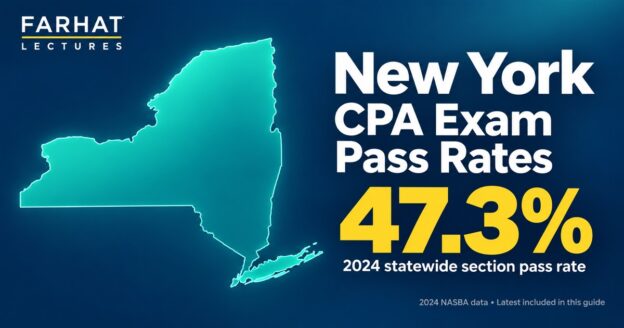
New York CPA Exam Pass Rates: 2024 NASBA Data
New York CPA exam pass rates from 2024 NASBA data: the 47.3% statewide section rate, public and private school comparisons, degree tables, and official application links.

New York CPA exam pass rates from 2024 NASBA data: the 47.3% statewide section rate, public and private school comparisons, degree tables, and official application links.
Learn how ASC 250 treats changes in principles, estimates, reporting entities, and accounting errors. Compare the rules, follow corrected journal-entry examples, watch the video lesson, and test yourself with a seven-scenario quiz.
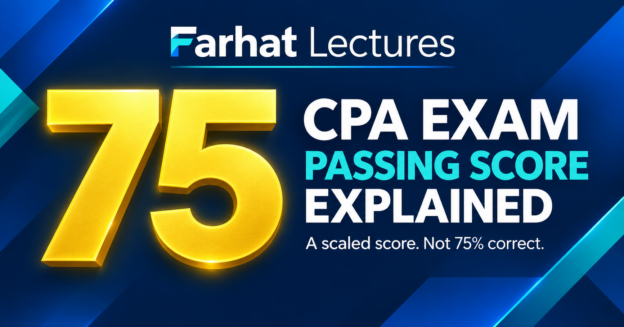
Yes. A CPA Exam score of 75 is the minimum passing score for each section in 2026. Scores range from 0 to 99. A 75
Compare CPA exam pass rate by jurisdiction statistics for 2024 with a map and ranked table covering 53 jurisdictions. Includes NASBA report dates and explanations of what state pass rates mean.
See the latest CPA passing percentage for 2026, with official Q1–Q2 pass rates, charts, 2025 comparisons, and the CPA passing grade of 75 explained.
Do not box your CPA exam preparation into a fixed time frame. Be realistic, focus on understanding, and get help from Farhat Lectures when you need it.
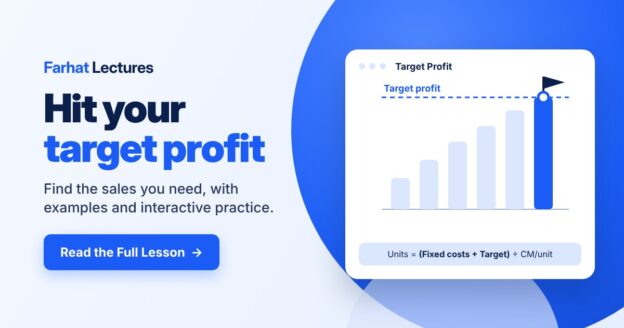
The target profit formula tells you how many units—or how much sales revenue—you need to earn a desired profit. Required unit sales = (Fixed costs
Work through five CVP analysis examples using contribution margin to evaluate advertising, product quality, pricing, commissions, and special orders. Includes formulas, calculations, a comparison table, and a Farhat video lesson.
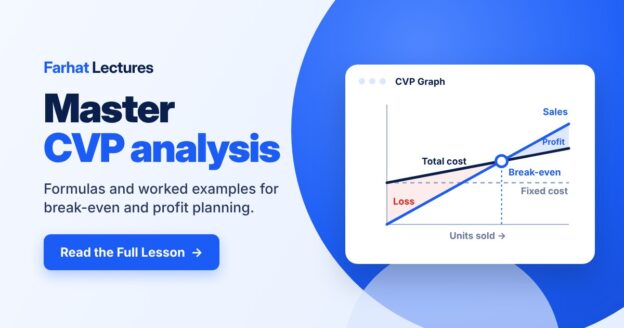
Cost volume profit analysis (CVP analysis) examines how selling prices, sales volume, variable costs, and fixed costs affect operating profit. Managers use it to calculate
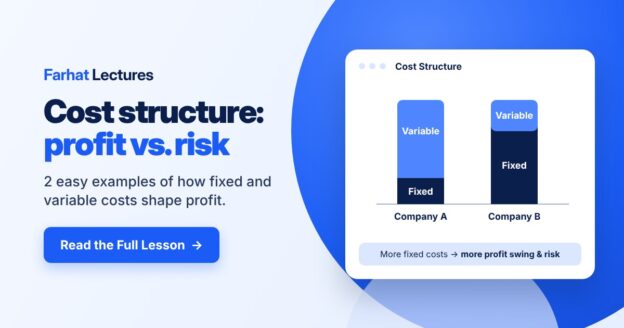
Cost structure is the mix of fixed and variable costs a business incurs. That mix helps explain why two companies with the same sales and