Intermediate Accounting
Purchase Cutoff Errors: Why the Current Ratio Changes
Learn how purchase cutoff errors affect inventory, accounts payable, working capital, and the current ratio. Compare an omitted invoice with a missed count.

Learn how purchase cutoff errors affect inventory, accounts payable, working capital, and the current ratio. Compare an omitted invoice with a missed count.
Trace inventory errors through cost of goods sold, net income, and retained earnings. Work a two-year example with overstated and understated ending inventory.
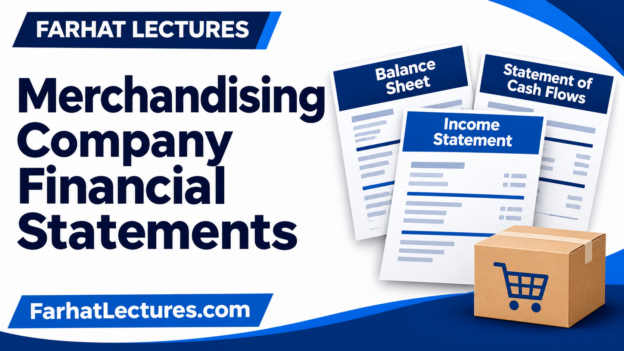
Follow an original merchandising example from net sales to net income, retained earnings, and a classified balance sheet, with explained practice questions.
Follow one payroll and one customer invoice across year-end. See how a reversing entry changes the next journal entry and how to check each period’s expense or revenue.
The account used for the original cash transaction determines whether a deferral is a candidate for reversal. Work through unused supplies and an advance from a customer.

Learn how a merchandiser closes sales discounts, returns, cost of goods sold, expenses, and dividends, then checks ending retained earnings.
See why a profit appears on the income statement debit side, how the placement reverses for a loss, and how a dividend error can leave a worksheet in balance.
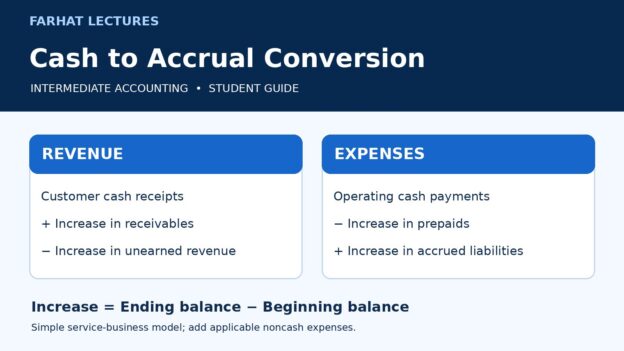
Learn cash to accrual conversion with revenue and expense formulas, a complete worked example, a net-income reconciliation, and explained practice questions.
Follow a small retailer from ledger balances to a finished 10-column worksheet. Check seven adjustments, trace the debit and credit totals, and reconcile the result to equity.
Build an adjusted trial balance from seven original adjustments. Follow the journal entries, account balances, debit-credit totals, and error checks.