Intermediate Accounting
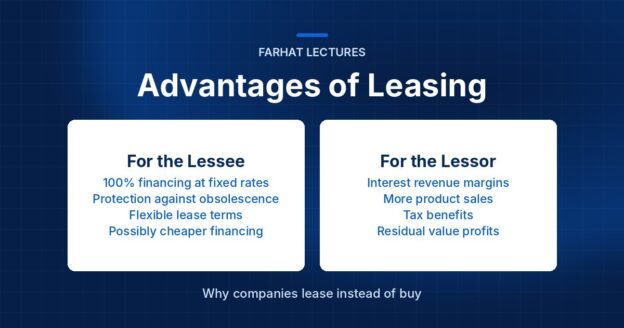
Advantages of Leasing for Lessees and Lessors
Why do companies lease instead of buy? See the advantages of leasing for lessees and lessors, the role of residual value, and the trade-offs.

Why do companies lease instead of buy? See the advantages of leasing for lessees and lessors, the role of residual value, and the trade-offs.
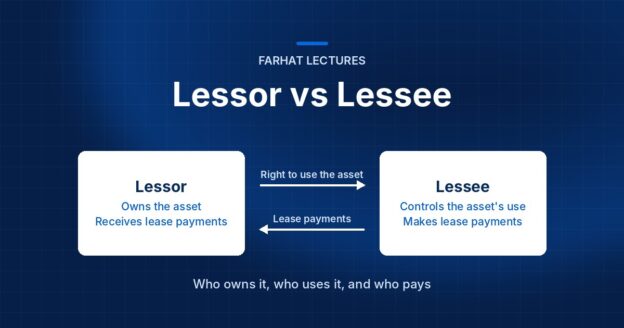
Learn the difference between a lessor and a lessee, what a lease is under ASC 842, and what the lessee reports on its balance sheet.
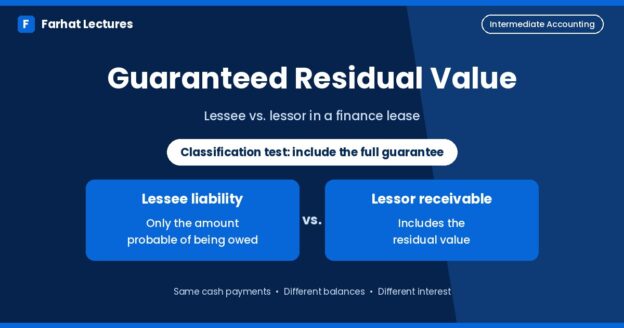
How a guaranteed residual value affects a finance lease: it counts in full for classification, only partly (or not at all) in the lessee liability, and fully in the lessor receivable.
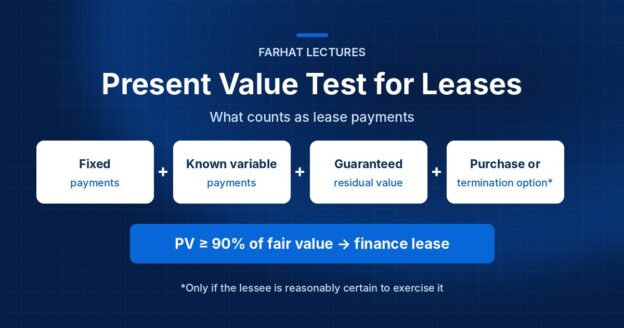
Learn which payments go into the present value test for leases, how residual values and options are treated, and which discount rate the lessee uses.
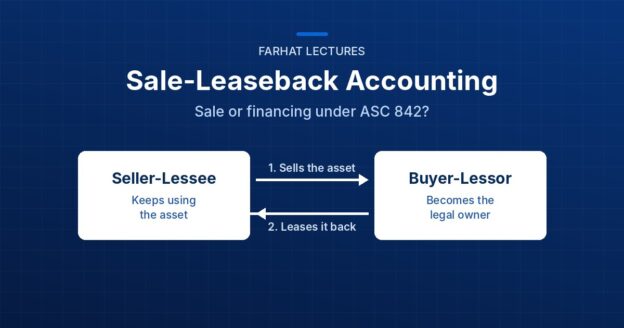
Learn how ASC 842 decides whether a sale-leaseback is a sale or a financing, and how the seller-lessee records the gain, ROU asset, and lease liability.
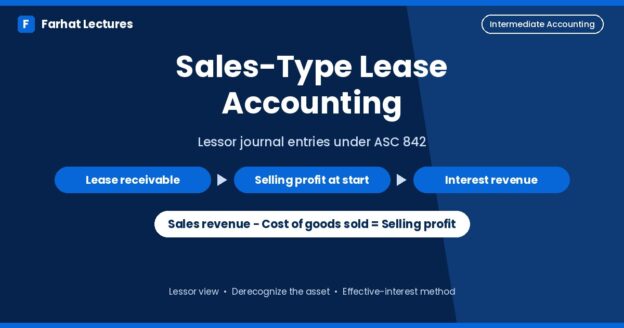
Sales-type lease accounting for the lessor: record the lease receivable, sales revenue, and cost of goods sold at commencement, then earn interest revenue until the asset comes back.
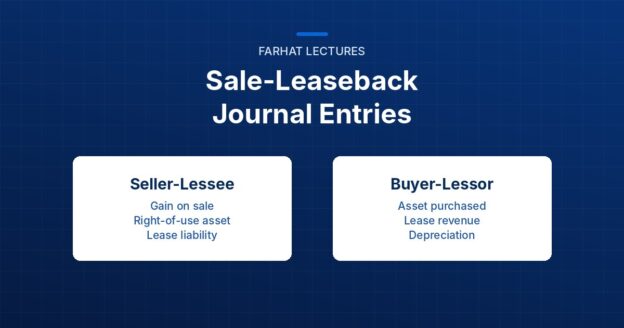
Record sale-leaseback journal entries for both the seller-lessee and the buyer-lessor, from the sale date through two years of lease payments.
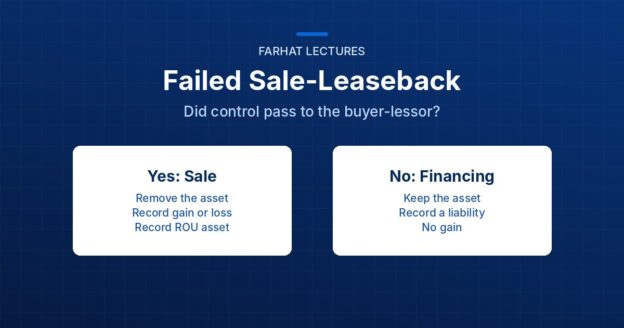
See why a finance leaseback or repurchase option makes a sale-leaseback fail, and how the seller-lessee records the deal as a financing.
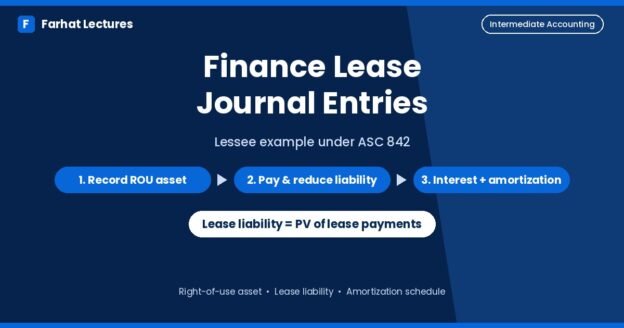
Finance lease journal entries for the lessee, step by step: record the right-of-use asset and lease liability, build the amortization schedule, and post year-end interest and amortization.
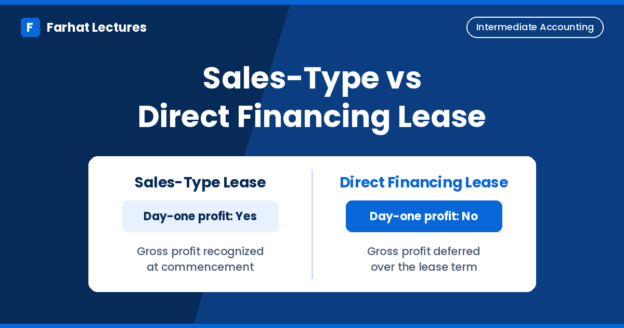
Compare sales-type vs direct financing leases for lessors: the day-one entry, when gross profit is recognized, the higher rate, and why total income ends up the same.