
Premium Liability: Coupons, Redemptions, and Journal Entries


Under the traditional expense model, premium liability is the estimated obligation, at the seller’s net cost, for promotional rewards customers are expected to claim but have not yet received. To calculate it, convert expected coupon redemptions into rewards, subtract rewards already delivered, and multiply by the net cost per reward (reward cost minus any cash the customer pays).
Quick note: this page covers promotional premiums, like coupons and mail-in rewards. If you are looking for unearned premium liability in insurance accounting, that is a different topic.
This guide follows the classic premium and coupon calculation taught in intermediate accounting courses. It also explains a necessary boundary: under current U.S. generally accepted accounting principles (GAAP), customer incentives may instead reduce revenue or create a contract liability under Accounting Standards Codification (ASC) 606.
Watch: Premium Liability Example, Step by Step
Watch Professor Farhat work through an expense-based premium liability example. The model distinction below explains its boundary under ASC 606.
What does premium liability mean?
Here, a premium is a promotional reward, such as a reusable bottle offered for purchase tokens. It is not an insurance premium or a premium on a bond. A redemption occurs when the customer uses the offer and receives the reward.
Companies may sell products this year but deliver some rewards next year. Recording only rewards delivered so far would miss the outstanding obligation in the lesson’s expense model. The estimate connects the promotion’s cost with the sales that generated it.
The central question is what remains to be provided. The number of coupons distributed, the number expected to be returned, and the number of rewards already delivered are three different quantities.
First identify which accounting model applies
| Arrangement | Accounting starting point |
|---|---|
| Exercise explicitly using Premium Expense and Premium Liability | Apply the lesson’s expected-redemption cost model below |
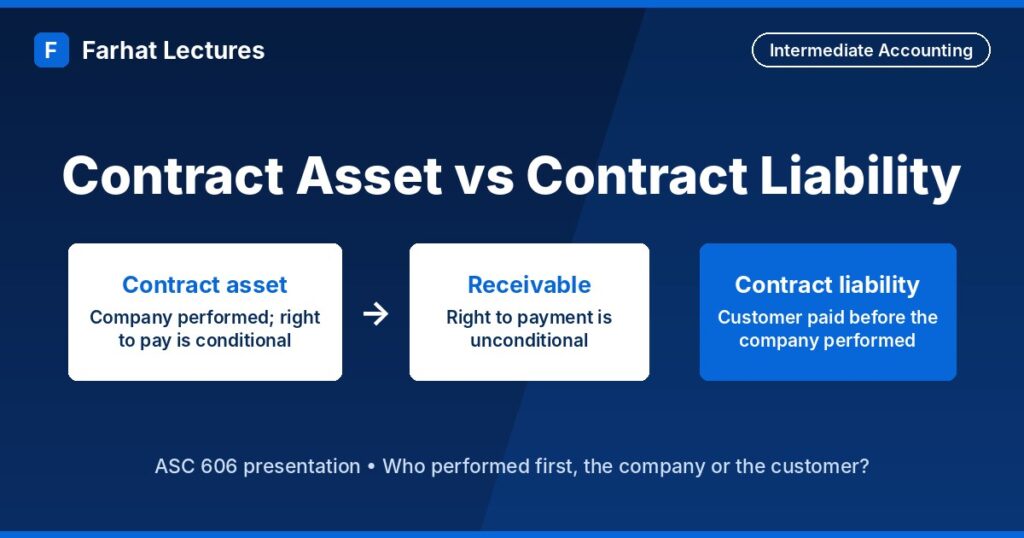
| Payment, rebate, or credit to a customer | Generally reduce transaction price and revenue unless paid for a distinct good or service |
| Option that gives the customer a material right to future goods | Allocate part of the transaction price to the right and defer that revenue until satisfaction or expiry |
A material right is a valuable option the customer would not receive without entering the contract. A performance obligation is a promise to provide a distinct good or service. An allocated-revenue contract liability is measured differently from an estimated-cost premium liability.
The FASB revenue implementation Q&As address material rights in Questions 12–14 and customer payments in Questions 25 and 29. The relevant authoritative paragraphs are ASC 606-10-55-41 through 55-45 and 606-10-32-25 through 32-27.
Heads up: in October 2026, the FASB proposed an update on consideration payable to a customer, with comments due November 23, 2026. It focuses mainly on payments made to a customer’s customers, such as platform credits. Check whether a final standard has been issued before relying on this section for a real contract.
Study boundary: the worked entries below illustrate the expense-based model presented in this guide. They are not a conclusion that a real customer reward meeting ASC 606’s material-right criteria should be expensed instead of receiving revenue allocation. Use the model stated in your exercise; for an actual contract, evaluate its terms first.
For the broader allocation rules, continue to revenue recognition and contract-liability examples. Here, the focus remains the lesson’s redemption calculation.
How to calculate premium liability
For a new program with no opening liability, use this sequence:
| Step | Calculation |
|---|---|
| 1. Expected coupons returned | Coupons issued × expected redemption rate |
| 2. Expected rewards | Expected coupons returned ÷ coupons required per reward |
| 3. Rewards still expected | Expected rewards − rewards already delivered |
| 4. Net cost per reward | Reward cost − cash contribution collected from the customer |
| 5. Ending premium liability | Rewards still expected × net cost per reward |
Apply the redemption percentage to the quantity defined in the problem. If it describes all coupons issued, calculate the total expected redemptions first, then subtract actual redemptions. Applying that percentage again to the remaining coupons gives a different answer, and it is wrong.
A simple premium liability example
Hypothetical example: Summit Snacks issues one token with each of 80,000 packs sold. Customers exchange eight tokens plus $2 for a bottle costing Summit $5. The company expects 50% of the tokens to be redeemed. By year-end, customers have returned 16,000 tokens. Summit bought 6,000 bottles for the promotion.
- Expected tokens returned: 80,000 × 50% = 40,000 tokens.
- Expected bottles: 40,000 ÷ 8 = 5,000 bottles.
- Bottles already delivered: 16,000 ÷ 8 = 2,000 bottles.
- Bottles still expected: 5,000 − 2,000 = 3,000 bottles.
- Net cost per bottle: $5 − $2 = $3.
- Ending premium liability: 3,000 × $3 = $9,000.
Total estimated promotion expense is 5,000 × $3 = $15,000. Of that total, $6,000 relates to bottles already delivered and $9,000 remains outstanding. These are cost-model amounts; they are not an allocation of sales revenue under ASC 606.
Premium liability journal entries
For this exercise, assume Summit expenses actual redemptions during the year and accrues the expected unpaid balance at year-end. Ordinary snack sales and their cost-of-goods-sold entries are omitted.
| Event | Account | Debit | Credit |
|---|---|---|---|
| Buy 6,000 bottles | Premium inventory | $30,000 | — |
| Buy 6,000 bottles | Cash | — | $30,000 |
| Deliver 2,000 bottles | Cash: 2,000 × $2 | $4,000 | — |
| Deliver 2,000 bottles | Premium expense | $6,000 | — |
| Deliver 2,000 bottles | Premium inventory: 2,000 × $5 | — | $10,000 |
| Year-end adjustment | Premium expense | $9,000 | — |
| Year-end adjustment | Premium liability | — | $9,000 |
The redemption entry balances: $4,000 cash plus $6,000 expense equals $10,000 inventory delivered. The year-end entry creates the obligation for expected future claims without reducing inventory before bottles leave the company.
If 100 of those previously accrued rewards are redeemed next year, the entry is debit Cash $200, debit Premium Liability $300, and credit Premium Inventory $500. It uses the existing liability rather than recording the same promotion expense again.
Want more worked examples like this one? Explore the Intermediate Accounting course, or try the free sample course first.
Why inventory and liability do not match
Summit has 4,000 bottles left, costing $20,000. That asset does not equal the $9,000 liability. Inventory covers bottles physically held; the liability measures expected outstanding rewards at their net cost. Summit also bought more bottles than it expects to deliver under this estimate.
For a continuing program, include opening obligations, redemptions of earlier offers, and revised estimates. The simple first-year formula is not a substitute for reconciling an existing account balance.
What If Redemptions Differ From the Estimate?
Estimates change, and that is normal. Suppose that early next year, before any more bottles go out, Summit revises its estimate to 4,500 bottles in total instead of 5,000.
Bottles still expected: 4,500 − 2,000 = 2,500 bottles.
Revised liability: 2,500 × $3 = $7,500.
Reduction needed: $9,000 − $7,500 = $1,500.
Entry: debit Premium Liability $1,500 and credit Premium Expense $1,500.
This is a change in accounting estimate, so Summit adjusts the current period. It does not go back and restate the prior year.
Common calculation mistakes
- Counting tokens as rewards without dividing by the exchange requirement.
- Accruing all expected rewards after already expensing some redemptions.
- Ignoring customer cash contributions in this net-cost model.
- Using the reward’s retail value instead of the seller’s cost.
- Crediting inventory for rewards not yet delivered.
- Calling every coupon an expense, without checking ASC 606.
Exam Tip: Which Model Does the Question Want?
Read the accounts in the question first. If the question gives you Premium Expense and Premium Liability, use the cost model on this page. If it describes a customer option and asks about allocating the transaction price or deferring revenue, it is testing ASC 606 material rights. Using the wrong model is one of the fastest ways to lose an easy point.
The need to estimate a remaining obligation also appears in assurance warranty accounting. The broader recognition decision is explained in contingent liabilities, but customer contract rules must still be considered.
Practice questions with answers
1. Convert coupons into rewards
A lesson-model program issues 24,000 coupons. Expected redemption is 60%, and six coupons buy one reward. How many rewards are expected?
Answer: 24,000 × 60% ÷ 6 = 2,400 rewards. The 14,400 intermediate result counts coupons, not rewards.
2. Calculate the remaining obligation
For that same program, 900 rewards have already been delivered. Each costs $4 and requires a $1 customer contribution. What is ending premium liability?
Answer: (2,400 − 900) × ($4 − $1) = $4,500, assuming no opening obligations or other adjustments.
3. Choose the correct model
A coupon gives a customer a material right to future goods under ASC 606. Is estimating a Premium Expense accrual enough?
Answer: No. Account for the right as a performance obligation and allocate revenue under ASC 606. The expense-based classroom calculation does not replace that analysis.
Interactive practice: premium liability multiple-choice exercise
Check your understanding with this interactive multiple-choice exercise. You will identify what a material right creates under ASC 606, estimate the year-end premium liability under the classroom cost model, and choose the related journal entry. Try the hints first, then open the step-by-step solutions. The exercise applies the cost-based premium liability model from this lesson, so keep the ASC 606 boundary above in mind when you analyze a real contract.
Key Takeaways
- Premium liability equals rewards still expected times the net cost per reward.
- Convert coupons into rewards before you multiply by cost.
- Expense redemptions as rewards are delivered, then accrue only what remains.
- Premium inventory is an asset, and it does not have to equal the liability.
- Under ASC 606, a material right gets part of the transaction price as deferred revenue. It is not a cost accrual.
Frequently asked questions
Is premium inventory a liability?
No. It is an asset held for future distribution. Premium liability is the obligation associated with expected outstanding claims in the lesson model.
Do all outstanding coupons create equal obligations?
No. Expected redemption and the offer’s terms matter. Some coupons will expire unused.
Are customer rebates always Premium Expense?
No. Customer payments generally reduce revenue unless they purchase a distinct good or service. A reward option can instead require deferred revenue for a material right.
Is Premium Liability A Current Liability?
Usually, yes. Most rewards are expected to be claimed within the next year, so the liability is reported as current. Any portion expected to be settled after one year, or after the operating cycle if that is longer, is noncurrent.
What Is The Journal Entry For Premium Liability?
At year-end, debit Premium Expense and credit Premium Liability for the expected rewards still outstanding. In the Summit example, that is $9,000. When a customer later redeems, debit Cash for any customer contribution, debit Premium Liability for the net cost, and credit Premium Inventory for the reward’s cost.
How Is Premium Liability Different From A Material Right?
Premium liability is measured at the seller’s cost of the rewards still expected. A material right under ASC 606 is measured by allocating part of the sale price to the option. That amount is deferred as a contract liability and recognized as revenue when the customer redeems or the option expires.
What Happens If Fewer Customers Redeem Than Expected?
The company lowers its estimate and reduces the liability in the current period, with a matching reduction to Premium Expense. It is a change in estimate, so prior periods are not restated.
Continue learning: Intermediate Accounting course · Farhat Lectures free sample course.
About the author: Mansour Farhat teaches accounting and CPA, CMA, and EA exam review courses at Farhat Lectures. His lessons pair short videos with worked examples and practice questions like the ones on this page.



Responses