
Property, Plant and Equipment (PP&E): Definition, Cost and Examples

Property, plant and equipment (PP&E) are tangible, long-term assets a business uses in its operations, such as land, buildings, machinery, vehicles and furniture. PP&E is recorded at historical cost: the purchase price plus all necessary costs to bring the asset to its location and get it ready for use. Depreciable PP&E is depreciated over its useful life beginning when it is substantially complete and ready for its intended use. Land generally is not depreciated, and construction in progress is not depreciated until the asset is ready for use.
Getting that amount right matters: it determines the asset reported today and, for depreciable assets, the costs allocated to future periods. A payment made on the purchase date is not automatically part of PP&E.
Video lesson with Professor Farhat
Professor Farhat introduces PP&E and explains historical cost in this 8-minute lesson. Skip to 3:02 for the historical cost segment.
Watch Property Plant and Equipment (Introduction) on YouTube.
What qualifies as property, plant and equipment?
Ask whether the item has physical substance, will provide service over multiple periods, and is held for operating use. Plant assets and fixed assets are common names for this group. A patent is intangible, while goods bought for ordinary resale are inventory.
Hypothetical comparison: a computer retailer holds boxed laptops for customers as inventory. Its own checkout computers are equipment. The physical items can be similar; their business purpose changes the classification. Land held only for price appreciation is an investment rather than operating PP&E. Temporary idleness alone does not automatically turn operating equipment into an investment.
Most PP&E is depreciated: its cost is allocated over its useful life. Ordinary land generally has an indefinite life and is not depreciated. See land vs land improvements for the important exception involving limited-life additions to land.
How Does PP&E Appear On The Balance Sheet?
PP&E is reported as a noncurrent (long-term) asset. Companies show the historical cost of each asset group, subtract accumulated depreciation (the total depreciation recorded so far), and report what is left as net PP&E. Net PP&E is also called the carrying amount or book value.
Net PP&E = Historical cost minus accumulated depreciation minus any impairment losses
Hypothetical example. Cedar Co. reports the following:
| Item | Amount |
|---|---|
| Land | $80,000 |
| Buildings | $250,000 |
| Equipment | $70,000 |
| Total PP&E at cost | $400,000 |
| Less: accumulated depreciation | ($95,000) |
| Net PP&E | $305,000 |
All of the accumulated depreciation relates to the buildings and equipment, because land is not depreciated.
Which property, plant and equipment costs are capitalized?
Capitalize means record a cost as part of an asset rather than charge it immediately to expense. Under U.S. generally accepted accounting principles (GAAP), the historical-cost guidance in Financial Accounting Standards Board (FASB) Accounting Standards Codification (ASC) 360-10-30-1 focuses on the condition and location needed for intended use. In plain terms: if a cost is necessary to get the asset to where it will be used and working the way you intend, it belongs in the asset’s cost.
| Question | Usual treatment |
|---|---|
| Does the expenditure acquire the asset or make it ready for intended use? | Include the necessary amount in the relevant PP&E account. |
| Does it buy coverage or a service for future periods? | Record a prepaid asset, then expense the benefit as consumed. |
| Does it pay for the current period’s routine operation? | Recognize an expense. |
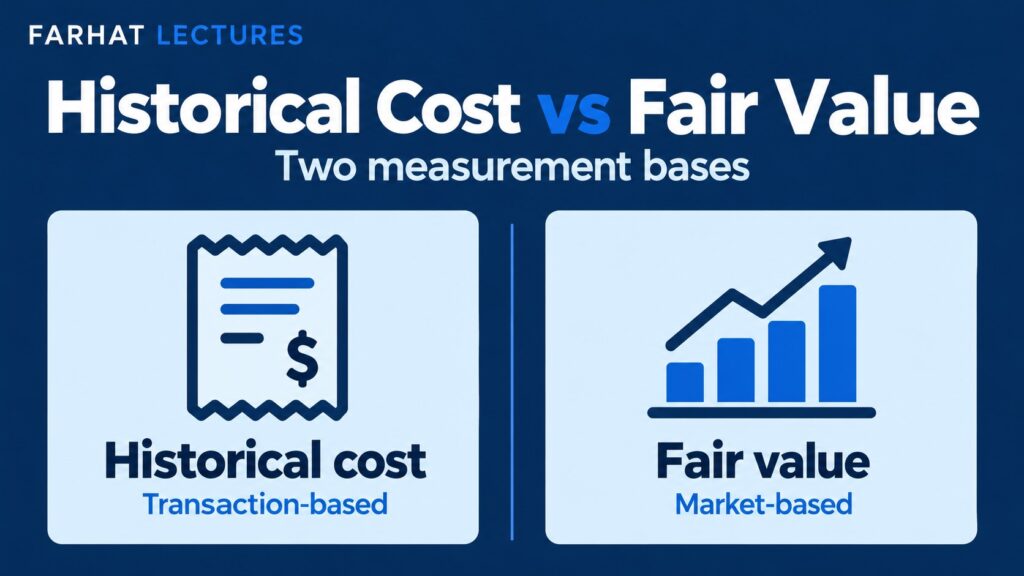
Historical cost is not an instruction to update the asset to every new market price. U.S. GAAP generally does not allow upward PP&E revaluation. International Financial Reporting Standards (IFRS) permit a revaluation model under International Accounting Standard (IAS) 16; keep the accounting framework clear. The IFRS Foundation’s IAS 16 overview explains initial cost, and our historical cost vs fair value guide develops the broader distinction.
Equipment cost example: separate the invoice from the asset
Hypothetical example. Elm Printing buys a press for $40,000, with an $800 prompt-payment discount. Additional necessary costs are sales tax of $2,400, freight of $900, transit insurance of $200, and installation and testing of $1,300. A separate $1,200 operating-insurance premium covers the next year.
| Item | Amount | Treatment |
|---|---|---|
| Invoice less prompt-payment discount | $39,200 | Equipment |
| Sales tax | $2,400 | Equipment |
| Freight and transit insurance | $1,100 | Equipment |
| Installation and testing | $1,300 | Equipment |
| Total equipment cost | $44,000 | Capitalized |
| Future operating insurance | $1,200 | Prepaid Insurance |
If Elm pays these amounts immediately, debit Equipment $44,000 and Prepaid Insurance $1,200; credit Cash $45,200. The insurance is expensed over its coverage period. Annual vehicle license fees are also operating costs rather than additions to vehicle cost.
This guide uses the cash-equivalent (net) approach to prompt-payment discounts: record the equipment at the price after the discount, even if the company misses the discount. A missed discount is recorded separately as an expense, often called purchase discounts lost, not as extra equipment cost. Some companies use the gross method in practice, so check which method an exam question assumes. Transit insurance is different because it protects the asset while it travels to its intended location.
Purchased buildings vs constructed buildings
| Method | Typical capitalized costs |
|---|---|
| Purchase an existing building | Purchase price, closing costs, assumed acquisition obligations, and necessary repairs or remodeling to ready it for use. |
| Hire an independent contractor | Contract price, architect fees, permits, building excavation and directly attributable outside project costs. |
| Construct with the company’s own resources | Direct materials, direct construction labor, construction overhead and a reasonable allocated share of fixed overhead. |
General management salaries do not become building cost simply because construction is underway. For a self-constructed building, employees directly performing or supervising construction can contribute to asset cost. Costs must have a real connection to the project; an arbitrary allocation of unrelated administrative overhead is not enough.
Fixed overhead means costs like factory rent, insurance and depreciation that do not change with construction activity. Companies handle it in one of two ways: some assign none of it to a self-constructed asset, while many assign a reasonable share, which is the approach this guide follows. In the textbook’s fixed-overhead allocation discussion, if allocating overhead causes the recorded construction cost to exceed the price an independent outside producer would charge, the excess allocated overhead is recognized as a period loss.
Hypothetical example. Birch Services pays a contractor $300,000, an architect $12,000, permit fees of $3,000 and foundation-excavation costs of $15,000. The building cost is $330,000. An unrelated $8,000 allocation of head-office management salaries is excluded. Under U.S. GAAP, as presented in the textbook, if a donor contributes $20,000 toward the project, the building is still recorded at its $330,000 cost and the contribution is accounted for separately. IFRS rules for government grants (IAS 20) can work differently, so keep the framework clear.
A condition attached to a building permit can also be a construction cost. For example, if the city requires the company to pay for a public access path before it will approve construction, that payment is part of the building’s cost. Explain why the cost is necessary rather than classifying it solely by its label. Under U.S. GAAP (ASC 835-20), companies must capitalize qualifying interest on assets constructed for their own use. Capitalization begins when expenditures for the asset have been made, activities necessary to prepare the asset for its intended use are in progress, and interest costs are being incurred. It continues while those conditions are present and ends when the asset is substantially complete and ready for its intended use. The calculation is covered in a separate lesson.
A legal retirement obligation can create another part of asset cost even though cash will be paid later. The asset retirement obligation guide explains the matching liability and subsequent entries.
What If You Buy Land And A Building For One Price?
A lump-sum purchase (also called a basket purchase) happens when one price covers several assets. Split the total price based on each asset’s relative fair value. This matters because land is not depreciated and the building is.
Hypothetical example. Oak Company pays $500,000 for land and a building. Appraisals show fair values of $150,000 for the land and $450,000 for the building, a total of $600,000.
Land: $150,000 divided by $600,000, times $500,000 = $125,000
Building: $450,000 divided by $600,000, times $500,000 = $375,000
The two amounts add back to the $500,000 paid.
Paying with something other than cash? The same cash-equivalent idea applies. If the company signs a long-term note, record the asset at the present value of the payments. If it issues shares of stock, use the fair value of the stock or the fair value of the asset, whichever is more clearly evident.
Common mistakes when calculating PP&E cost
These are the mistakes students make most often:
- Capitalizing every bill paid before opening day. Only costs needed to get the asset ready count. A one-year insurance policy paid before opening is a prepaid, not equipment.
- Expensing everything except the invoice price. Sales tax, freight, transit insurance, installation and testing all belong in the asset’s cost.
- Lumping land and a building together. Land is not depreciated, so its cost must stay separate from the building’s.
- Adding a missed cash discount to the asset. Under the cash-equivalent approach, a lost discount is an expense.
- Capitalizing employee training on new equipment. Training builds staff skills, not the asset, so it is generally expensed.
- Treating later repairs like acquisition costs. Repairs and improvements made after the asset is in use follow separate rules, covered in a separate lesson.
Key Takeaways
- PP&E is tangible, used in operations, and expected to last more than one year.
- Record it at historical cost: the purchase price plus every necessary cost to get it to its location and ready for use.
- Costs that benefit future periods, like next year’s insurance, are prepaids. Routine operating costs are expenses.
- Land is not depreciated, so always keep its cost separate from buildings.
- On the balance sheet, net PP&E equals cost minus accumulated depreciation and any impairment.
- Under U.S. GAAP, PP&E stays at historical cost. Upward revaluation is an IFRS option only.
Want the full chapter in video form? See the Intermediate Accounting course, or try the free sample course first to see how the lessons work.
Practice questions with explained answers
1. A dealer buys a van for delivery and another identical van for resale. Are both PP&E?
Answer: No. The delivery van is equipment because it supports operations. The van held for ordinary sale is inventory. Intended use drives the classification.
2. A machine costs $18,000, plus $900 sales tax, $500 delivery and $600 installation. What is its initial cost?
Answer: $20,000. All four amounts acquire or prepare the machine. A separate operating-insurance premium would be a prepaid expense if it covers future periods.
3. A business builds its own storeroom using $40,000 of materials, $25,000 of direct labor and $5,000 of allocable construction overhead. What is capitalized?
Answer: $70,000. Direct construction labor and appropriate construction overhead are part of the self-constructed asset. Unrelated office costs are excluded.
Interactive PP&E Practice Exercise
Practice three CPA FAR and Intermediate Accounting questions on fixed asset classification, land depreciation, and which acquisition costs to include in the historical cost of machinery.
Frequently asked questions
Is PP&E the same as a current asset?
Answer: No. PP&E is a noncurrent (long-term) asset because it provides service for more than one year or operating cycle. Current assets, such as cash, inventory and short-term prepaids, are expected to be used up or turned into cash within one year or the operating cycle, whichever is longer.
Does “plant” mean only a factory?
Answer: No. PP&E is a group label for tangible operating assets. A service company’s office furniture and computers can qualify.
Why can a repair before use be capitalized?
Answer: A necessary repair to ready an acquired building for its intended use can be an acquisition cost. A routine repair while operating the building serves a different purpose.
Is Land Considered Property, Plant And Equipment?
Answer: Yes, when it is used in operations, such as the land under a factory or store. Land is reported in PP&E at cost but is not depreciated because it generally has an indefinite life. Land held only to sell later at a profit is an investment, and land a developer holds for resale is inventory.
What Is Net PP&E And How Do You Calculate It?
Answer: Net PP&E is the carrying amount of PP&E on the balance sheet. Net PP&E equals historical cost minus accumulated depreciation and any impairment losses. For example, $400,000 of cost less $95,000 of accumulated depreciation gives net PP&E of $305,000.
Is PP&E Tested On The CPA Exam?
Answer: Yes. Property, plant and equipment is part of Area II, Select Balance Sheet Accounts, in the 2026 FAR section of the CPA Exam. Expect questions on which costs to capitalize, depreciation, impairment and disposals.
Is Interest Part Of The Cost Of PP&E?
Answer: It can be. Under U.S. GAAP (ASC 835-20), qualifying interest is capitalized once asset expenditures have been made, activities necessary to prepare the asset for its intended use are in progress, and interest costs are being incurred. Capitalization continues while those conditions are present and ends when the asset is substantially complete and ready for its intended use. Interest on an asset bought ready to use, such as a delivery van, is expensed.
Sources and lesson context
This original study guide covers the classification, historical cost, equipment and building portions of Wiley Intermediate Accounting, section 9.1. The current U.S. GAAP reference is FASB ASC 360. Examples and questions above are hypothetical and were created for this article.
Last reviewed: November 12, 2026.
About The Author
Mansour Farhat teaches accounting through Farhat Lectures, where he creates courses for CPA, CMA and EA candidates and accounting students. He also publishes free lessons on the Farhat Lectures YouTube channel.
Continue learning: Intermediate Accounting course · Farhat Lectures free sample course.

Responses